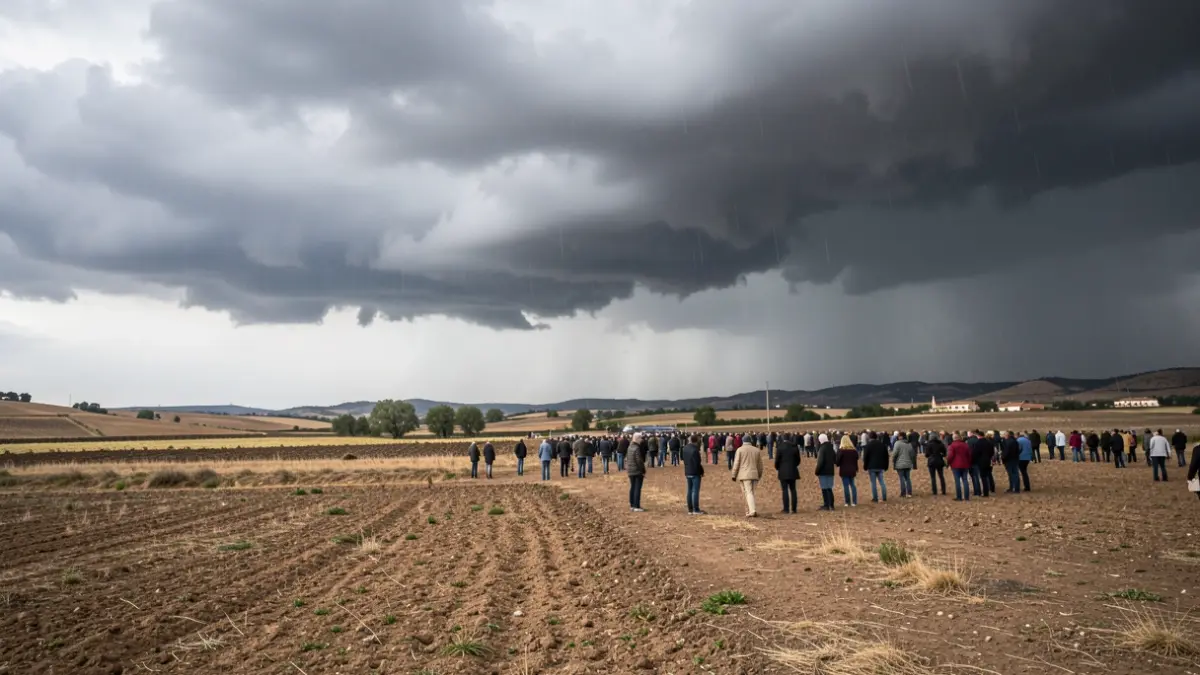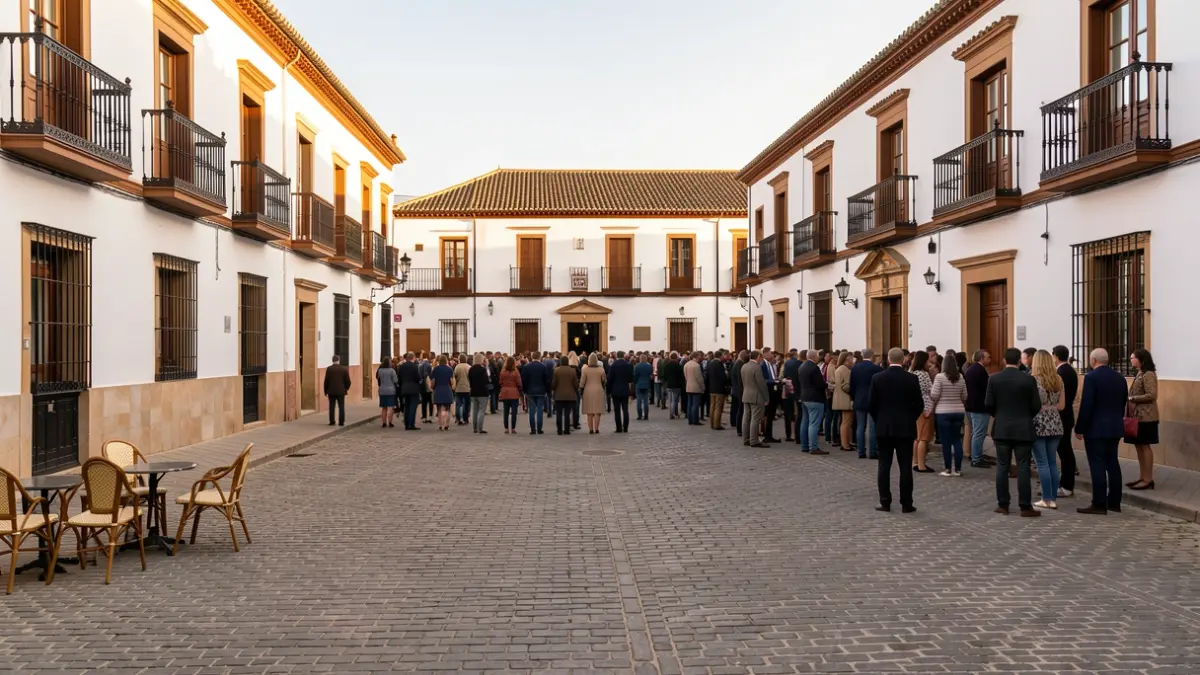
Plan Romero 2026 was activated this Monday by the Regional Government of Andalusia, marking the start of its 42nd edition. The operation involves over 7,000 personnel and significant enhancements in technology, healthcare, and preventive measures to ensure the safety of the El Rocío Pilgrimage. The operation, coordinated by the Andalusian Emergency Agency, will run from May 18th to May 28th.
Key novelties this year include a new Integrated Operational Coordination Center (Cecopi) in El Rocío, which will provide permanent healthcare assistance. Additionally, advanced risk control and prevention systems have been implemented, with a special focus on forest fire protection, safeguarding the Doñana environment, and ensuring the well-being of pilgrims from the 127 Rocío brotherhoods.
Several brotherhoods from the province of Cádiz began their journey to the Aldea on Monday. These include the brotherhoods from La Línea, San Fernando, and Chiclana. On Tuesday, departures are expected from Cádiz capital, Chipiona, Arcos, Rota, and Puerto Real, followed by Sanlúcar, El Puerto, and Jerez on Wednesday. Most of these brotherhoods will embark at Bajo de Guía on Tuesday to cross the Guadalquivir river.
The acting Minister of Health, Presidency, and Emergencies, Antonio Sanz, highlighted that Plan Romero is one of the largest deployments for large gatherings in Southern Europe, covering extensive pilgrimage routes and a unique natural environment like the Doñana Natural Space.
The new Cecopi, with an investment exceeding four million euros co-financed by the Regional Government of Andalusia and European funds, will centralize operational coordination and improve emergency response capabilities. It includes an expanded operations center and a healthcare center spanning over 500 square meters.
The healthcare contingent, coordinated by the 061 Health Emergencies Center, will feature seven medical consultation rooms, a mobile diagnostic imaging unit, a triage area, and a ten-bed observation room, staffed by over 200 healthcare professionals. This is supported by 13 assistance posts along the pilgrimage routes, a medicalized helicopter, and 31 healthcare vehicles.
Technologically, the operation introduces a new high-precision orthophoto of the village and advances towards a 'digital twin' of the area. The deployment will utilize drones with thermal cameras, intelligent capacity control systems via Wi-Fi, GPS devices for brotherhoods, and the ES-Alert system for mass notifications.
The EMA Infoca unit's resources are enhanced to combat forest fires, with daily activation of air and ground resources, focusing surveillance on the Doñana area.
The 127 participating brotherhoods will be equipped with automatic defibrillators and fire extinguishers, thanks to the collaboration of the Andalusian Emergency Agency and training provided by the 061 Health Emergencies Center.