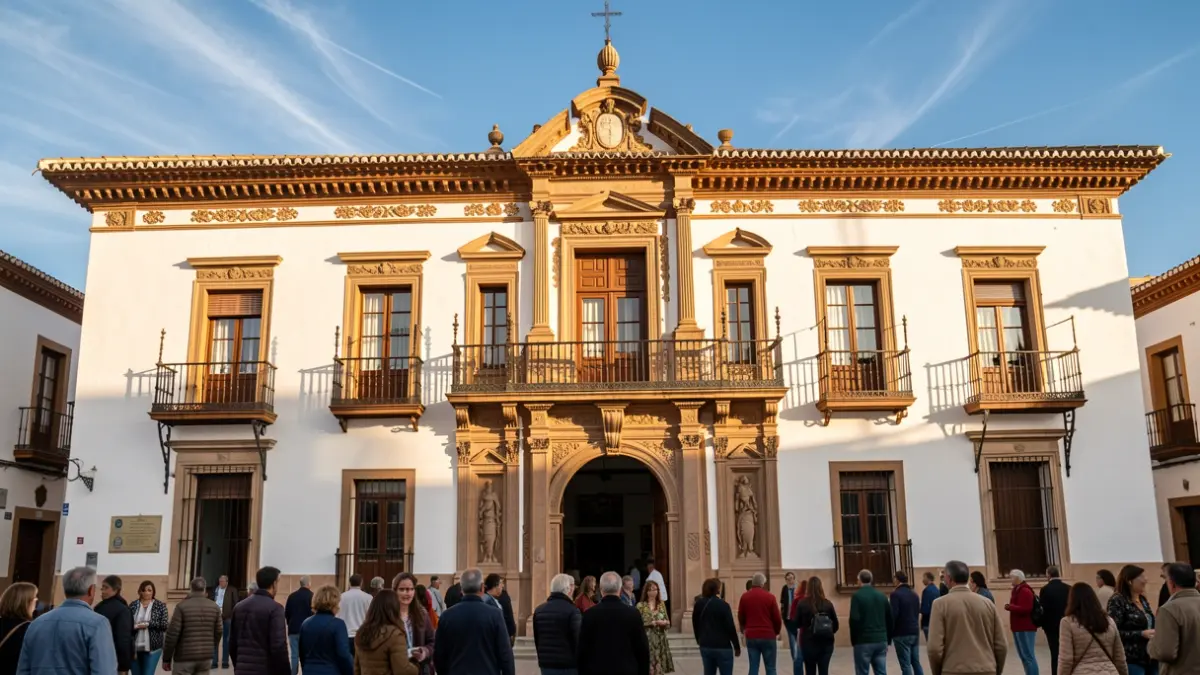
The official announcement took place in Gdansk (Poland) during the V European Congress of Gastronomy, themed “Memory and Future,” and the New Trends in Tourism 2026/2027 conference. These events, held at the European Solidarity Centre on April 16 and 17, provided the setting for the handover from the Polish city to Málaga.
This honorary distinction, granted annually by the European Community of New Gastronomy to a representative European city, entails organizing various activities, events, and initiatives throughout the year. The aim is to promote the gastronomy of European countries and the host city, fostering its evolution within the framework of 21st-century New Gastronomy.
Málaga's bid was represented by an institutional and professional delegation. Key figures included Jacobo Florido, Councillor for Tourism and City Promotion; María Francisca Caracuel, Vice President of Municipal Attention for the Provincial Council of Málaga; Manuel Tornay, President of the Málaga Gastronomic Academy (AGM); and Javier Frutos, President of the Málaga Hoteliers Association (Mahos).
The capital status comes with its own visual identity, designed to reflect the values of Málaga's gastronomy. The sardine, an iconic element, is central to the logo, which also incorporates three vertical elements symbolizing the producer, the preparer, and the consumer. The horizontal composition, through its colors, evokes the region's strengths: brown, ochre, and green tones for the land and cultivation areas; green and yellow for produce, fruit, grapes, and olive oil; and blues, along with a sun reference, connecting to the city, the sea, and Mediterranean light.
The capital's activity program will include cultural initiatives, Mediterranean and sustainable gastronomy, innovation, contemporary cuisine, education, and knowledge transfer. It will also focus on gastronomy as a social connector and international projection, aiming to protect gastronomic heritage, encourage citizen participation, promote sustainable practices, strengthen professional training, and consolidate European cooperation networks with a legacy extending beyond 2026.