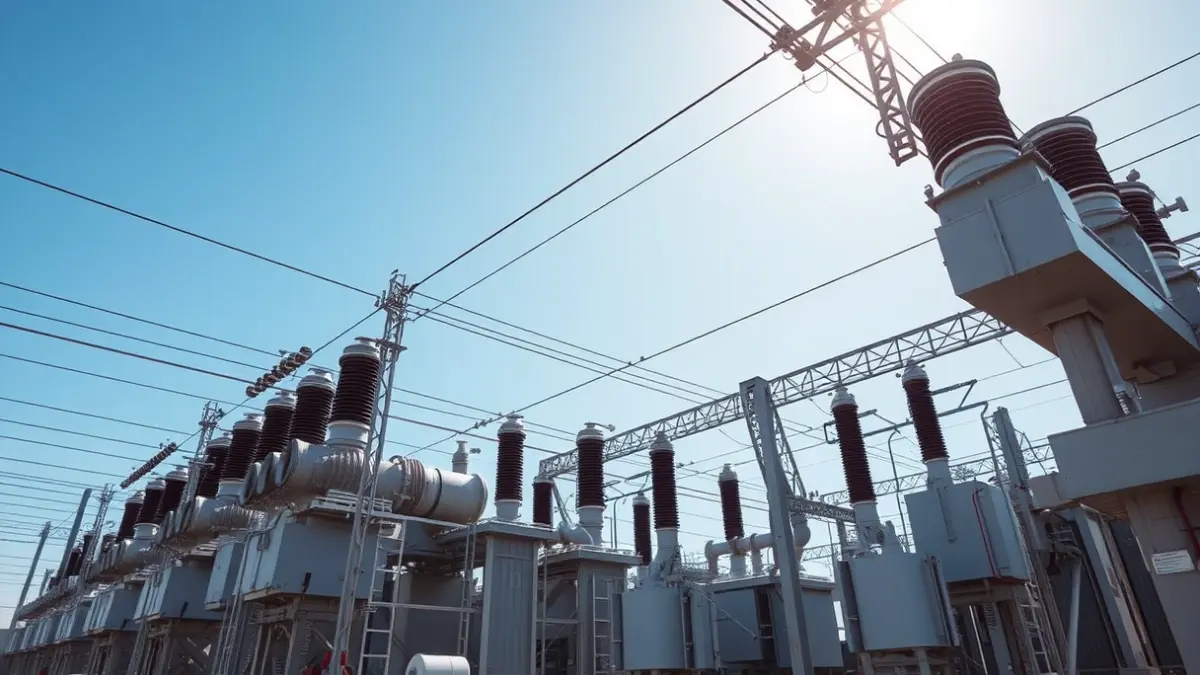
The current situation in Málaga is alarming, with the electricity grid operating at its limit. The infrastructures responsible for supplying energy to new residential developments, hospitals, or industrial warehouses cannot handle further requests, according to data from the National Commission for Markets and Competition (CNMC) and e-Distribución, a subsidiary of Endesa.
In 2025, the multinational company could only authorize 18% of connection requests nationwide, and the situation in Andalucía is equally restrictive. Although published capacity is informative and varies, each request is evaluated based on its impact on the entire grid, which functions as an interconnected system.
Regarding energy, Málaga presents two distinct realities. On one hand, the transmission network has sufficient capacity but lacks projects. However, the distribution network suffers from a significant bottleneck. The Costa del Sol is a critical point, where only one of the three planned substations, Costasol, is operational. The Benahavís substation is built but awaiting a legal resolution for its connection, and the Ventilla substation, in Mijas, is undergoing environmental processing.
“"Andalucía needs a clear acceleration of investment, both in the transmission network and in the distribution network. The bottleneck is not only a matter of investment willingness but also of the regulatory framework and administrative processing."
The electricity company has urged the Junta de Andalucía to expedite permits to shorten investment timelines in the networks. It is noted that administrative procedures are excessively long, sometimes requiring between five and seven years for the most complex cases. This slowness prevents the necessary investment effort from being deployed to resolve the current lack of capacity.
A spokesperson for the Málaga City Council has described the situation as “extremely urgent” for the province and the city. They highlighted that the lack of electrical power is hindering housing projects, as licenses cannot legally be granted without the required power, as seen in the case of a social housing development.