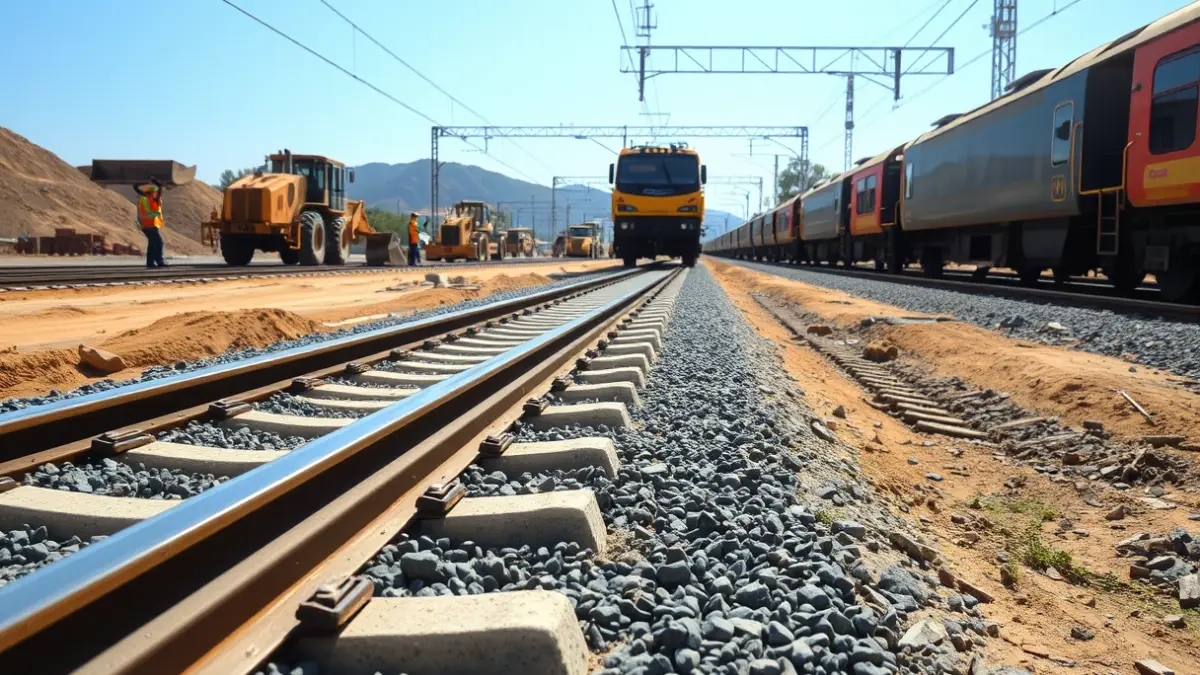
The high-speed rail infrastructure linking Málaga with the rest of the country is preparing for its partial reopening on April 30. This date marks the end of a crucial phase of repair work, which has lasted almost three months since the incident on February 4. The scale of the project has been such that approximately 200,000 cubic meters of material have been moved, a volume equivalent to 80 Olympic-sized swimming pools.
The interruption originated on February 4, when heavy rains from storm Leonardo caused the collapse of a 300-meter long and 15-meter high embankment in Álora. This landslide covered the tracks with tons of earth and caused significant damage to the catenary, tracks, and a high-voltage tower, compromising the stability of the area.
Recovery efforts could not begin immediately due to the instability of the terrain. After a planning period, heavy machinery started operating in late February, with 24-hour shifts involving 75 workers and 28 machines. Although the tracks were cleared by March 11, the discovery of an unstable wall forced an extension of the work, delaying the reopening initially planned for Holy Week.
“"I do not want to commit to dates because the work is tremendously complex."
Despite the reopening of one of the two tracks, the Minister of Transport has avoided setting a date for the full normalization of the service, citing the technical complexity of the pending tasks. This situation has generated political debate, with criticism from the opposition regarding the reopening schedule and the management of deadlines.
The tourism sector in the province of Málaga has welcomed the news with optimism, hoping that the return of the AVE will boost demand from national visitors ahead of the May long weekend. However, concerns have been raised about initial limitations in service frequency and speed, as it will operate with only one track.