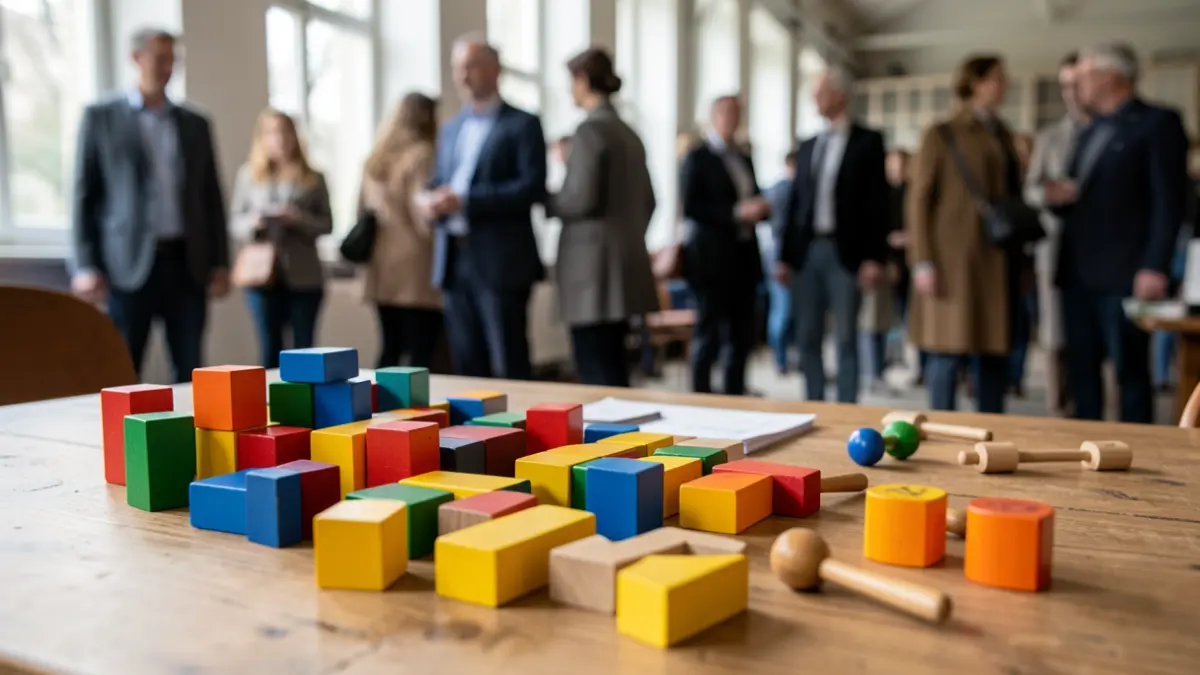
Experiences conducted in primary school classrooms with 9 and 10-year-olds in the province have allowed this team, belonging to the University Institute for Research in the Training of Education Professionals (IFE) and the Area of Mathematics Didactics, to analyze how algorithms can be designed through prediction, creation, and optimization tasks, without relying on digital devices.
The main objective of this project is to show how computational thinking can enrich mathematical problem-solving from an early age, using physical and manipulative materials instead of screens.
“"Students analyze information, break down problems, build solutions, anticipate outcomes, test them, and correct errors."
The results of this research have been published in the journal International Journal of Science and Mathematics Education. This mathematical approach is presented as an opportunity to explore, reason, make decisions, and learn from mistakes, without the essential use of a computer.
One of the study's innovations is the inclusion of the socio-affective domain, promoting teamwork and the appreciation of science through the figures of mathematicians Alan Turing and Joan Clarke.
The group of UMA educators has made a workbook available to educational centers with applied and validated tasks in this learning line. The project, funded by the UMA's Own Plan for Research, Transfer, and Scientific Dissemination, will continue until December 2027, expanding the proposal to Secondary education and other educational levels.