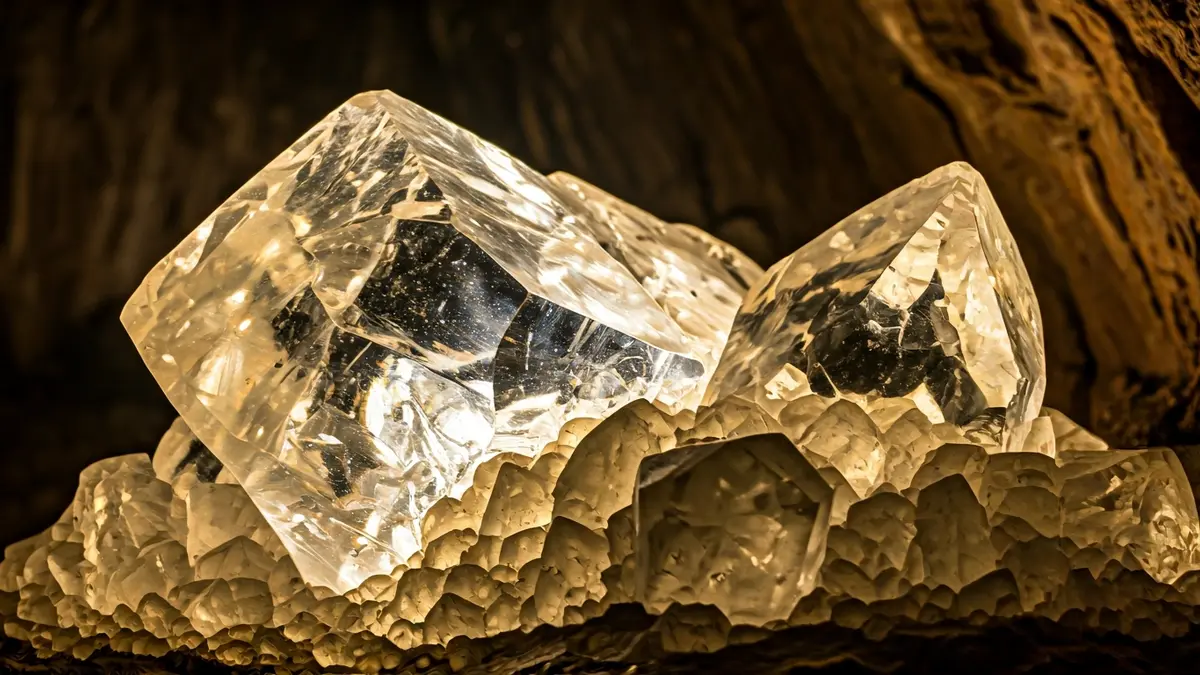
The candidacy of the Geode of Pulpí has been officially accepted for the preliminary report phase, an essential requirement within the UNESCO's new international selection system. This stage will assess its outstanding universal value and conservation conditions before a formal submission.
This decision, made last Friday in Sigüenza by the Ministry of Culture and the autonomous communities, positions Pulpí and Almería with the possibility of obtaining global recognition that could significantly boost its tourist appeal and consolidate the Geode as a leading geological landmark in Europe.
This new procedure, implemented by UNESCO, requires aspiring properties to pass an initial technical screening that analyzes their outstanding universal value and conservation conditions before they can be formally presented.
The process towards World Heritage declaration is lengthy and can take years to resolve. The Geode of Pulpí will compete in this phase with the Sweet and Salty Landscape of Sigüenza and Atienza, in Guadalajara, an area known for its salt production and territorial transformation since the Middle Ages.
Located inside the Mina Rica, in the Sierra del Aguilón, the Geode of Pulpí was discovered in 1999. It stands out for its large, transparent gypsum crystals, making it a unique geological formation in Europe. Since its opening to the public in 2019, it has become a major tourist attraction in the Levante Almeriense.
During the Historical Heritage Council meeting, other Spanish cultural candidacies were also discussed, including the Fiesta de Pecados y Danzantes de Camuñas in Toledo, belenismo (in collaboration with Italy and Paraguay), the Jota, the Floral Carpets, and the esparto technique (with Morocco).
Additionally, the transnational candidacy ‘Places of Hadrian: Classical Values of Europe’ for the European Heritage Label was approved, which includes sites like Itálica in Spain, Villa Adriana in Italy, and the city of Athens in Greece, all linked to the Roman emperor.