AlmeríaCádizCórdobaGranadaHuelvaJaénMálagaSevillaAlpujarra AlmerienseLos VélezComarca Metropolitana de AlmeríaFilabres-TabernasLevante AlmeriensePoniente AlmerienseValle del AlmanzoraBahía de CádizCampiña de JerezCampo de GibraltarCosta NoroesteLa JandaSierra de CádizAlto GuadalquivirCampiña de BaenaCampiña Sur CordobesaLos PedrochesCórdoba (comarca)SubbéticaValle del GuadiatoValle Medio del GuadalquivirAlpujarra GranadinaComarca de AlhamaComarca de BazaComarca de GuadixComarca de HuéscarComarca de LojaCosta GranadinaLos MontesValle de LecrínVega de GranadaEl AndévaloEl Condado de HuelvaCosta OccidentalCuenca MineraComarca Metropolitana de HuelvaSierra de HuelvaÁrea Metropolitana de JaénCampiña de JaénEl Condado (Jaén)La LomaSierra de CazorlaSierra MáginaSierra MorenaSierra de SeguraSierra Sur de JaénLas VillasComarca de AntequeraLa AxarquíaGuadaltebaCosta del Sol OccidentalMálaga Costa del SolNorormaValle del GuadalhorceSerranía de RondaSierra de las NievesAljarafeBajo GuadalquivirCampiña de CarmonaCampiña de Morón y MarchenaComarca de ÉcijaComarca Metropolitana de SevillaSierra Norte de SevillaSierra Sur de SevillaVega del GuadalquivirAlmeríaCádizCórdobaGranadaHuelvaJaénMálagaSevillaAlpujarra AlmerienseLos VélezComarca Metropolitana de AlmeríaFilabres-TabernasLevante AlmeriensePoniente AlmerienseValle del AlmanzoraBahía de CádizCampiña de JerezCampo de GibraltarCosta NoroesteLa JandaSierra de CádizAlto GuadalquivirCampiña de BaenaCampiña Sur CordobesaLos PedrochesCórdoba (comarca)SubbéticaValle del GuadiatoValle Medio del GuadalquivirAlpujarra GranadinaComarca de AlhamaComarca de BazaComarca de GuadixComarca de HuéscarComarca de LojaCosta GranadinaLos MontesValle de LecrínVega de GranadaEl AndévaloEl Condado de HuelvaCosta OccidentalCuenca MineraComarca Metropolitana de HuelvaSierra de HuelvaÁrea Metropolitana de JaénCampiña de JaénEl Condado (Jaén)La LomaSierra de CazorlaSierra MáginaSierra MorenaSierra de SeguraSierra Sur de JaénLas VillasComarca de AntequeraLa AxarquíaGuadaltebaCosta del Sol OccidentalMálaga Costa del SolNorormaValle del GuadalhorceSerranía de RondaSierra de las NievesAljarafeBajo GuadalquivirCampiña de CarmonaCampiña de Morón y MarchenaComarca de ÉcijaComarca Metropolitana de SevillaSierra Norte de SevillaSierra Sur de SevillaVega del Guadalquivir

UJA Uncovers Secrets of Child Mummification in Ancient Egypt

An international investigation analyzes two mummies from Aswan, revealing surprisingly sophisticated embalming techniques for their time.

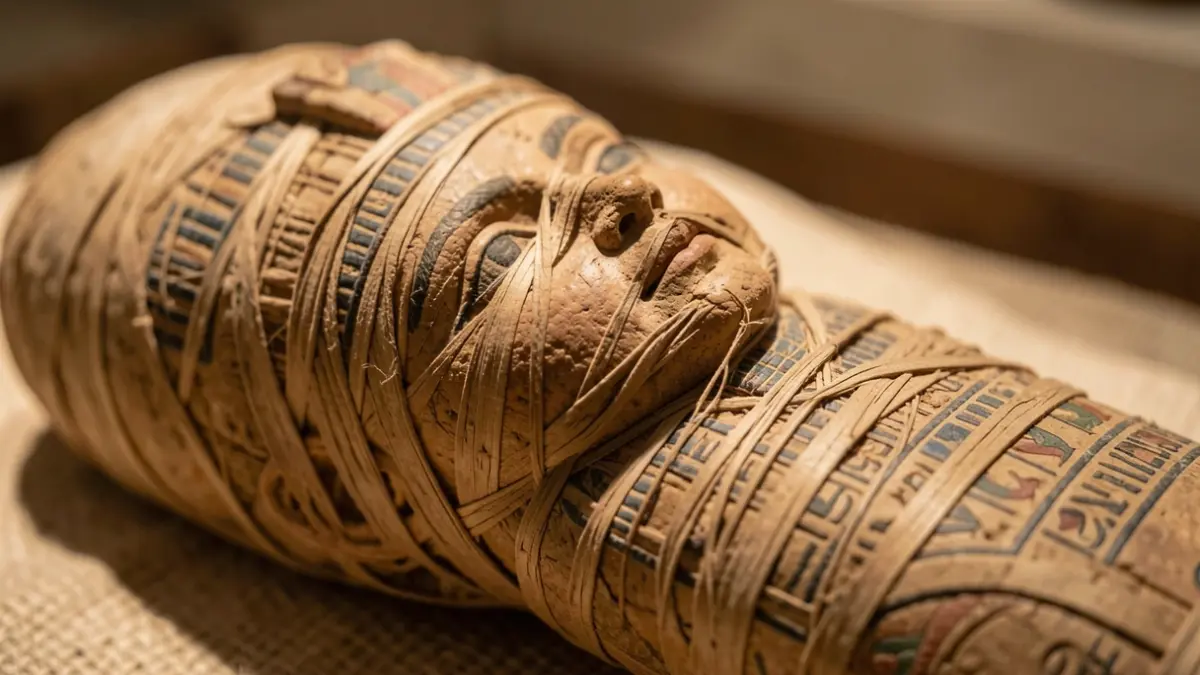
Detail of ancient Egyptian child mummy wrappings with intricate patterns.
IA

Detail of ancient Egyptian child mummy wrappings with intricate patterns.

An international investigation led by the University of Jaén has shed new light on child mummification practices in Ancient Egypt, analyzing two mummies discovered in Aswan.

The University of Jaén (UJA) has participated in a pioneering study that redefines the understanding of child mummification in Ancient Egypt. The research, published in the prestigious scientific journal 'International Journal of Osteoarchaeology', focuses on how embalming techniques applied to children evolved across different historical periods.
The study was based on high-resolution computed tomography (CT) analysis of two exceptionally well-preserved child mummies discovered at the Qubbet el-Hawa site in Aswan. The work, titled 'Two child mummies from Qubbet el-Hawa (Aswan, Egypt): A paleoradiological case-based study', involved an international team of researchers from Egypt, Spain, and Switzerland, including Alejandro Jiménez Serrano from the UJA.
The findings reveal significant differences in embalming techniques between the two mummies, despite their origin from the same archaeological site. The child from the Middle Kingdom showed limited procedures, characteristic of an early phase of these practices. In contrast, the mummy from the Late Period exhibited advanced techniques, such as excerebration (brain removal through the nose) and sophisticated body treatment with resins, methods previously documented mainly in adults from social elites.
These results provide radiological evidence that children could receive funerary treatments comparable to those of adults, challenging the traditional notion that child mummification was simpler. The research also identified unusual funerary elements, such as bead nets, faience jewelry, and shell amulets, suggesting a high social status and ritual protection for the minors.
The study highlights the importance of computed tomography as a non-invasive tool in bioarchaeology, allowing for detailed examination of ancient human remains without compromising their integrity. The findings offer valuable insights into childhood, social identity, funerary beliefs, and technological development in ancient Egyptian civilization.