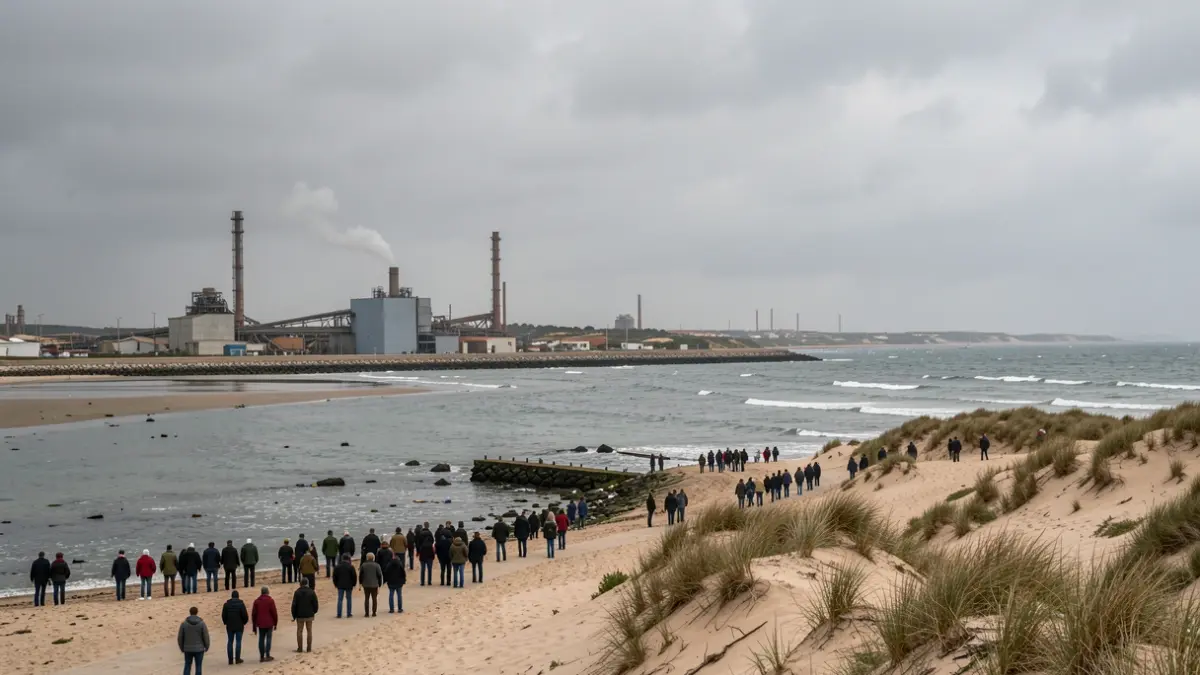
The Black Flags 2026 report, prepared by Ecologists in Action, has highlighted two points on the Huelva coastline for significant environmental problems. These distinctions identify areas requiring urgent action to restore their natural values and mitigate deterioration.
The Huelva Estuary receives a Black Flag in the pollution category. The report criticizes the concentration of planned industrial and energy projects in the area, emphasizing the need for a joint assessment of their cumulative impact. The historical presence of phosphogypsum stacks on the Tinto marshes is also a concern and is included among the recovery priorities proposed by the environmental organization.
As restoration proposals for the Estuary, Ecologists in Action demands comprehensive environmental assessments and the progressive recovery of marshland ecosystems affected by phosphogypsum, based on scientific criteria. It also calls for a review of projects considered 'green' if transparency regarding the origin of their energy or water is not guaranteed.
The second Black Flag awarded to Huelva focuses on coastal management and affects the Central Beach of Isla Cristina. The report warns of the deterioration of the dune cordon, whose natural capacity to protect the coast has been reduced by past actions, increasing vulnerability to storms and erosion.
The proposed restoration measures for Isla Cristina include the removal of the promenade built on the front line to facilitate the recovery of the original dune system, considered a natural defense against the sea. It also proposes the elimination of permanent occupations on the dunes, such as beach bars and facilities, and the reinforcement of environmental protection for areas like La Gaviota beach and La Gola through figures within the Natura 2000 Network.