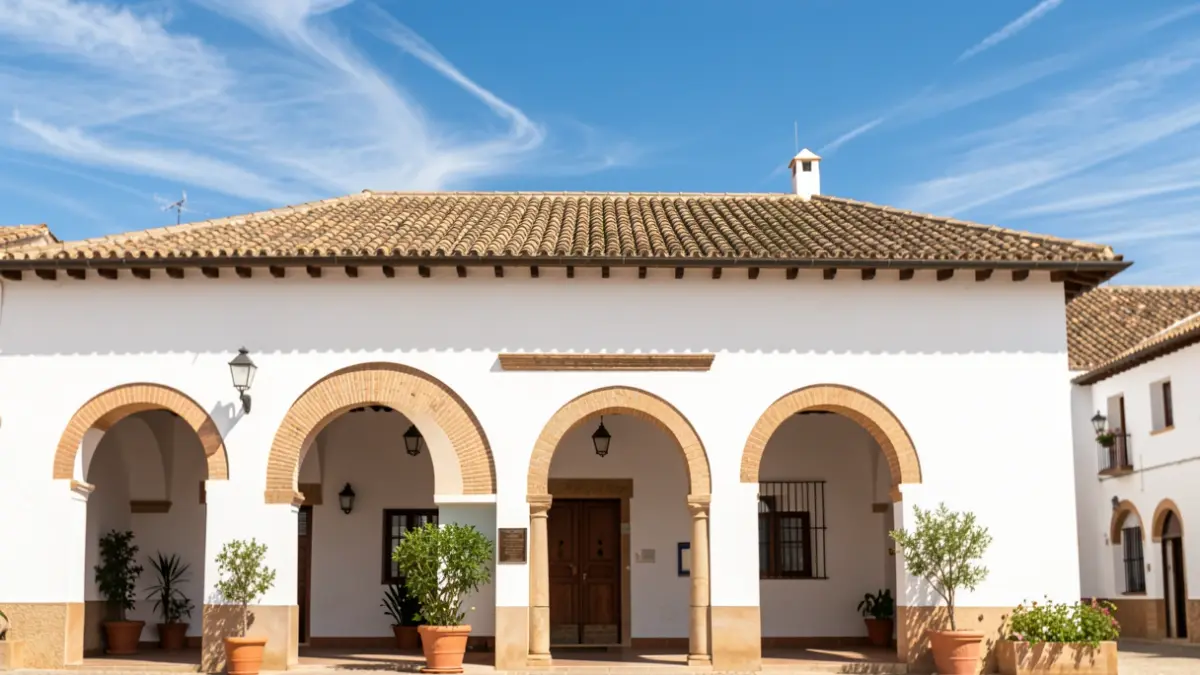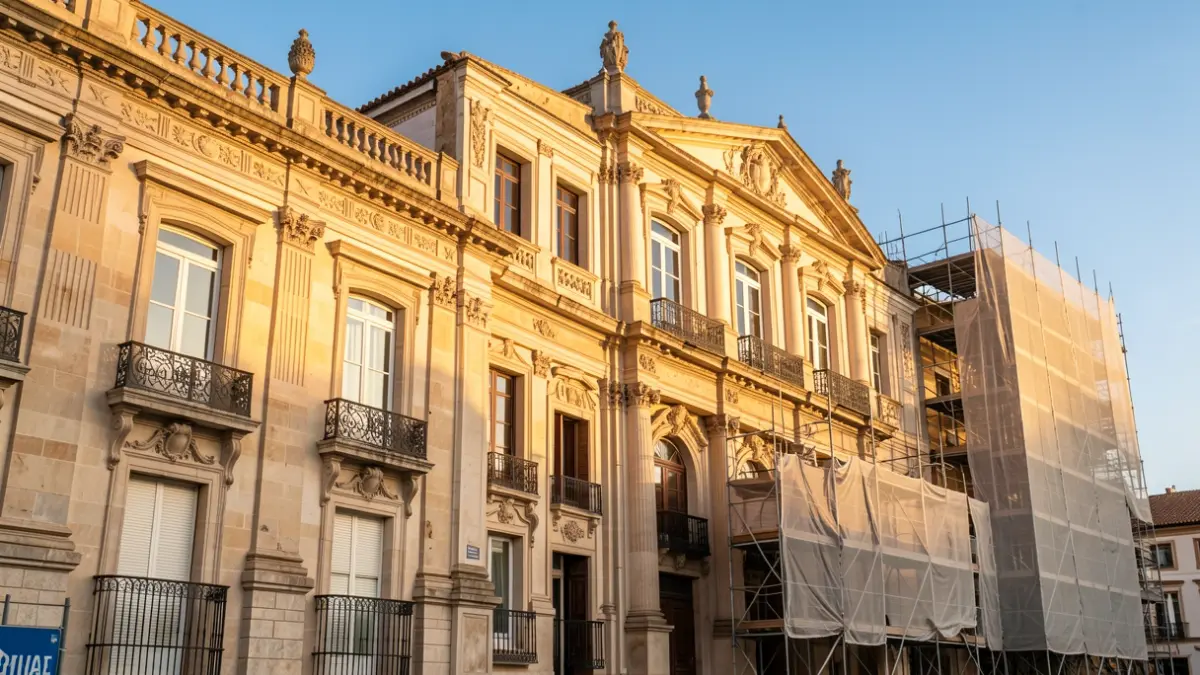
The recent trajectory of the former Bank of Spain in Huelva has been a complex process, marked by several changes in plans and challenges that have generated uncertainty about its final destination. The building, which closed its doors after 65 years of banking activity in the city on December 31, 2003, has seen various proposals for its reuse.
After a period of inactivity, in 2010 the drafting of a project to turn it into a space dedicated to Ibero-American Culture began. However, this idea did not materialize, and it wasn't until 2016 that the City Council's plenary session revisited support for its reconversion, this time with the aim of transforming it into an archaeological museum. This proposal was well-received by the public, who saw it as an opportunity to preserve the city's historical legacy. The building's facade was declared a Monument and a Site of Cultural Interest (BIC), and in 2019, renovation work began.
The work became complicated upon the discovery of archaeological remains in a basement intended to house the building's facilities. The need to rethink the project and excavate the site for its possible integration forced a modification of the design in July 2021. Doubts arose about the viability of the archaeological museum due to space and technical limitations, such as the impossibility of housing the Roman water wheel or integrating certain remains due to their weight, given that the facade is protected. The final decision was to prioritize a complete art museum rather than dividing the collection.
“"The decision was between housing a complete art museum or the archaeological one, but only some pieces. They decided not to divide the collection into two."
The public has expressed disagreement with this decision, although the project's progress is unstoppable. The technical problems faced by the team are understandable, as is the difficulty of the choice. Reactivating the building and making a sequence of archaeological findings, spanning from at least the 5th century BC to the 20th century, visitable is a priority. However, the impact that an archaeological vindication of Huelva, materialized in a museum dedicated to its historical narrative, would have had on the city is acknowledged.