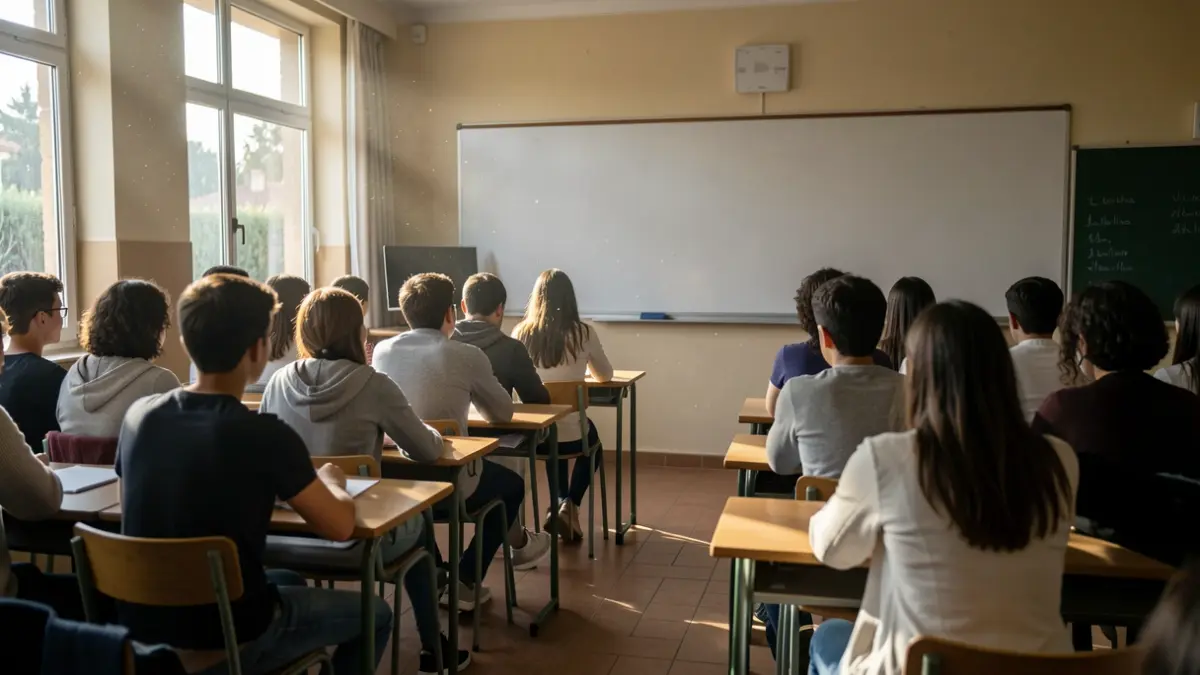
Demographic shifts are imposing substantial changes on Granada's educational system. A projected loss of 15,545 students across Primary, Secondary, and Baccalaureate levels by 2035 is anticipated, based on reports from the Ramón Areces Foundation, the European Foundation Society and Education, and the BBVA Foundation and Ivie. Regionally in Andalusia, the population aged 0-24 is expected to fall by 14%.
Compulsory education (ages 6-15) is set to see a regional decline of 18.7%, while Baccalaureate (ages 16-17) will face an even steeper drop of 28.5%. This is compounded by an aging teaching workforce, with 42.9% of Secondary teachers in Granada being over 50 years old, the highest rate in Andalusia.
The birth rate in the province has halved since 1975, with 6,623 births recorded in 2024 compared to 13,645. This decline has already led to mixed-age classrooms in Granada city schools, a situation previously confined to rural areas. However, a slight increase is predicted in the first cycle of Early Childhood Education (ages 0-3) between 2025 and 2035, with 3,538 and 3,810 more students respectively, attributed to family preferences and measures like free tuition.
The second cycle of Early Childhood Education (ages 3-6) will see moderate growth, while Primary (-5,699), Secondary (-6,298), and Baccalaureate (-3,548) are expected to experience significant enrollment decreases. Studies highlight the need for a profound reorganization of material and human resources within the Spanish educational system, which is projected to lose over 600,000 students nationwide in the coming decade.
The extension of compulsory education up to age 18 and continuous professional development are being considered. The report suggests enhancing the quality of the system by leveraging the demographic decline, improving teacher training, digital infrastructure, and reducing student-teacher ratios.
Starting next academic year, class sizes for 3-year-olds will be reduced to a maximum of 22 students, with a progressive rollout to the rest of Early Childhood Education and eventually Primary education. In Granada, 28 new classrooms are expected to be created to accommodate this measure, aimed at improving educational quality amidst declining enrollment.