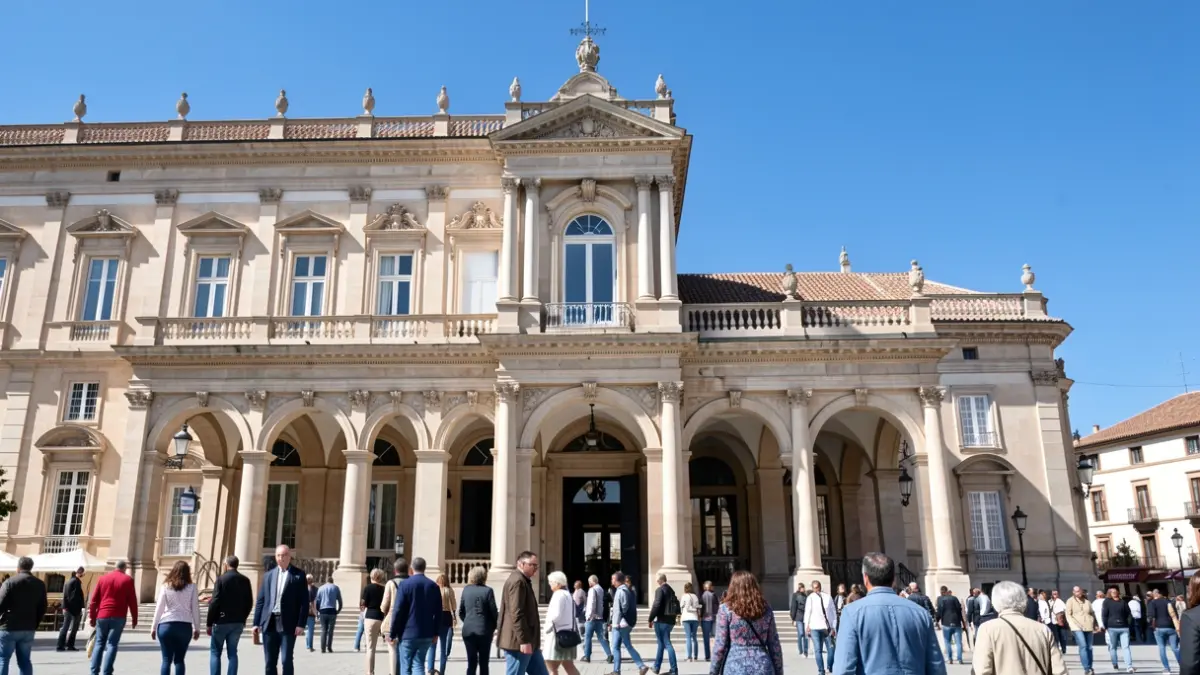
The University of Granada (UGR) is preparing to host a significant portion of the 2026 Spanish University Championships, an event spanning all public universities in Andalusia. The UGR will manage 14 sports disciplines, which will take place in 19 different facilities across the city of Granada and metropolitan municipalities such as Armilla, Maracena, Albolote, Alhendín, and Ogíjares.
The competition will be held in two periods: the first from April 8 to 23 and the second from May 4 to 14. It is anticipated that the championships will bring together over 7,000 participants, including athletes, coaches, judges, organizing staff, and volunteers. Of these, approximately 3,400 will compete in the games organized in Granada, representing more than 60% of the total estimated participation across the 32 modalities that make up the full championship calendar.
The competitions organized by the UGR include both individual and team sports. During April, equestrian, swimming (including adapted swimming), badminton, rugby 7 (men's and women's), karate, futsal, and 3x3 basketball will be held. In May, handball, basketball, wrestling, judo, taekwondo, football, and volleyball championships will take place. Of the 14 modalities, 13 will be hosted in Granada city, while Maracena, Albolote, Alhendín, Ogíjares, and Armilla will host various competitions in their municipal and supramunicipal sports facilities. Nine of the 19 venues belong to the University of Granada.
“"This is magnificent news that once again positions Granada as a benchmark in organizing major sporting events."
The organization of these championships involves the collaboration of ten institutions, including the University of Granada, the Superior Sports Council, the Junta de Andalucía, the Diputación de Granada, and the city councils of Granada, Maracena, Albolote, Alhendín, and Ogíjares, as well as the Club de Hípica Granada. The rector of the UGR, Pedro Mercado, expressed his satisfaction at hosting this event, highlighting institutional support and alignment with the healthy values of sport. The mayor of Granada, Marifrán Carazo, emphasized the event's importance for the city, which will attract nearly 4,000 students and generate opportunities linked to sport and young talent.
A relevant element of the program will be the integration of university research into the swimming championship. The Singular Aquatics Lab of the Faculty of Sports Sciences will carry out an automatic competition analysis project, within the framework of the SWIM 3 project, funded by the National Research Plan. This analysis aims to obtain technical and performance data from the actual competition. The celebration of these modalities in Granada is part of the 'Road to Granada 2030' roadmap, which seeks to prepare the city for the 2030 European University Games and promote Granada's bid for European Capital of Culture 2031.