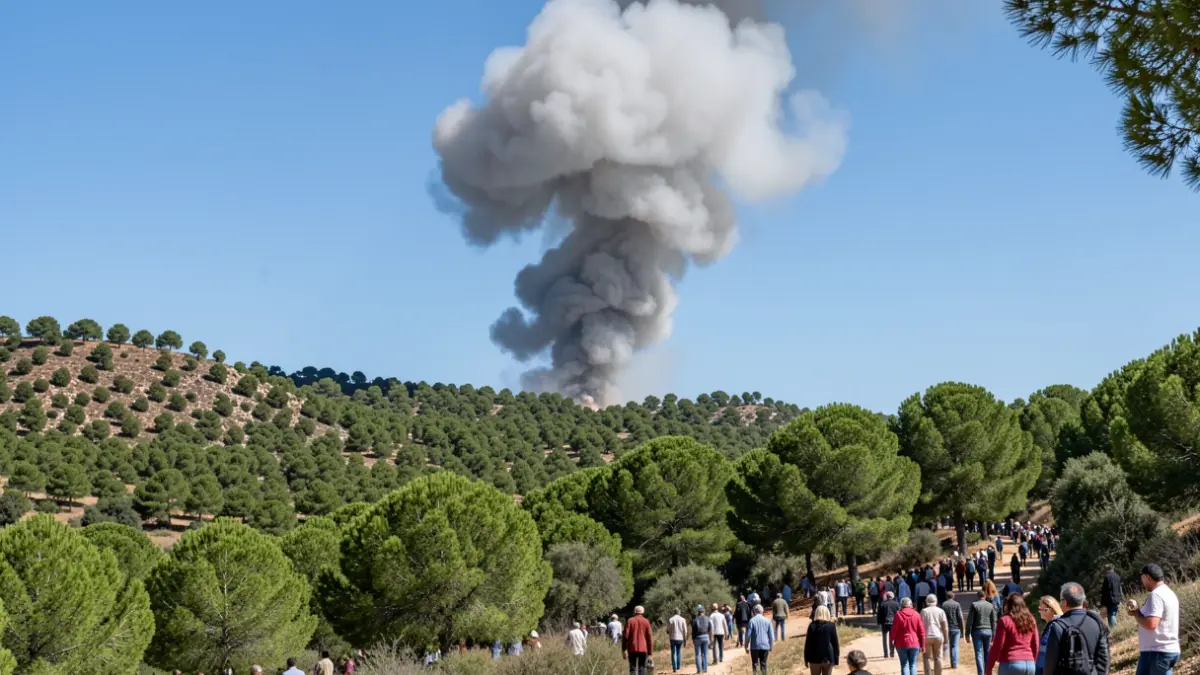
The fire, which remains active and evolving according to predicted patterns, has seen its spread rate reduce in recent days, although the burnt area is approaching historic figures for the Huelva province. The most significant activity on Wednesday was concentrated in the northern zone, as well as in the east, southeast, and northeast.
During the night, the extinction team is taking advantage of the light northern wind to consolidate the northern flanks and work on key sectors. However, low relative humidity and ground heating necessitate caution against potential flare-ups.
Flames crossed into the province of Seville on Wednesday, specifically into the municipality of Aznalcóllar, in the Charcofrío area. The mayor of Aznalcóllar confirmed the fire's advance, which later moved back towards the province of Huelva. In El Madroño, another affected area in Seville, the fire was more under control.
An alternative control line is being reinforced approximately 16 kilometers from the front, with the involvement of heavy machinery and resources from the Military Emergencies Unit (UME), as well as teams from Castilla-La Mancha and Castilla y León.
Over 700 residents, 524 from Huelva and 194 from Seville, remain preventatively evacuated from their homes. Currently, 62 people are sheltered in various locations such as Zalamea la Real, El Castillo de las Guardas, and Valverde del Camino.
A total of eleven roads remain closed to traffic in the provinces of Huelva and Seville, hindering access and firefighting efforts in some areas.