During his visit, the Monarch, accompanied by various military authorities, showed keen interest in each squadron and undertook a flight as co-pilot in one of the NH-90 helicopters, the latest addition to the fleet. Subsequently, the Minister of Defense, Margarita Robles, joined the meeting at the Internal Security Training Center (CASI), where they observed a simulated aircraft fire and the rescue of its pilot.
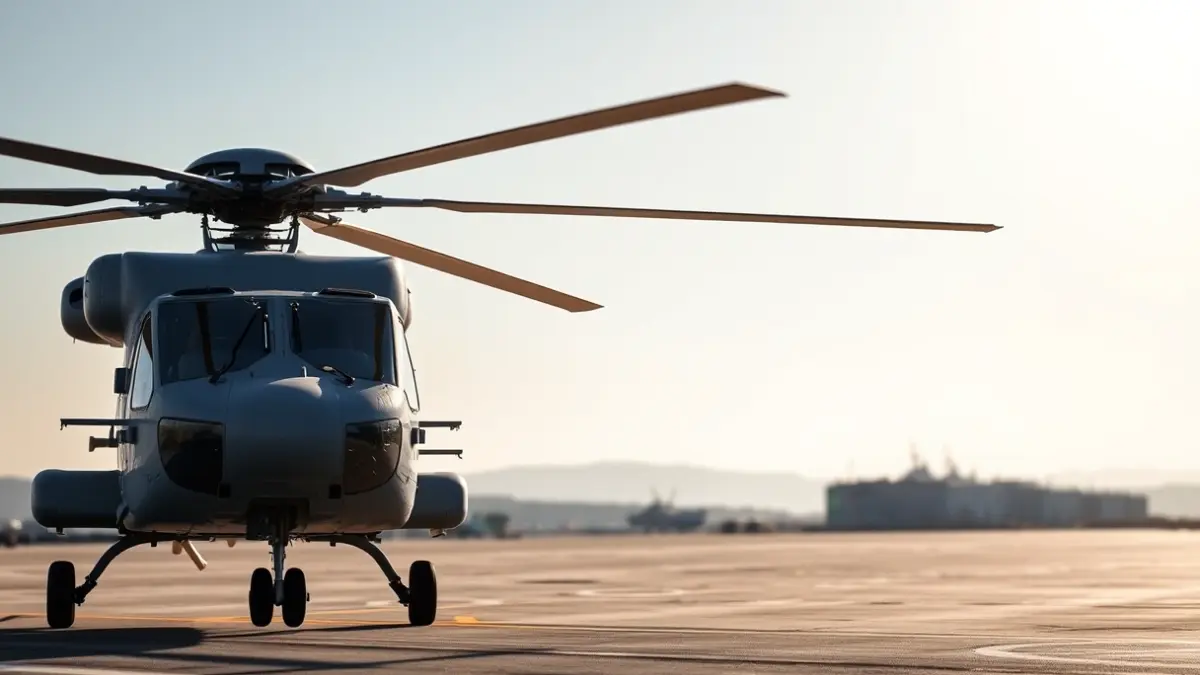
The Navy, which considers Rota one of its most strategic bases, is engaged in a modernization process of its air arm. This involves decommissioning older aircraft and establishing new squadrons. Recently, three NH-90 helicopters have arrived at Rota, now forming part of the 14th squadron, with a fourth on the way and a total of seven planned. This renewal necessitates significant construction work at the base, including a new hangar and a building to house a Full Flight simulator for the NH-90, which is crucial for pilot training.
The Head of State was able to assess the performance of these modern units during his flight along the Bay of Cadiz, passing by the Constitution Bridge. These helicopters are designed for tactical troop transport and support for special operations, in addition to being capable of various missions such as logistical transport, search and rescue at sea.
On the flight lines, the King closely observed aircraft from all squadrons, from the Scan Eagle drones of the Eleventh to the AV-8 Harrier jets of the Ninth, as well as a Cessna from the Fourth, SH-60F from the Tenth, and the recently arrived H-135 from the Twelfth, primarily used for training and logistical missions.
“"In recent years, we have seen the decommissioning of some squadrons like the Third, Sixth, and Fifth, and we are incorporating new units, which are already the present, such as the H135 and the NH90, and soon we will also incorporate the SH 60 Romeo. The leap will be from 90s or even 80s technology to technology of this decade."
The FLOAN currently comprises over 660 military personnel and consists of seven aircraft squadrons, based in Rota, with the exception of the unmanned aerial vehicle squadron. Modernization efforts have included the integration of the 12th squadron with H-135 Nival helicopters and the retirement of older models. The Tenth squadron anticipates the arrival of the SH60 Romeo, an improved version that will expand its anti-submarine warfare capabilities, by the end of 2026.
The King also visited two training centers at the Rota Naval Base. At the Navy's Survival Center, he witnessed a simulation of a helicopter crew rescue after a crash at sea, a facility that has improved survival probability in such incidents by 90%. Subsequently, at the CASI, a helicopter fire simulation with a trapped pilot rescue was conducted. This center, which trains approximately 3,000 students annually, uses aircraft and ship models to make these incidents as realistic as possible, preparing Armed Forces members to act in various emergencies, including NBQ incidents.
“"These procedures help train personnel and make them aware of the importance of being prepared for situations that can occur at any time, focusing primarily on reacting immediately, and then providing tools to satisfactorily resolve the accident."
The CASI addresses the training needs of Fleet ship crews, US Navy vessels, the Aircraft Flotilla, as well as units from other branches of the armed forces, the UME, the Royal Guard, and civil protection institutions. In 2019, its training capacity was expanded with the creation of a floodable compartment for plugging, patching, and dewatering exercises, solidifying its position as a national and international benchmark in emergency simulation.