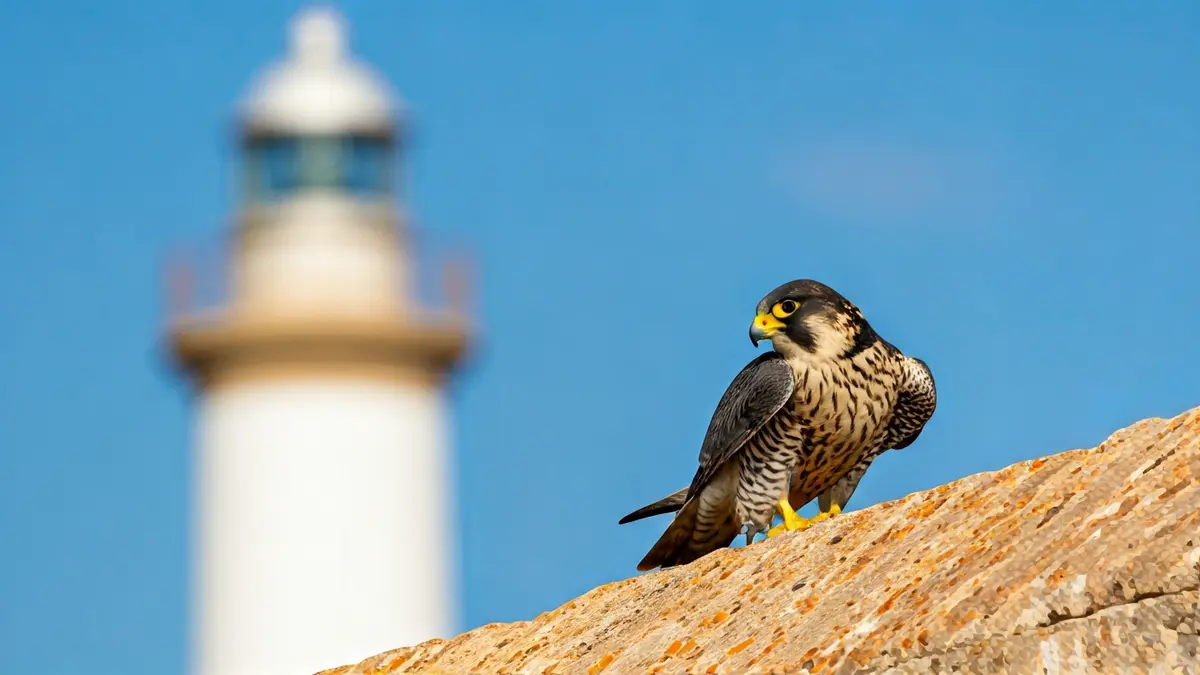
The province of Cádiz is reasserting itself as a crucial global ornithological hotspot, a migratory pathway, and a unique biodiversity sanctuary in Europe. In this context, the recent nesting of a pair of peregrine falcons at the top of the Chipiona Lighthouse is not an isolated event but a new chapter in the deep connection this territory maintains with the avian world.
The joint decision by the Chipiona City Council and the Port Authority of Seville to suspend tourist visits to the lighthouse until May 18 underscores a clear priority: ensuring the necessary tranquility for the incubation of this protected species to succeed. At 69 meters tall, the lighthouse offers the falcons an environment similar to the rocky cliffs where they typically nest, a habitat that has diminished in the mountains due to human activities like climbing.
“"Around the Chipiona Lighthouse, during the breeding season, you won't see a single pigeon."
José María, an ornithologist with decades of experience observing birds in the region, emphasizes that the success of this nesting brings benefits beyond pure conservation. The peregrine falcon acts as a natural regulator of the urban ecosystem. Its presence helps control populations of other birds whose droppings can damage historical heritage and affect public health. This model of coexistence is already observed in major cities like London, New York, and Madrid, and in Cádiz, pairs are already established on the high-voltage towers crossing the Bay.
The definitive establishment of this pair in the lighthouse, after several attempts and thanks to the installation of a nest box by the Migres project, enhances Chipiona's appeal within the ornithological tourism circuit. Cádiz is a key stage for phenomena such as north-south migration, attracting visitors with a specific profile: high-to-middle-income tourists who are environmentally conscious and generate a direct economic impact on local hospitality.
The monitoring of the chicks is exhaustive. Experts from the Gaditana Society of Natural History, such as Chus Fernández, monitor the nest with telescopes to ensure nothing disturbs the process. The risk is considerable: any unusual noise or prolonged human presence in the lighthouse lantern could stress the parents and lead to the abandonment of the eggs.
This institutional commitment between the City Council and the Port Authority of Seville represents a new understanding of heritage. The restriction of visits until the end of May is the price to pay for the Chipiona Lighthouse not only to continue guiding ships but also to consolidate itself as a vertical sanctuary in a land that is, by right, the home of Europe's birds.