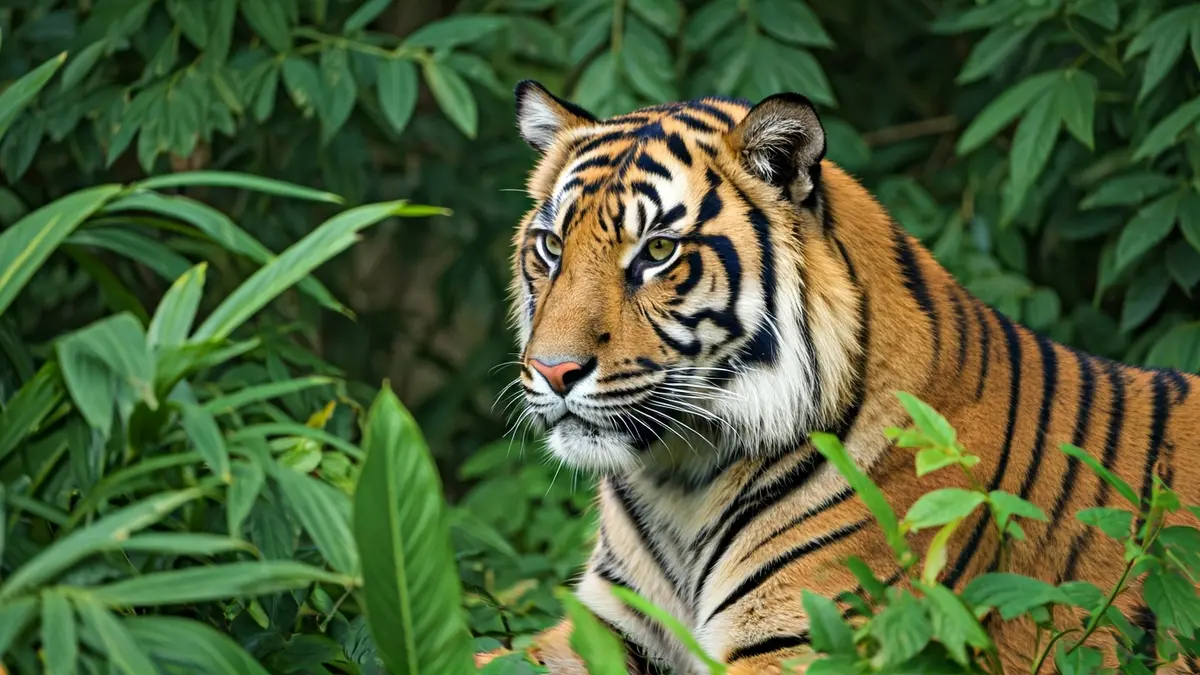
The fight for the survival of the Sumatran tiger, classified as 'critically endangered' by the International Union for Conservation of Nature, has a direct link to the Costa del Sol. Fewer than 400 individuals are believed to remain in the wild, and two of these rare big cats reside at BIOPARC Fuengirola.
As part of its 25th anniversary, the park maintains its commitment to conservation, education, and global awareness. A recent report, supported by the park's foundation, highlights promising developments in Indonesia's Way Kambas National Park, where conservation teams have confirmed the presence of at least seven Sumatran tigers and evidence of breeding.
The BIOPARC Foundation stated that their team covered over 48,000 hectares in their effort to manage 12 protection patrols.
This progress is vital, though not without challenges. Rangers trek hundreds of kilometers through dense jungle to remove deadly illegal traps and monitor tiger movements. Threats such as poaching, deforestation, and human-animal interaction continue to push the species to the brink of extinction.
Conservation efforts are not limited to the rainforest. BIOPARC Fuengirola also focuses on raising awareness through initiatives like international conservation funding and its “Origin” photography competition, which this year runs from April 9 to May 31. The park combines 'ex situ' efforts on-site with 'in situ' projects in the animals' native habitats, ensuring their protection both in and out of the wild.
The two resident Sumatran tigers at BIOPARC Fuengirola serve as ambassadors, helping visitors understand what is at stake. These felines, known for their solitary and elusive nature, have dark coats with narrow black stripes that provide natural camouflage. Unlike many big cats, they are strong swimmers and unafraid of water. They are the smallest, yet darkest, surviving tiger subspecies, an adaptation to their environment.