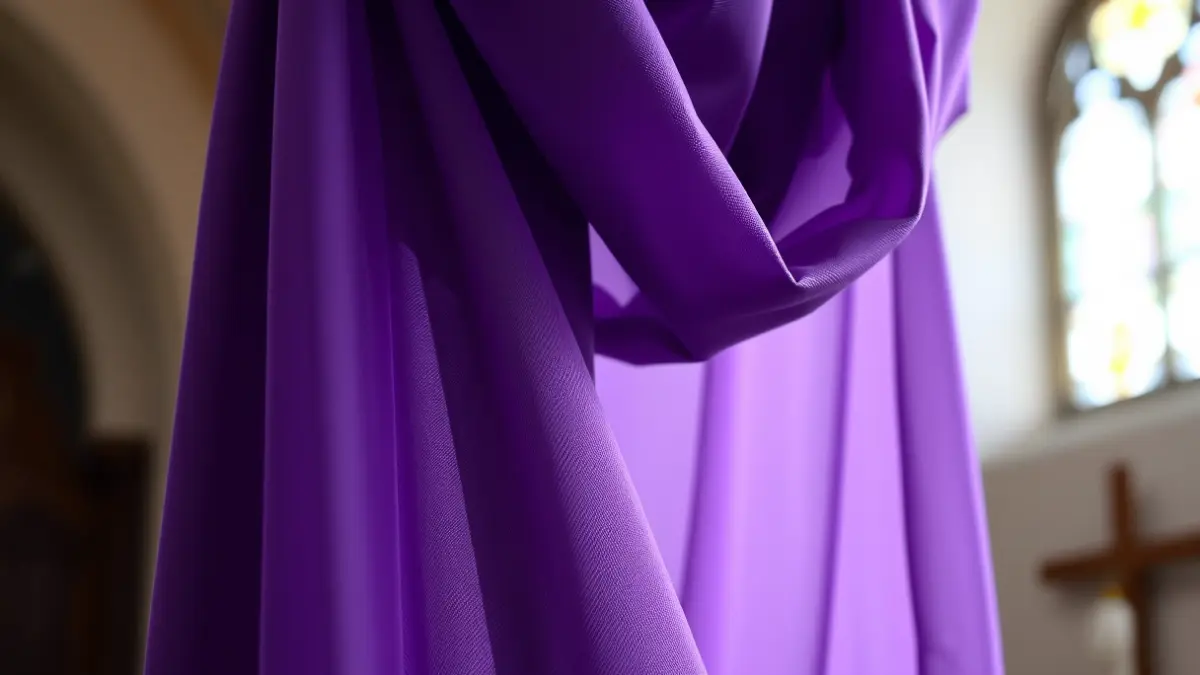
This custom, which allows the cross's shape to be glimpsed through a translucent fabric, is rooted in a Church tradition largely lost after the Second Vatican Council. Until the second half of the 20th century, not only crosses but also religious images were covered with veils.
The practice began at the end of Lent, specifically from Passion Sunday, the fifth and last of this liturgical period. From then on, representations of Jesus, the Virgin Mary, and the saints remained veiled.
“"It was a way to ensure that the faithful's attention was solely on the mysteries of Jesus' passion, death, and resurrection."
In the past, it was mandatory in all churches to perform this veiling from Passion Sunday, using a purple or red veil. Over time, the obligation became more flexible, and the custom gradually disappeared in many places. However, in Córdoba, brotherhoods such as the Misericordia and the Prendimiento, as well as the pro-brotherhood of the Bondad, have decided to revive it.
This tradition, which is maintained in various parts of Christianity, offers a solemn and symbolic way of understanding the passion, death, and resurrection of Jesus. The images remained covered until the moment of the resurrection, although on Good Friday, one of them was unveiled during the Offices for the adoration of the Crucified Christ.