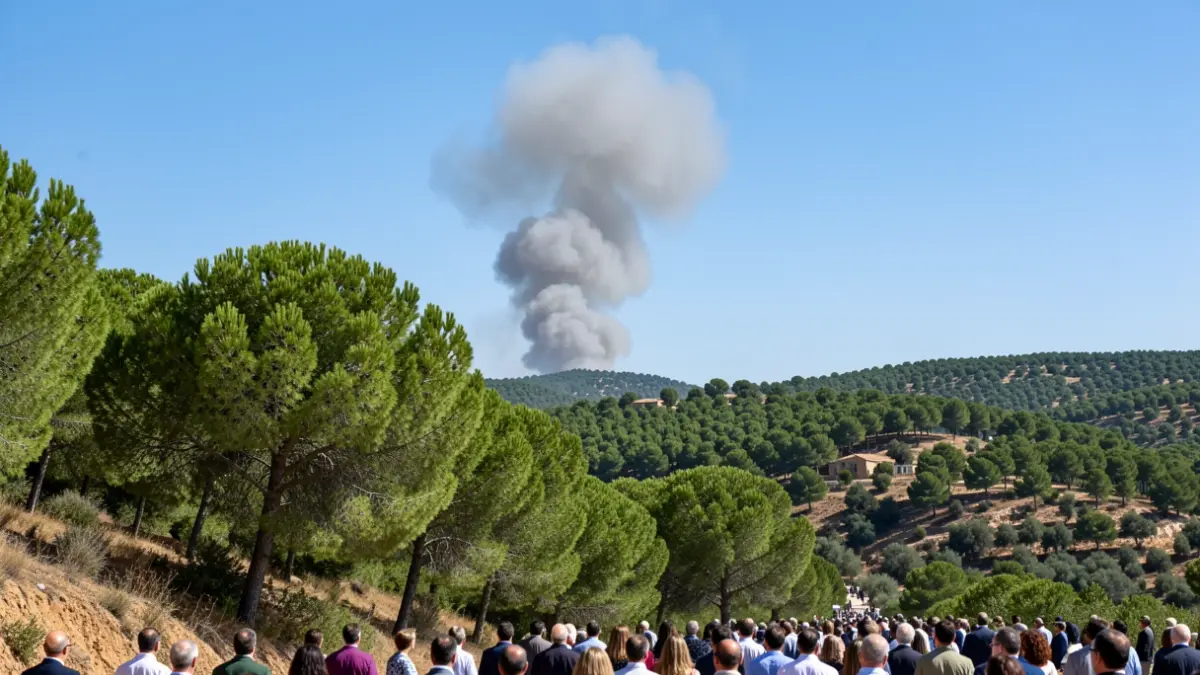
The arrival of summer intensifies concerns over forest fires in the Sierra de Córdoba. With a growing resident population and an increase in visitors, neighborhood associations and prevention experts are calling for more resources and decisive action from public administrations to mitigate the fire threat.
Representatives from the Trassierra District Council and the Seven Fincas Early Assistance Volunteer Group warn that the situation is becoming more complex each year, not only due to climate change and high temperatures but also increased human activity in the area.
Juan Manuel Luque, president of both entities, emphasizes that prevention is the primary tool. "Mountains must be cleared in winter," he states, highlighting the need for cleaning and maintenance work before the summer season to ensure at least minimal protection.
“"80% of urbanizations have their self-protection plan done, but none of us know if it's good or bad because the City Council doesn't respond."
A key demand concerns self-protection plans, mandatory documents for urbanizations in forest areas detailing aspects like street cleaning, evacuation routes, and emergency service accessibility. Developing these plans represents a significant financial investment for residents.
Luque reports that most of these plans receive no municipal response, leaving residents uncertain about their compliance with regulations. He cites the El Jardinito urbanization, which has spent approximately 60,000 euros on its plan and incurs annual maintenance costs without administrative validation.
The primary request is not just for more resources, but for technical feedback confirming compliance with the law and suggesting necessary improvements. "We don't know if we comply with the law or not because the City Council doesn't respond," the neighborhood representative insists.
Uncertainty also stems from the recent reorganization of forest fire prevention by the Regional Government of Andalusia (Junta de Andalucía), integrating the Infoca device into a new emergency agency. This shift modifies the prevention model, which is still awaiting full implementation.
Juan Andrés de Gracia, president of the Citizen Movement Council (CMC), explains that the regional government promotes collective self-protection plans for densely populated areas, integrated into municipal emergency plans. However, he notes that the Córdoba City Council currently lacks the technical capacity to analyze these documents.
Despite these challenges, it was agreed to maintain the validity of individual prevention plans for the current campaign, allowing property owners to carry out activities like clearing undergrowth and cleaning plots. De Gracia regrets the lack of qualified municipal staff for this task.
Neighborhood representatives express feeling "forgotten" due to institutional neglect, distinguishing this from the emergency response efforts. Juan Manuel Luque praises the professionalism of the Infoca Plan and the awareness of residents, most of whom avoid risky practices.
Neighborhood demands also extend to the cleaning and maintenance of roads, ditches, and land adjacent to inhabited areas. De Gracia positively acknowledges the work by the Provincial Council of Córdoba (Diputación de Córdoba) on Sierra roads but stresses the need to enhance cleaning of vacant lots and transition zones between urban and forest environments.
The key, according to representatives, lies in combining forest prevention, public awareness, and improved administrative coordination to face the high-risk season, acknowledging that much of the battle against fires is won long before the first flames appear.