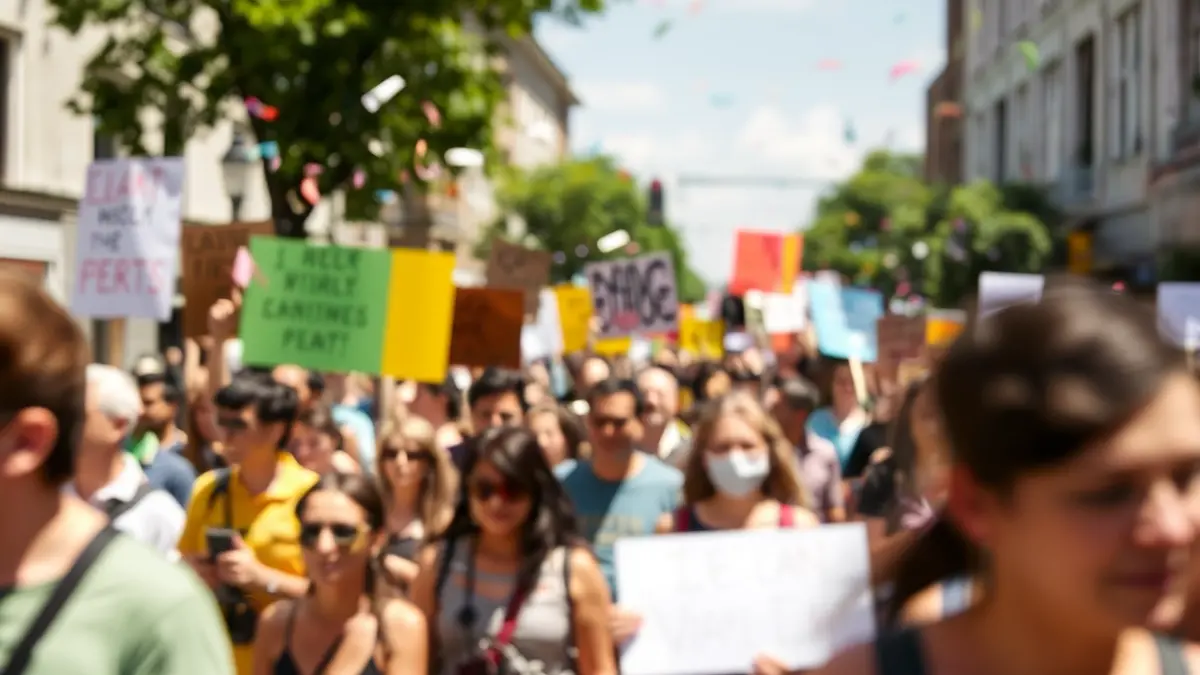
Under the slogan 'Rights, not trenches: wages, housing, and democracy,' the march brought together approximately 3,000 people, according to the organizing unions, while the National Police estimated attendance at 1,500. The protest, which included the presence of various candidates and politicians, served as a platform to express public concern over job insecurity and the dismantling of essential services.
“"The Housing Law is made only for capital and not for the people who truly need a decent home."
The CC.OO. representative in Córdoba sharply criticized the current Housing Law, stating that it does not meet citizens' needs. She also called for a wage increase of up to 7% in the coming years to combat the growing difficulty for young people to build a life project, and denounced the privatization of education and healthcare, as well as the neglect of the elderly without an adequate dependency law.
“"We are talking about working poor, about people who have to string together jobs to make ends meet."
Similarly, the general secretary of UGT warned about job insecurity, especially among youth, and highlighted how low wages, high housing prices, and the need for private health insurance are pushing many families into an unsustainable situation. For this organization, the solution involves a wage increase and greater investment in public services such as healthcare and education, considered pillars of a just society. She also rejected divisive rhetoric, emphasizing the importance of democracy and the defense of labor rights.
The demonstration saw the participation of workers from companies like Hitachi and crane operators, who are involved in labor disputes. Employees of the Japanese multinational hope to reach an agreement in an upcoming meeting, while crane operators lament that, after 64 days of strike, negotiations remain stalled over a 9-euro wage difference. The march, called by the major unions, concluded in the Plaza de Las Tendillas.