The traditional history of Córdoba's foundation relies on the Greek historian Strabo, who, a century after the events, attributed its origin to the Roman praetor Marcus Claudius Marcellus in 169 BC. This version has maintained that the new Roman city was established in what is now the historic center of the Cordoban capital.
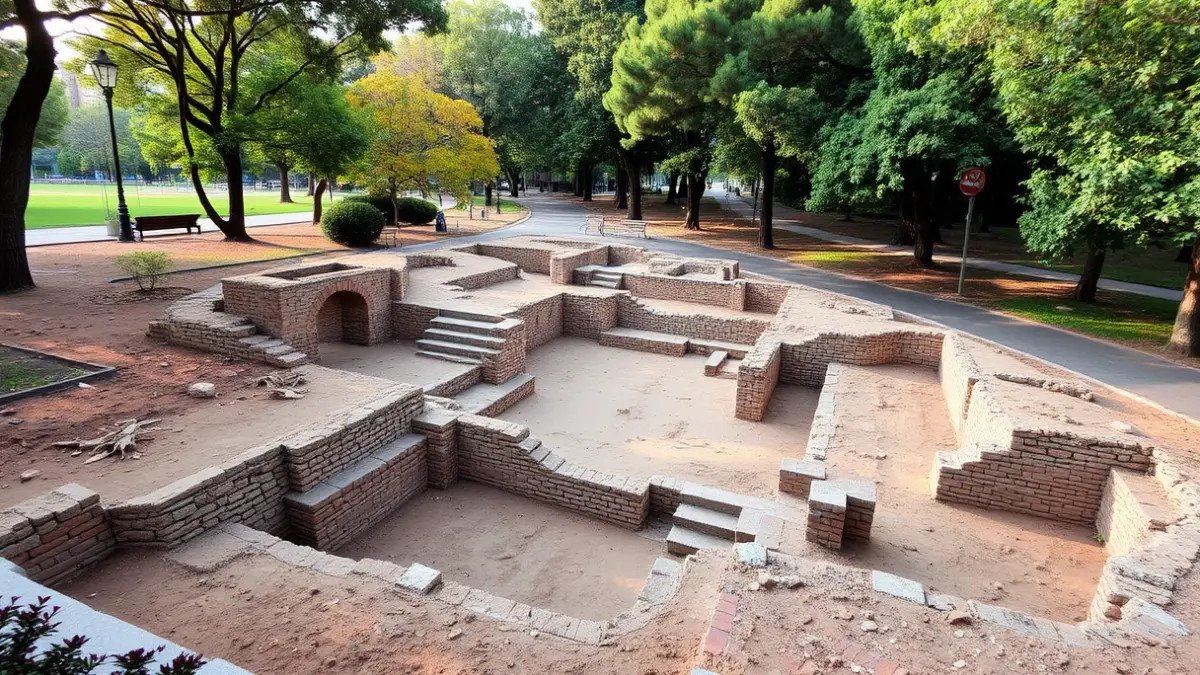
However, a researcher from the University of Córdoba has presented an alternative hypothesis at an international conference in Rome. Drawing on the archaeology of other Roman foundations in the Iberian Peninsula, he suggests that the origin of Roman Córdoba could be located in Cruz Conde Park.
This site, about 700 meters from the current center, housed ancient pre-Roman populations. The researcher proposes that, rather than the founding of a new city, it was a symbolic act of refoundation, given the collaborative relationship between the pre-existing inhabitants on the Quemados hill and the new Roman occupants.
“"In the first Roman 'foundations,' there are no structural or almost no material Roman changes. Life continued as before, but under a new political and administrative framework. This makes the hypothesis that Marcellus built a new city unthinkable. It was not done anywhere else in Hispania, and Córdoba would be an unproven exception."
This perspective implies that the Romans would have reorganized the existing Tartessian city on the Quemados hill, which coexisted for over a century with a Roman military camp established in the current historic center, possibly since 206 BC. Ultimately, this military camp would evolve to become Colonia Patricia.
The proposal is supported by examples such as Itálica in Seville and Carteia in Cádiz, where the first Roman foundations did not involve the construction of entirely new cities. The idea of a 42-hectare city, ten times the size of Tarraco of the Scipios at the same time, without stratigraphic evidence, is considered less feasible.