Understanding the rich past of the Andalusian capital continues to yield new insights. A researcher from the University of Córdoba (UCO) and director of the Patricia Unit has proposed that the creation of Roman Córdoba was a symbolic act of refoundation based on a pre-existing Tartessian core. This hypothesis opens the door to the idea that Roman Córdoba was founded in the current Parque Cruz Conde.
Traditionally, the city's foundation has been attributed to the Roman praetor Marcus Claudius Marcellus in 169 BC, based on texts by the Greek historian Strabo. These earlier investigations maintained that Rome established a new city in what is now the Historic Center.
“"The Romans simply reorganized the existing Tartessian city, which coexisted for a time with the military camp that the Romans themselves had established in the current Historic Center of the city, probably since 206 BC."
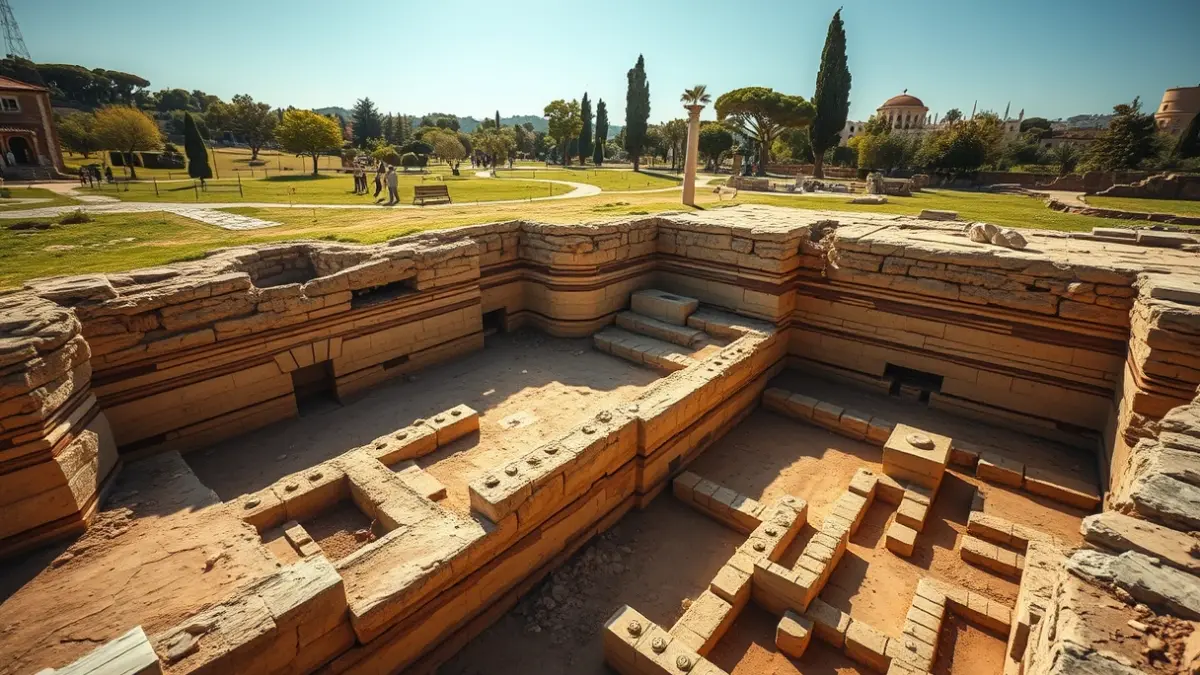
However, the archaeologist has presented a completely different theory at an international conference in Rome. His approach, based on archaeological accounts of how other Roman cities were established on the peninsula, suggests that the origin of Roman Córdoba would be located in Parque Cruz Conde, about 700 meters from the current city center.
In this location, where ancient pre-Roman populations were settled, the expert believes that a symbolic refoundation occurred, rather than the birth of an entirely new city. There was a relationship of friendship and collaboration between the original inhabitants, who remained in the area known as Colina de los Quemados until the 1st century AD, and the new Roman occupants.
This new archaeological perspective revises the traditional version, placing the Roman origin of Córdoba in Colina de los Quemados. The researcher argues that the archaeological reality of the first Roman foundations in Hispania, such as Itálica in Seville and Carteia in Cádiz, demonstrates that there were no significant structural changes, but rather a reorganization under a new political and administrative framework. This makes the idea that Marcellus built a new city of 42 hectares, without stratigraphic evidence, seem unlikely.