
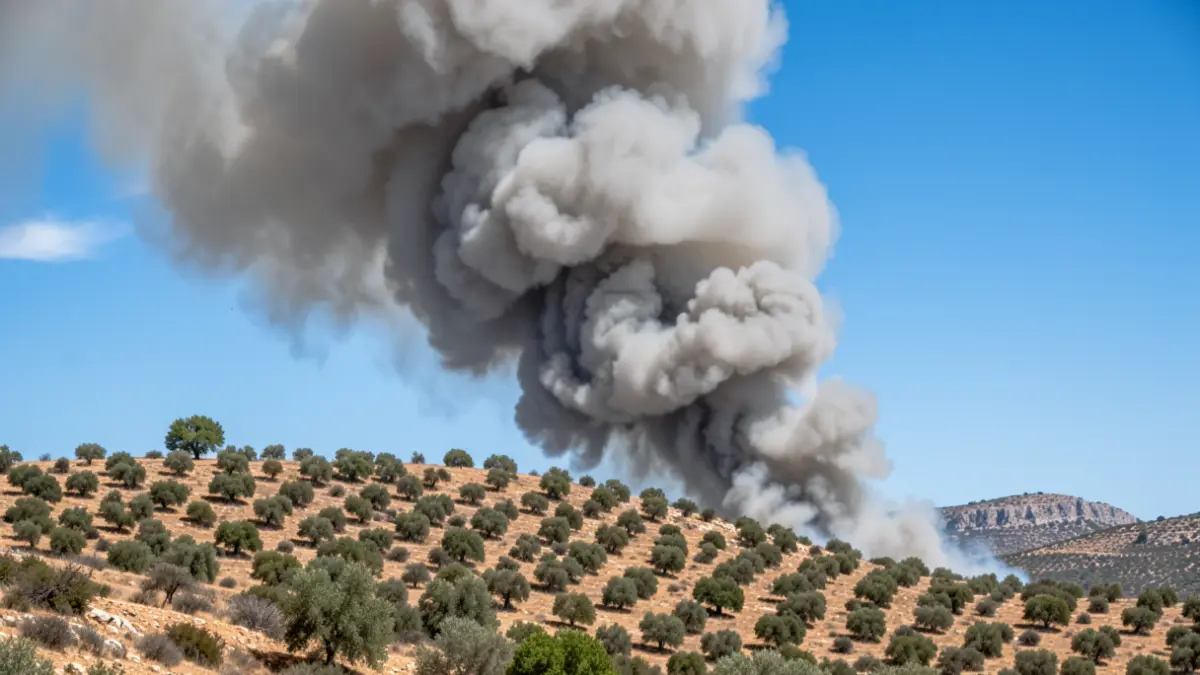
The fire began around 2:40 PM this Friday when a straw truck caught fire on the N-432 highway, within the municipality of Córdoba and close to Cerro Muriano. What initially seemed like a minor incident quickly escalated into a serious blaze as flames spread to the surrounding vegetation. Personnel from the Infoca Plan had to join forces to coordinate an operation that has resulted in one of the worst fires experienced in the Sierra de Córdoba in recent years.
The Guardia Civil proceeded to close traffic on the N-432 highway between Córdoba and Cerro Muriano. Nine aerial units from the Infoca Plan worked intensely to prevent the flames from reaching nearby homes. Authorities decided to preemptively evacuate the developments of Torreárboles and Villa Alicia, and surveillance was increased over the urban area of Cerro Muriano.
The primary concern focused on the population center of Cerro Muriano, as the flames advanced uncontrollably. The aerial units concentrated their efforts on directing the fire towards the west of Torreárboles, hoping for a decrease in wind intensity.
Given the fire's progression, the Junta de Andalucía, through the Minister of Presidency, Antonio Sanz, elevated the Infoca Plan in the province of Córdoba to an emergency level, operational situation 1. The public was urged to follow the instructions of emergency services, and the City Council opened the civic center of Cerro Muriano for those evacuated.
The advanced command post was established at the Feria parking lot in Cerro Muriano. The Infoca Plan increased its deployment with 70 ground personnel, five water trucks, and more aerial resources, in addition to a Medical Unit for healthcare assistance.
As night fell, the wind directed the fire towards Alcolea. The Infoca Plan reinforced ground resources, bringing the total to 145 personnel, eight water trucks, three bulldozers, the Medical Unit, and a Meteorology and Transmissions Unit. Air support also increased, with over 20 units including helicopters and small planes.
This incident is reminiscent of the 2025 fire at the Castillo de la Albaida, which burned 84 hectares and forced the evacuation of about five hundred people. That fire, which originated in a roadside ditch on the road to Trassierra, also spread rapidly due to dry vegetation after a rainy spring.
Authorities warn that the conditions following spring rains make the mountains and countryside particularly vulnerable, with abundant dry grass, increasing the risk of large fires with any spark, heat, and wind.