The intervention project will focus on the comprehensive restoration of the four-sided truncated pyramidal roof and the upper cylindrical lantern. The main objective is to resolve the leaks and dampness that have affected the structure and interior decorative elements, compromising the conservation of this historic space.
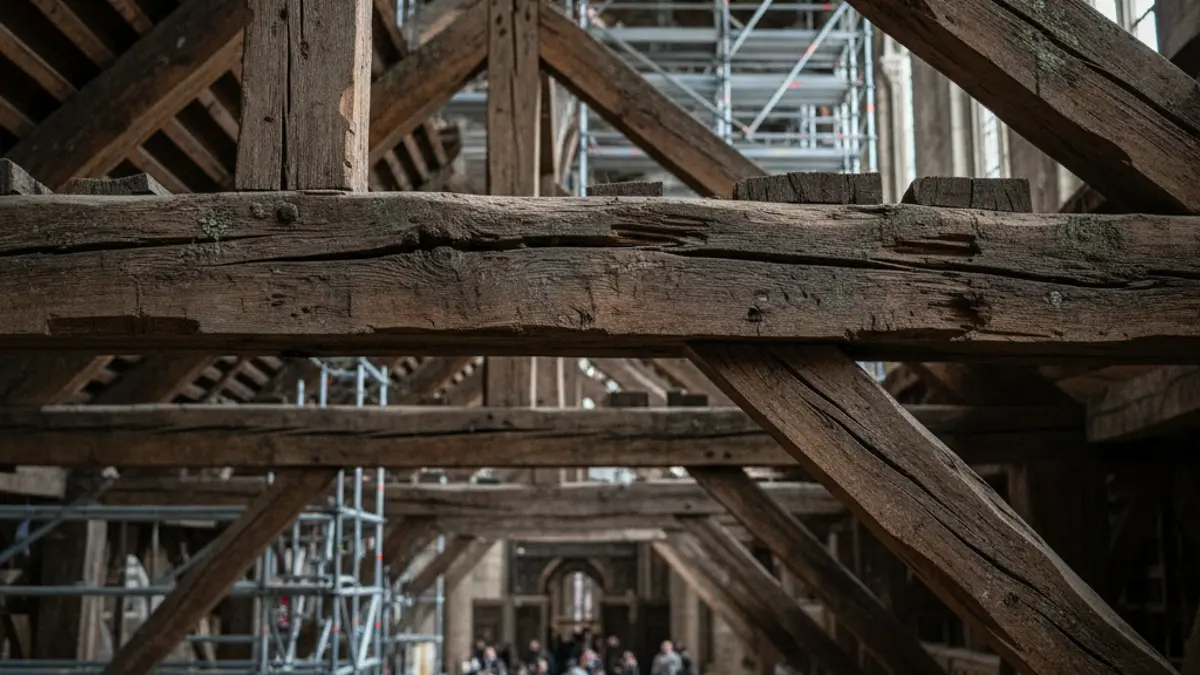
Previous studies have revealed the poor condition of the current structure, which shows attacks by wood-boring insects, cracks in the rafters, and inadequate constructive joints. These factors have contributed to the appearance of leaks and dampness, making the intervention urgent.
The action includes the replacement of the wooden structure, reusing elements in good condition and using squared pine wood for the rest, adjusted to structural calculations. The aim is to improve the design of the joints, reduce the number of rafters, and incorporate reinforcements in the upper ring. Additionally, the new structure will be separated from the historic brick vault, and fire prevention and biological attack protection treatments will be applied.
The intervention also covers the replacement of the wooden board, the plaster carpet, and traditional ceramic tiles, as well as the placement of lead elements at singular joints to ensure waterproofing. Resurfacing work with lime mortars and finishes compatible with historical materials will also be carried out. During the execution of the works, an auxiliary structure will be installed to prevent water entry.
“"The Provincial Heritage Commission also requests a series of prescriptions and recommendations, including the detailed definition of the joint with the Cardinal Salazar Chapel, the correction of certain project plans, the reuse of wooden elements where possible, the protection of the wall crowning by the overhang of the tile, and the execution of the works with archaeological control."
The Junta de Andalucía has required notification of the start of the works and, once completed, the submission of a comprehensive technical report with graphic and photographic documentation of the process and final result.
The Santa Inés chapel, founded in the 14th century and with a second foundation in the late 15th century, is located in the southern area of nave 10, next to the Cardinal Salazar Chapel and near the qibla wall. Its current configuration is the result of an intervention carried out in the late 18th century by the French architect and sculptor Baltasar Dreveton. The space features a quadrangular plan, a brick dome on pendentives with plasterwork ornamentation and an upper lantern, as well as a notable red and black jasper altarpiece and a grille designed by Hernán Ruiz III.