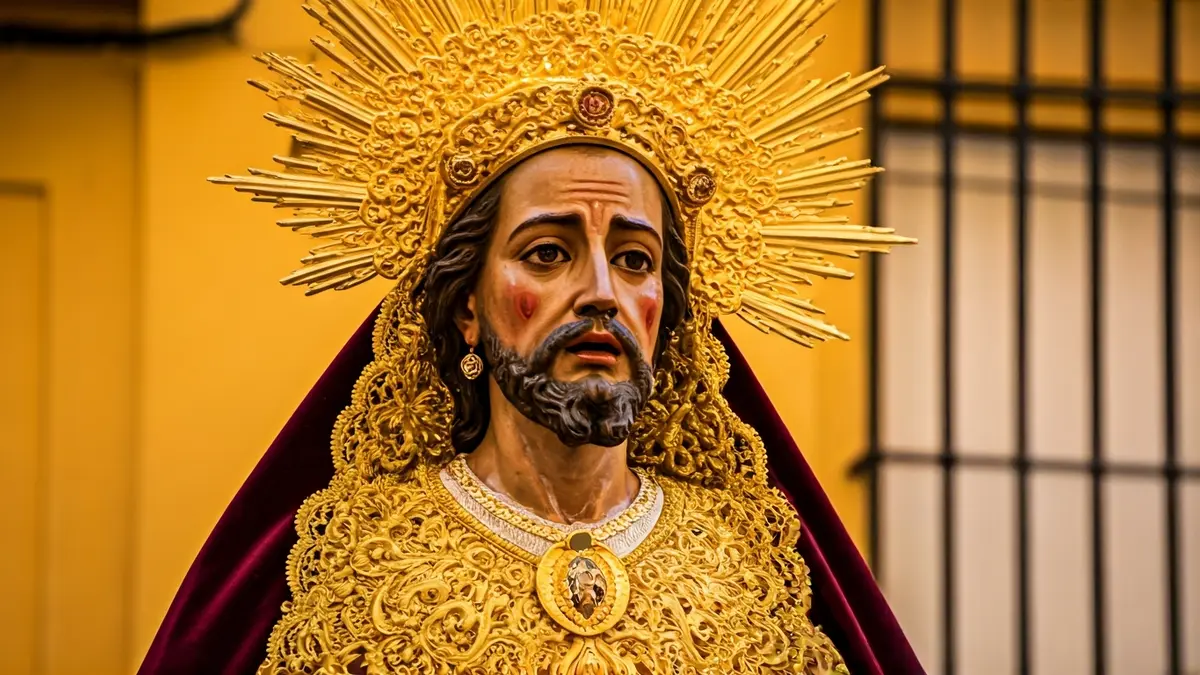
This polychrome wooden sculpture, of anonymous authorship and dating from the late 17th century, is traditionally linked to the Sevillian school, as noted by the IAPH. Experts from the institution will conduct the necessary studies to develop a detailed conservation project before any intervention begins.
The reception ceremony for the image of the Lord of the Passion, held this Monday, was attended by Juan José Primo Jurado, general director of the IAPH, the technical team of the Intervention Center, and Manuel Díaz, elder brother of the brotherhood, along with other representatives.
The image was removed from worship just after Holy Week. During its absence, María Santísima del Amor will preside over the chapel in the parish of San Basilio, accompanied by San Juan Evangelista. The brotherhood has stated that the return of the Lord will occur "as soon as possible" once the work is completed.
It is believed that the image was commissioned by Fray Juan de Alvear at that time. Historians such as Juan Aranda Doncel have attributed it to the imagery of the Sevillian school of the 17th century, as detailed in the historical description of the Holy Wednesday corporation.
The image of Nuestro Padre Jesús de la Pasión was part of the titular images of the extinct brotherhood of La Paz, which was based in the convent of the Basilios, the current canonical seat of the brotherhood, and which disappeared after the exclaustration of the monks in 1835.
Throughout the 20th century, after its inclusion in the newly founded brotherhood of Pasión in 1939, the Lord underwent several restorations. The first, which most altered its original appearance, was carried out by Juan Martínez Cerrillo in 1941, who removed its natural hair and carved a wooden one, along with a crown of thorns of the same material.
In 1983, Miguel Arjona performed another restoration, covering the original polychromy. Finally, in 2002, the image regained its splendor thanks to a restoration carried out by the Cordoban sculptor Antonio Bernal.