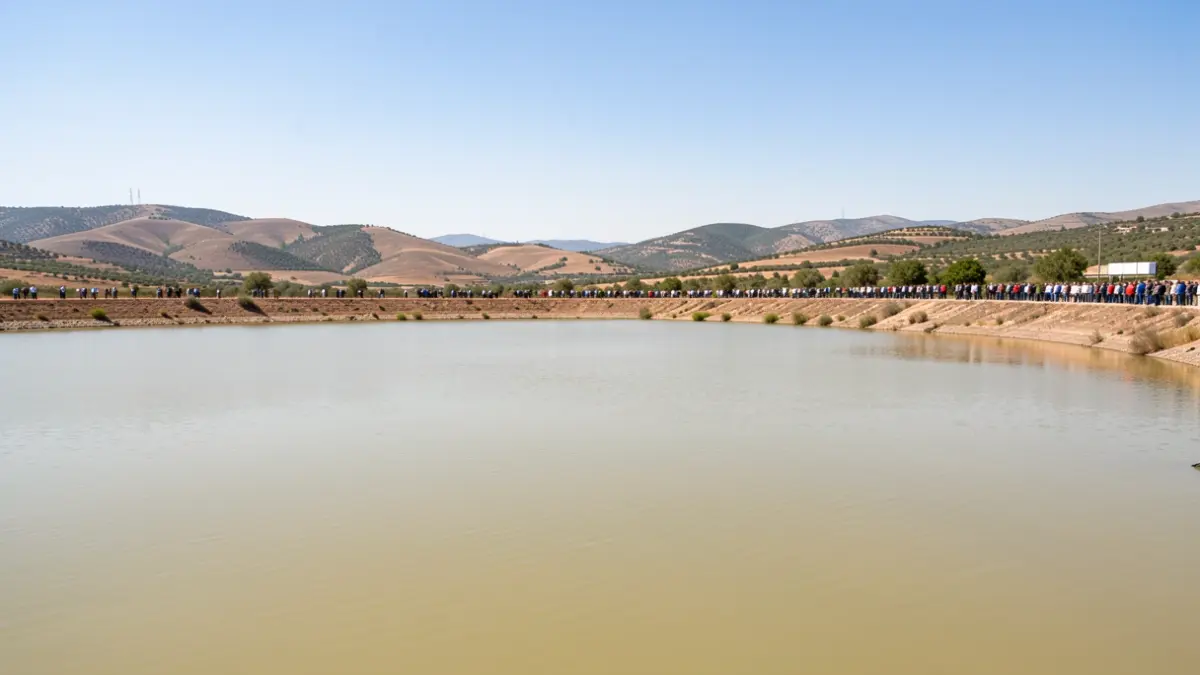
Although the water quality in the La Colada reservoir has improved, the total organic carbon (TOC) levels currently stand at 14 milligrams per liter. This figure represents half of the 44 mg/l recorded in 2022, but still exceeds double the admissible limit for human consumption, which is 5 mg/l (considered unfit from 7 mg/l upwards).
TOC refers to the presence of carbon in water, which can make it toxic. In this instance, it was identified that the source was an accumulated algae that, through its activity, generated this element. The situation became so critical that water tanker trucks were used to supply residents in the El Guadiato and Los Pedroches regions, as tap water was unfit for drinking or cooking.
Since 2023, the Provincial Council of Córdoba has been working on treatments to improve the water's potability. The identification of the algae causing the problem and the implementation of corrective measures appear to be yielding results, as indicated by the decrease in TOC.
The recent decision by the Regional Government of Andalusia to lift the swimming ban in the reservoir is due to the less stringent parameters required for bathing, focusing primarily on microbiological aspects such as Escherichia coli and intestinal enterococci, as well as monitoring for cyanobacteria or oils.
For water to be considered fit for human consumption, it must meet a wide range of physical and chemical parameters, according to Royal Decree 3/2023, and undergo all potabilization processes. The Regional Government of Andalusia believes that the improvement in water quality at La Colada, along with winter rains, reinforces the need to connect this reservoir with Sierra Boyera, which supplies the region but faces low-capacity issues.
The regional administration insists that it is crucial to utilize available water resources like La Colada, which can be treated, to ensure supply in the face of future droughts. The improvement in TOC levels, also influenced by increased rainfall in recent months, could determine if this reservoir can be a vital support for northern Córdoba province, a connection that the Guadiana Hydrographic Confederation has repeatedly rejected.