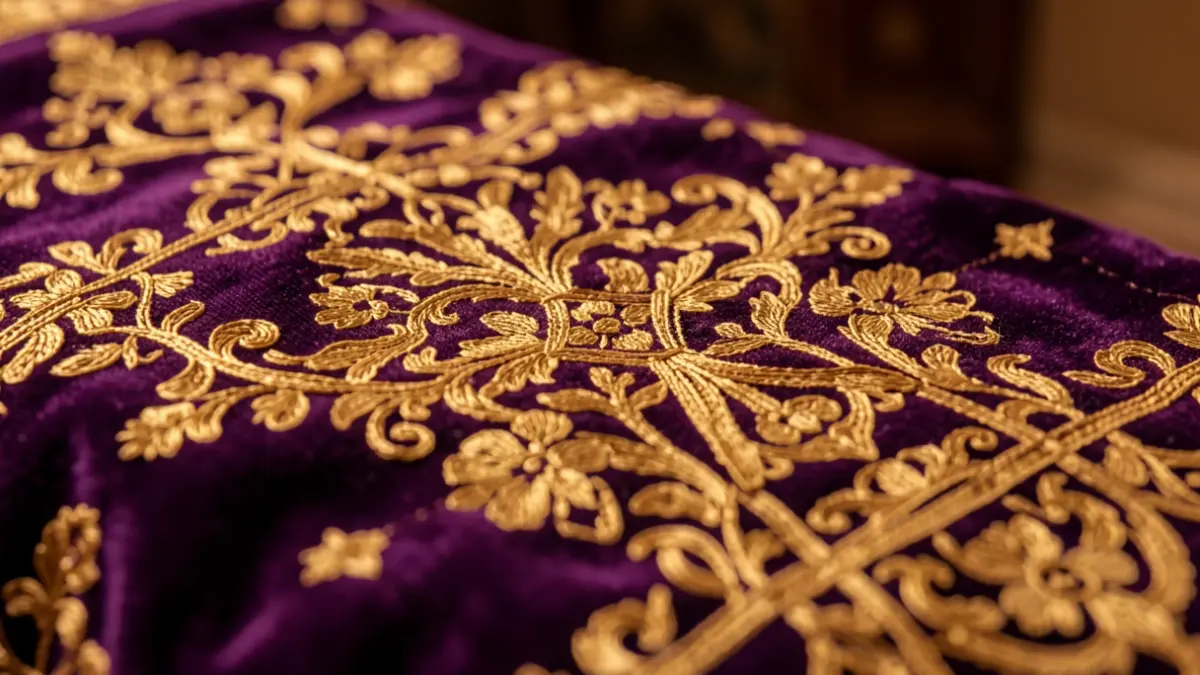
The use of these garments, characterized by rich gold thread embroidery and sequins on velvet, aims to highlight the royalty of the sacred images. The trend began with the Jesús del Calvario brotherhood, which pioneered the adaptation of a late 18th-century caftan, acquired by devotees from an antique dealer and donated to the brotherhood in 2014.
Ottoman embroidery technique differs from European styles through its floral and geometric motifs, crafted with gold threads on luxurious fabrics. According to experts, these pieces were status symbols in the Sultan's court and among the Eastern aristocracy, adding unique historical and artistic value to the Cordovan processions.
“"It was a status symbol used by the Sultan's court, the aristocracy, and wealthy families. They were embroidered with the technique we know as cardboard embroidery or laid thread with floral motifs, leaves, roses, and geometric patterns."
In recent years, other brotherhoods such as La O, El Amor, and the Perdón brotherhood have followed this path. In the case of the Señor del Silencio, the decision was made to reinterpret the original design, transferring the antique embroidery onto a new gold tissue fabric, a task carried out by local workshops to preserve the integrity of the historical pieces.