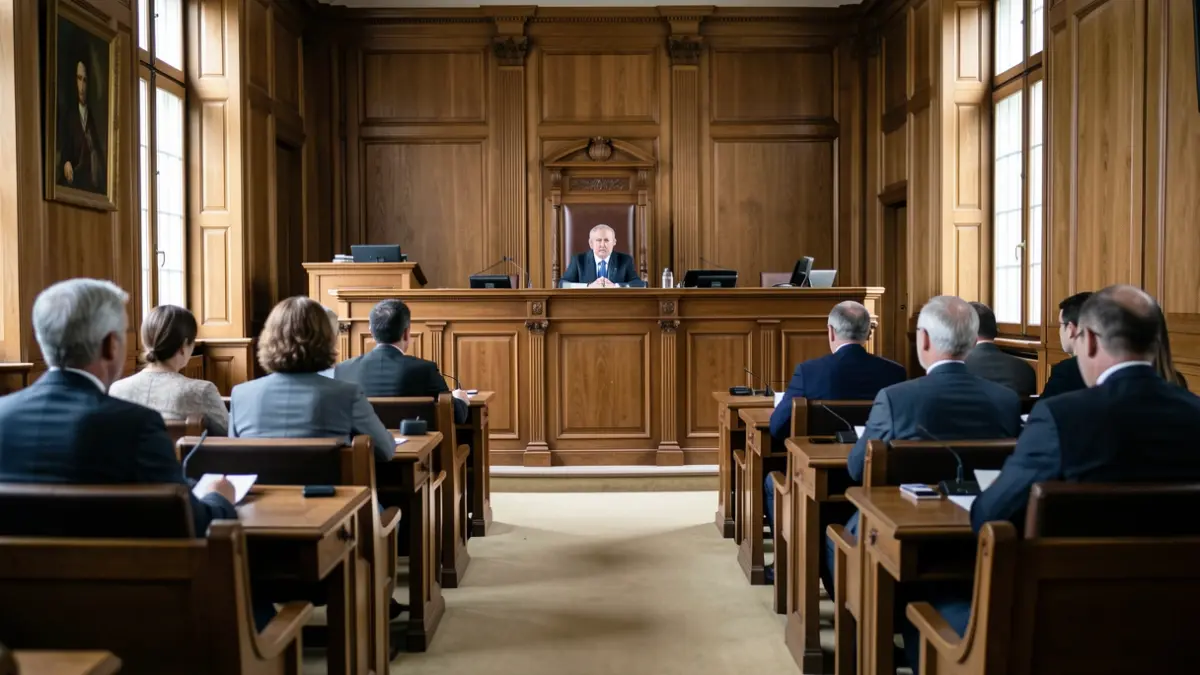
In the seventh session of the trial, Carlos González, along with his son Alejandro González and other defendants, testified for the first time. The former club owner stated that every questioned operation was properly accounted for and never received any reproach from control bodies.
González recounted that he assumed the club's sporting management entirely, even after handing over the presidency to his son in 2016, a decision he attributed to threats. He explained that the club, bought in 2011 in "technical bankruptcy," was sustained by his other companies, and that subsequent invoices reflected services rendered and his work as an external advisor.
Countering the accusation of ruinous management, he highlighted the club's greatest historical successes, including promotion to the First Division and the strong performance of the youth academy. "It was the best season in Córdoba's history," he affirmed, defending that the contracts were investments that yielded results.
González's defense focused on the legality of each operation, asserting that neither auditors, LaLiga, the Superior Sports Council, nor shareholders ever raised objections. This included dividend distribution, credit card expenses as representation gifts, and the security of his Madrid home, which he claimed was necessary due to death threats and installed on police recommendation.
The other defendants supported Carlos González's account. His son Alejandro González, former president, stated he only assumed "social representation" while his father continued to manage the club. Francisco Javier Jiménez Sacristán, González's right-hand man, defended his credit card expenses as "ridiculous" and for representation. Álex Gómez Comes and Andrés Delgado presented themselves as figures without real decision-making power, while FIFA agent Salvador Sánchez defended the profitability of his work in player signings and sales.
The final expert witnesses, from BDO and the Superior Sports Council, testified that their work was limited to pointing out relevant facts without using the term "irregularity," and that the dividend distribution, though deemed inadequate given the club's economic situation, was not invalidated as it was outside their jurisdiction.