The Railway Infrastructure Administrator (Adif) has issued a statement in response to the recent Civil Guard report on the railway accident that occurred in Adamuz. According to Adif, the voltage drop detected on the track 22 hours before the incident, which fell from 2.2 to 1.5 volts, did not necessarily indicate a rail break. The entity emphasizes that the threshold for activating an alert for track circuit occupancy is one volt, a figure higher than that recorded in this case.
Sources from Adif have clarified that track circuits are primarily designed to determine the position of trains and prevent collisions, not to detect fractures in the rails. This technical distinction is crucial for understanding the limitations of current detection systems and the interpretation of data prior to the accident.
Track circuits are not a system for determining rail breakage, but an exclusive system for determining the positioning of a train.
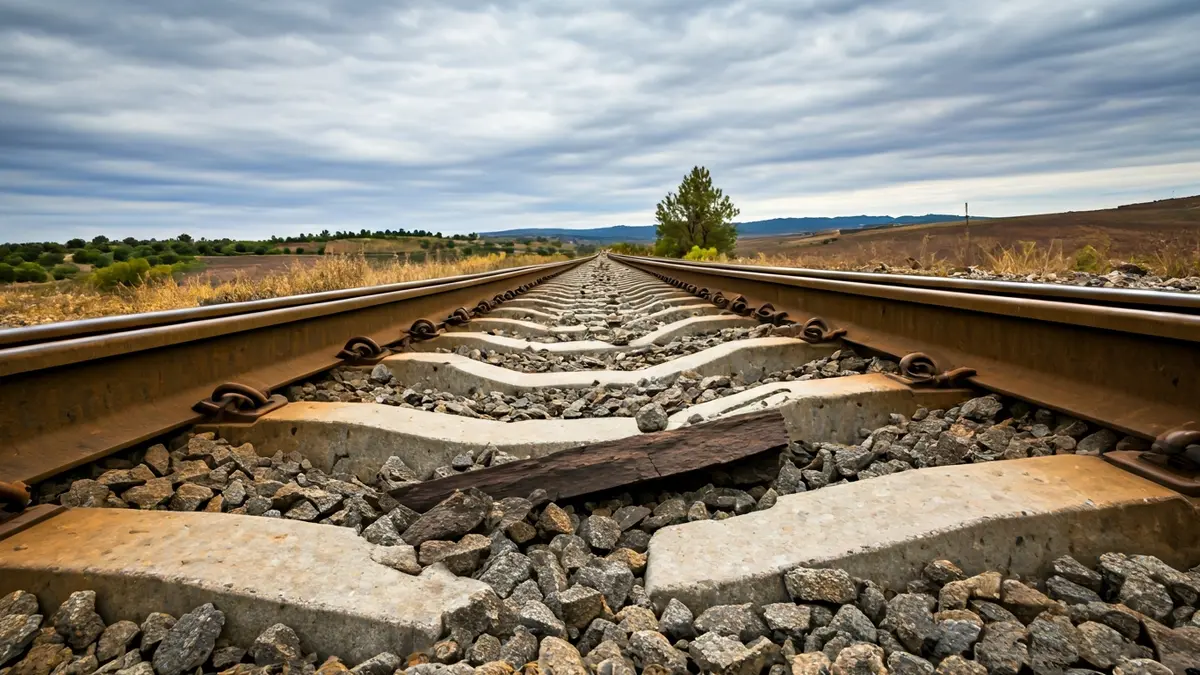
In contrast, the Civil Guard's report, submitted to the Montoro (Córdoba) Investigating Court, confirms the track breakage 22 hours before the derailment of the Iryo train and its subsequent collision with the Alvia. This police conclusion places the rail or weld breakage as the main line of investigation, ruling out sabotage, terrorism, or negligence by the train drivers.
The Benemérita's report also points to irregularities in the execution of welds, mentioning possible malpractice or the improper use of welding kits. It is noted that, according to Adif's regulations, the R260 strength weld should have been applied to the joining of used and new coupons, but an erroneous kit, the '350HT', was used. A correction of errors signed by a welding inspector dated January 29, 2026, attempts to justify this discrepancy, although it has raised suspicions among investigators.
Furthermore, it has been detected that no welding inspectors were present during the execution of the work, a circumstance that, if definitively confirmed, would constitute a serious irregularity in the safety protocols established for this type of critical work in railway infrastructure. The CIAF has also warned about inconsistencies in the documentation, such as the validity of signatures and the version control of the submitted documents.
Separately, the judge in Montoro has denied the parties involved access to the remains of the Alvia train until independent judicial experts are appointed. She has also rejected the request from the Railway Accident Investigation Commission (CIAF) to access the wagons, arguing that photographic evidence from the ocular inspection is already available and is sufficient for the investigation.