The collaboration agreement will enable the development of tools to anticipate water evolution in reservoirs and optimize drinking water treatment processes. The project, titled ‘Characterization and modeling of reservoir water masses and optimization of treatments in the province's ETAPs’, was presented by the president of the Provincial Council, Salvador Fuentes, and the rector of the UCO, Manuel Torralbo.
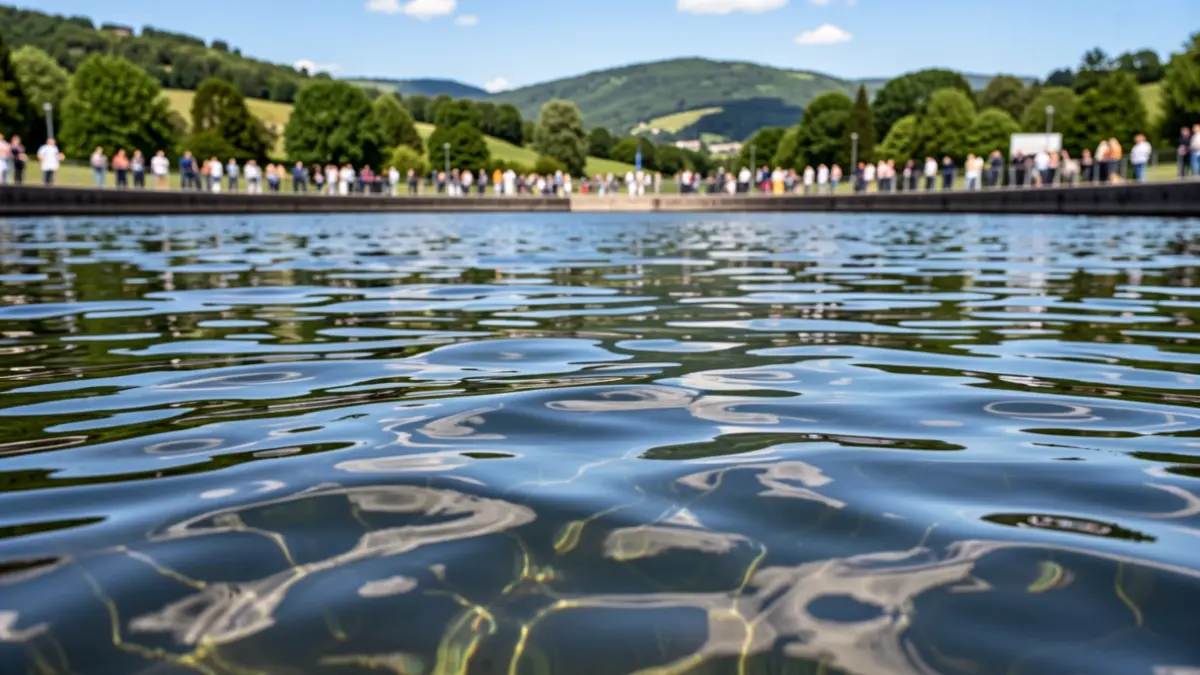
The research will focus on the Iznájar, Puente Nuevo, Sierra Boyera, and Martín Gonzalo reservoirs. It will analyze the characteristics of the feeding basins, the internal dynamics of the water masses, and their relationship with the processes at the Drinking Water Treatment Plants (ETAPs). Emproacsa serves approximately 370,000 users, driving the search for knowledge and prediction tools to address hydrological and environmental variability.
A key objective is to advance towards more predictive water management by developing models capable of simulating future scenarios, integrating environmental, hydrological, physico-chemical, and biological information. The results will inform predictive operational strategies and the use of technologies such as artificial intelligence, ultrafiltration, nanofiltration, partial reverse osmosis, and advanced oxidation processes.
This collaboration agreement, extendable to four years, aims to tackle the water challenge with the support of the UCO and the Polytechnic School of Bélmez. Rector Manuel Torralbo expressed gratitude for the ongoing collaboration with the provincial institution, highlighting its benefits for the citizens of Córdoba.
The research is structured into three phases: the first will analyze the hydrographic basins using geographic information systems, collecting environmental, climatic, and cartographic data. The second phase will characterize the reservoirs through a sampling network and laboratory analysis to study water distribution and internal processes. The third phase will apply the findings to water potabilization, examining ETAP operations and treatment responses to varying water conditions.