The Sevillian paths of Doñana attract thousands of travelers each year, fascinated by its biodiversity. Beyond the search for the Iberian lynx, the sky is filled with life due to the presence of numerous migratory and resident bird species, such as black-winged stilts, great crested grebes, kites, and glossy ibises. This territory, located on a key migratory route between Africa and Europe, offers a vital refuge for millions of birds annually, with around 400 species recorded.
Initiatives promoted by the Provincial Council of Seville, through Prodetur, have highlighted the natural wealth of municipalities such as Pilas, focused on active and sustainable tourism; Villamanrique de la Condesa, with horses as a central theme; and La Puebla del Río, centered on birdlife. These events aim to showcase diverse and extensive natural heritage, promoting controlled and environmentally respectful tourism.
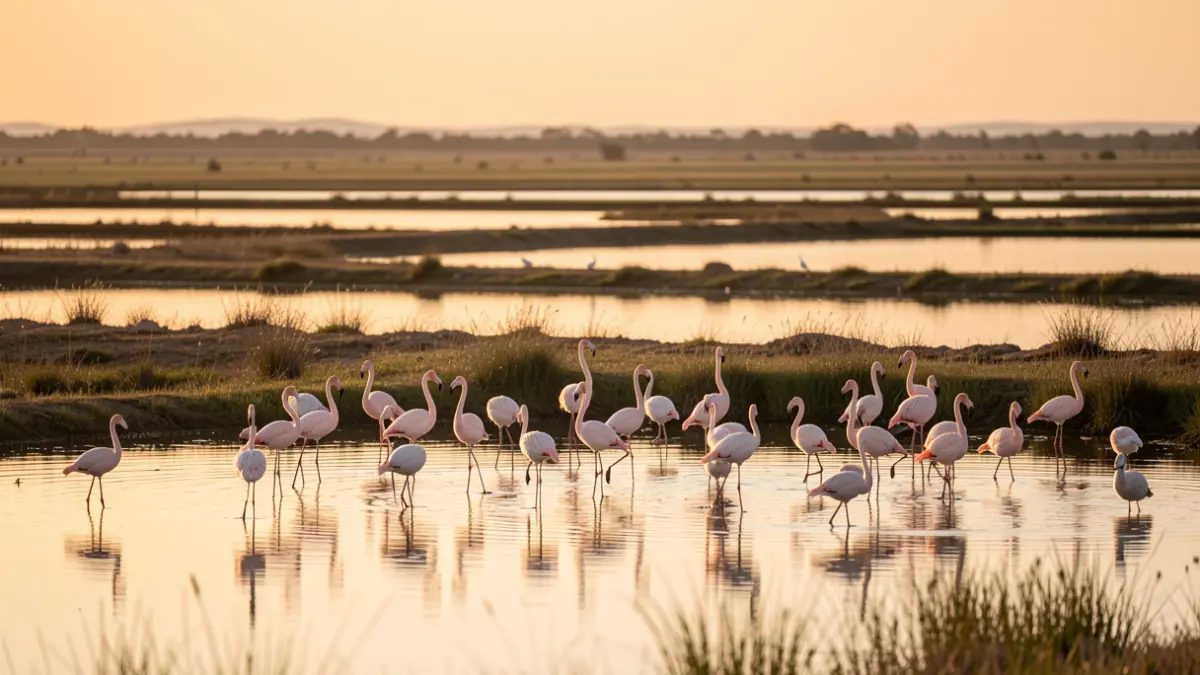
Aznalcázar, Isla Mayor, La Puebla del Río, Pilas, and Villamanrique de la Condesa are towns that invite contemplation of the sky and its birdlife. The rice paddies, particularly extensive in La Puebla del Río, the largest in Spain, are a major draw for birds. The diversity of landscapes, from marshes to the arms of the Guadalquivir River, offers unique opportunities for observing herons, kites, and flamingos.
Isla Mayor, formerly known as El Puntal, and the nearby Isla Mínima, immortalized in film, are examples of landscape transformation linked to rice cultivation and the influence of the Guadalquivir River. The water surface in the rice paddies creates a spectacle of color that changes with the seasons.
A notable natural enclave is the Dehesa de Abajo in La Puebla del Río. This municipal estate houses the Rianzuela lagoon, a catalog of birds where ducks, flamingos, and anseriformes find a safe refuge. Storks, with their nests full of chicks, are sentinels of the sunset in this natural environment.
Nature tourism is complemented by gastronomy, as seen at Ardea Purpurea in Villamanrique de la Condesa, offering dishes like salads and rice dishes in harmony with the surroundings. Stargazing is another highlighted activity in Doñana, with residents like Elena Comasni dedicated to sharing knowledge about the firmament.
Nature tourism has become a way of life for many residents. Companies like Tartessian Birds, run by Amadeo Quiñones in La Puebla del Río, are dedicated to highlighting the natural and historical heritage of the Doñana natural space, observing a growing interest from the Spanish public. La Cañada de Los Pájaros, a private initiative that transformed a landfill into a wetland, also hosts thousands of wintering birds and works on the reproduction of endangered species.
The Guadalquivir River has shaped the landscape of Doñana over time, with numerous modifications to improve its navigability. Sailing through sections like the one from Coria to La Puebla del Río allows for an understanding of the river's historical importance and its influence on the landscape, with vestiges such as ancient brick kilns and the Torre de los Herberos.
The company Suravante, promoted by merchant marine officer Francisco Rodríguez Roldán, offers sailing experiences that combine history and enology, including their orange wine made with local oranges. The area also stands out for its quality wine production in wineries like Alcarria, in Bollullos de la Mitación.
The integration of life and territory is evident in the construction of towers to house birds and bats, such as those located in Coria del Río and La Puebla del Río. These structures, designed for natural mosquito control and combating the Nile virus, demonstrate an innovative approach to coexistence with the environment.