The campaign to restore the Guadix-Baza-Lorca railway line has gained new support. The 'Mesa por la reapertura del tren' (Committee for the reopening of the train) will request the Spanish Government to conduct a new feasibility study, following a report from the University of Granada (UGR) that identified significant deficiencies in the previous analysis which led to the line's recovery being ruled out.
The study, coordinated by Professor of Financial Economics and Accounting, Andrés Navarro Galera, was presented at the Hospital Real. During the same event, the UGR formalized its membership in the 'Mesa del tren', an alliance promoted by the Provincial Council of Granada and supported by administrations, city councils, business organizations, and railway groups from Granada, Almería, and Murcia.
Navarro explained that the study's objective was not to advocate for a specific stance on the reopening, but to critically analyze the conclusions of the study commissioned by the Ministry of Transport. According to him, the ministerial report presents "improvable" aspects and does not offer a sufficient basis to definitively rule out the line's recovery. "We don't know if the line is viable or not, because the previous study does not allow for a definitive conclusion," summarized the head of the university's analysis.
One of the main arguments in the UGR's report is that the ministerial study focused primarily on traditional economic parameters, without adequately incorporating other factors that are now essential in infrastructure planning. These include the social benefits of improved connectivity, the fight against depopulation, enhanced access to employment and public services, as well as the environmental advantages of rail transport over road transport.
Navarro recalled that the previous analysis used demand, mobility, and socioeconomic data from years prior to the pandemic, and did not consider recent regulatory and strategic changes in Spain and the European Union. He highlighted that the Spanish Government has made commitments to increase freight rail transport and move towards sustainable mobility models, objectives that, in his view, were not adequately considered in the evaluation.
The report also indicates that rail generates significant social savings related to reduced pollutant emissions, lower road accident rates, decongestion of roads, and reduced maintenance costs for road infrastructure.
The 'Mesa del tren' considers that the UGR's research demonstrates the need for a new assessment incorporating updated criteria and a broader view of the railway corridor's strategic role. The university study maintains that any future analysis must jointly consider economic, social, environmental, and territorial variables, in addition to aligning with national and European sustainable mobility strategies.
For Navarro, the goal is to identify areas for improvement to obtain a more accurate picture of the infrastructure's true potential. He argued that reopening the line could become a development tool for large areas in northern Granada, Almería, and the Region of Murcia, fostering population retention and generating economic opportunities.
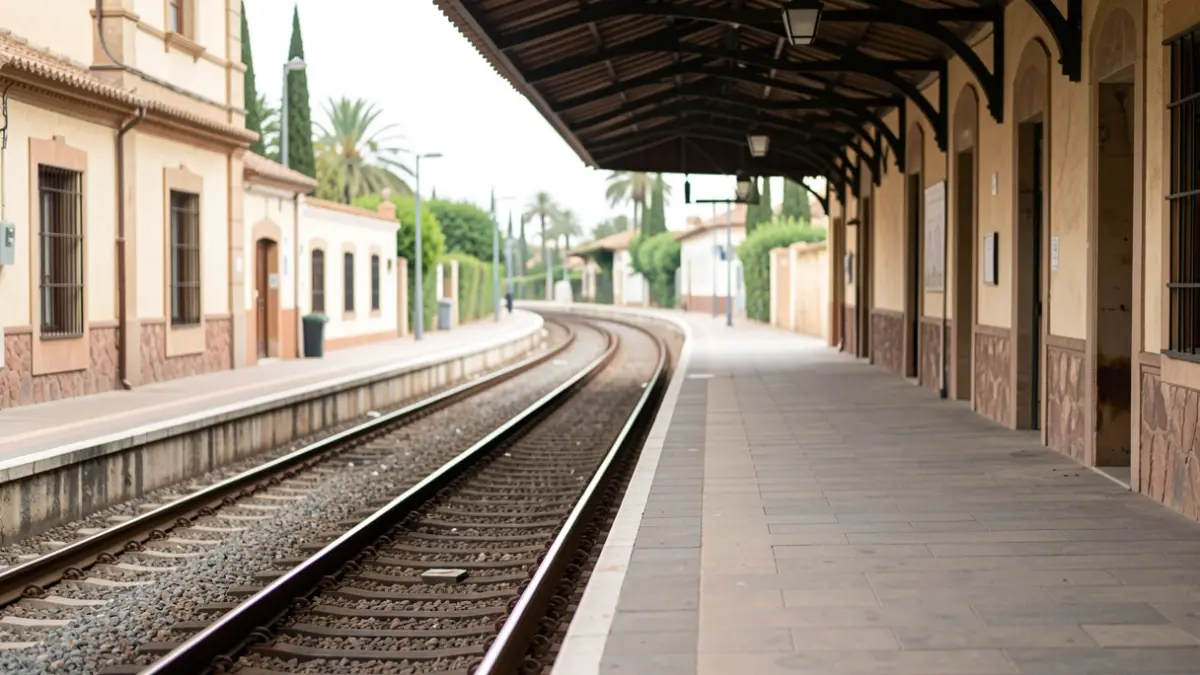
The UGR's involvement reinforces a long-standing demand. The Guadix-Baza-Lorca line has been closed since December 31, 1984, and has been the subject of continuous calls for its reopening. The president of the Provincial Council of Granada, Francis Rodríguez, who promoted this institutional alliance, has defended the corridor's recovery as a strategic infrastructure. The 'Mesa' now intends to convey to the Spanish Government the need to reconsider the situation and promote a new study.