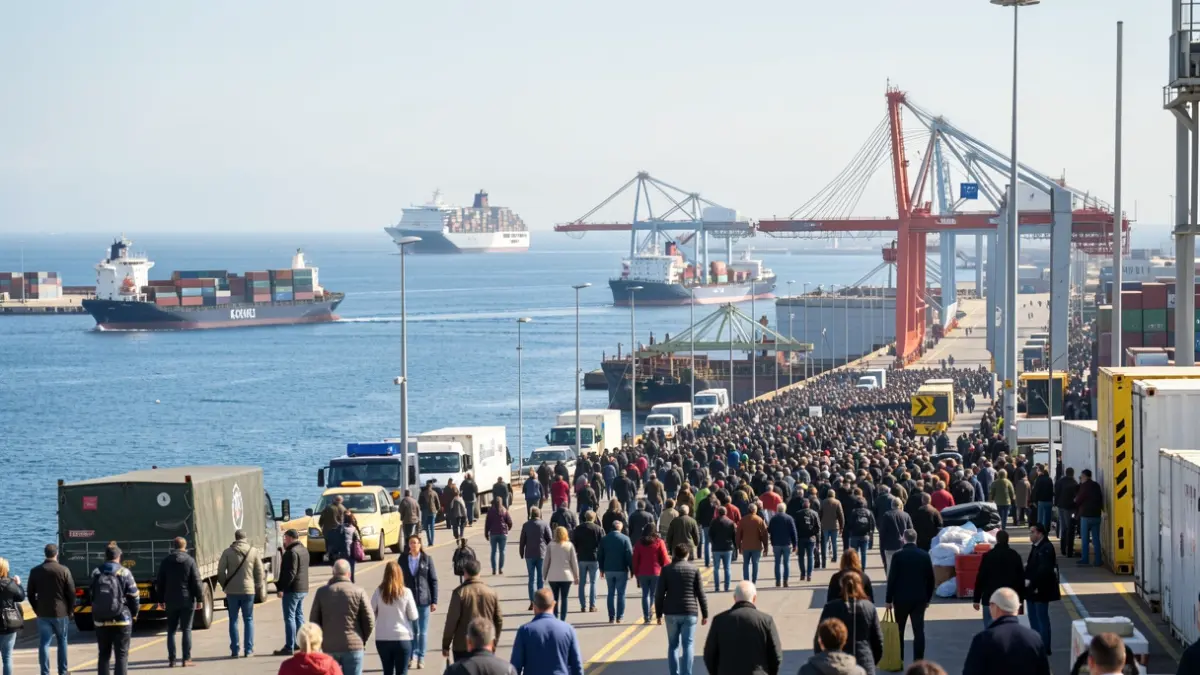
The situation in Ceuta, marked by the massive arrival of migrants from Morocco, is not confined to the autonomous city. The Campo de Gibraltar faces the consequences of this emergency, acting as a key logistical hub for managing the arrival of people to the Peninsula.
The Port of Algeciras is fundamental to this operation. When Ceuta's reception capacity is exceeded, adult migrants are transferred by ferry to Algeciras. There, the Red Cross coordinates health care, the delivery of basic supplies, and their subsequent referral to reception centers in other autonomous communities.
This migratory crisis also increases pressure on the State Security Forces and Corps in the region. The Guardia Civil and the National Police participate in the custody of transfers and port security. There is concern that human trafficking organizations might redirect their routes towards the coasts of Tarifa or Algeciras if access to Ceuta becomes more difficult, which would require increased police presence on the coastline.
The care of unaccompanied foreign minors is another major concern. While adults are transferred to other parts of Spain, minors remain under administrative guardianship. Ceuta is already operating with emergency resources for hundreds of minors, and if pressure grows, Andalusia may have to redistribute them, particularly affecting Campo de Gibraltar, where specific resources are already highly occupied.
The situation has revived the debate on the need to reinforce human and material resources for the control of the Strait. Institutional representatives and professional organizations are requesting more personnel for the Guardia Civil, Maritime Rescue, and humanitarian aid services, as well as greater state coordination to prevent Campo de Gibraltar from becoming a logistical bottleneck.