AlmeríaCádizCórdobaGranadaHuelvaJaénMálagaSevillaAlpujarra AlmerienseLos VélezComarca Metropolitana de AlmeríaFilabres-TabernasLevante AlmeriensePoniente AlmerienseValle del AlmanzoraBahía de CádizCampiña de JerezCampo de GibraltarCosta NoroesteLa JandaSierra de CádizAlto GuadalquivirCampiña de BaenaCampiña Sur CordobesaLos PedrochesCórdoba (comarca)SubbéticaValle del GuadiatoValle Medio del GuadalquivirAlpujarra GranadinaComarca de AlhamaComarca de BazaComarca de GuadixComarca de HuéscarComarca de LojaCosta GranadinaLos MontesValle de LecrínVega de GranadaEl AndévaloEl Condado de HuelvaCosta OccidentalCuenca MineraComarca Metropolitana de HuelvaSierra de HuelvaÁrea Metropolitana de JaénCampiña de JaénEl Condado (Jaén)La LomaSierra de CazorlaSierra MáginaSierra MorenaSierra de SeguraSierra Sur de JaénLas VillasComarca de AntequeraLa AxarquíaGuadaltebaCosta del Sol OccidentalMálaga Costa del SolNorormaValle del GuadalhorceSerranía de RondaSierra de las NievesAljarafeBajo GuadalquivirCampiña de CarmonaCampiña de Morón y MarchenaComarca de ÉcijaComarca Metropolitana de SevillaSierra Norte de SevillaSierra Sur de SevillaVega del GuadalquivirAlmeríaCádizCórdobaGranadaHuelvaJaénMálagaSevillaAlpujarra AlmerienseLos VélezComarca Metropolitana de AlmeríaFilabres-TabernasLevante AlmeriensePoniente AlmerienseValle del AlmanzoraBahía de CádizCampiña de JerezCampo de GibraltarCosta NoroesteLa JandaSierra de CádizAlto GuadalquivirCampiña de BaenaCampiña Sur CordobesaLos PedrochesCórdoba (comarca)SubbéticaValle del GuadiatoValle Medio del GuadalquivirAlpujarra GranadinaComarca de AlhamaComarca de BazaComarca de GuadixComarca de HuéscarComarca de LojaCosta GranadinaLos MontesValle de LecrínVega de GranadaEl AndévaloEl Condado de HuelvaCosta OccidentalCuenca MineraComarca Metropolitana de HuelvaSierra de HuelvaÁrea Metropolitana de JaénCampiña de JaénEl Condado (Jaén)La LomaSierra de CazorlaSierra MáginaSierra MorenaSierra de SeguraSierra Sur de JaénLas VillasComarca de AntequeraLa AxarquíaGuadaltebaCosta del Sol OccidentalMálaga Costa del SolNorormaValle del GuadalhorceSerranía de RondaSierra de las NievesAljarafeBajo GuadalquivirCampiña de CarmonaCampiña de Morón y MarchenaComarca de ÉcijaComarca Metropolitana de SevillaSierra Norte de SevillaSierra Sur de SevillaVega del Guadalquivir

Algeciras, Epicenter of Moroccan Migrant Regularization in Spain

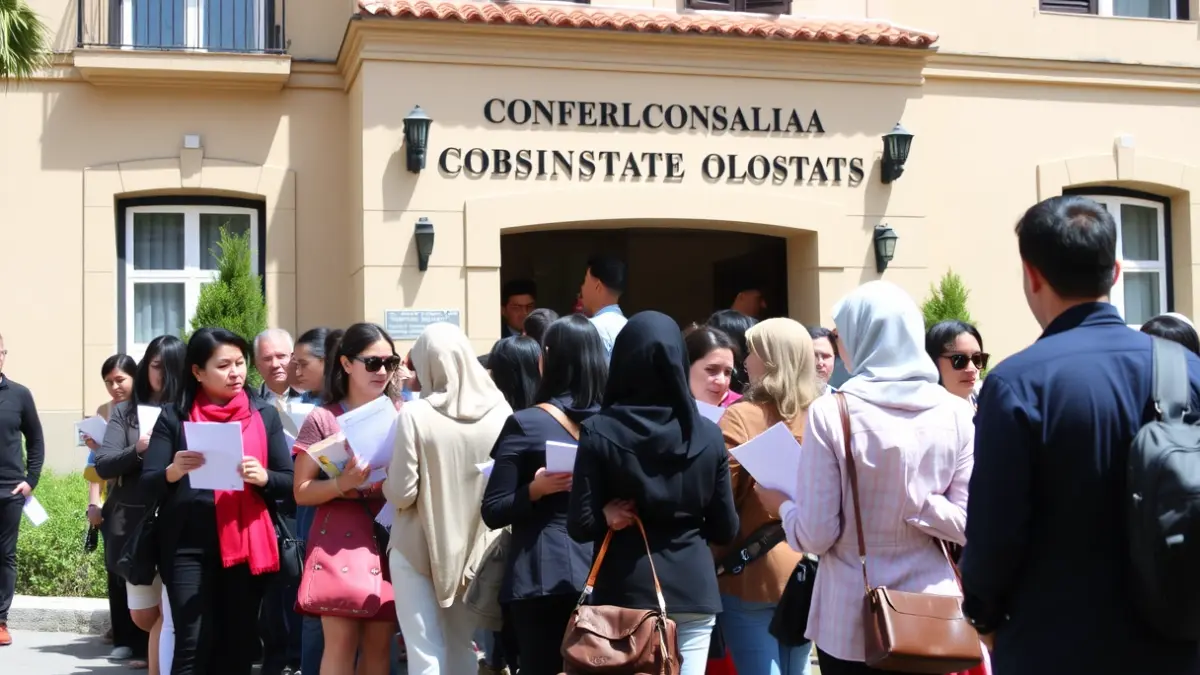
Dozens of people gather at the Moroccan Consulate to expedite procedures amidst the extraordinary regularization process launched by the Government.

Image of people queuing in front of a consulate holding documents.
IA

Image of people queuing in front of a consulate holding documents.

The city of Algeciras has become a focal point for the regularization of Moroccan citizens, with long queues at the Moroccan Consulate and immigration offices, reflecting the local impact of the new initiative by the Spanish Government.

Images of people holding forms and with appointments booked weeks in advance are common in Algeciras, where approximately 10,000 of its 123,000 inhabitants are of Moroccan origin with regularized status. This reality highlights the city's importance as a strategic enclave in Andalusia, given its proximity to North Africa and the centrality of the Port of Algeciras in the commercial routes of the Strait.
The mass regularization process, promoted by the Spanish Government, aims to expand avenues for legal residency for irregular migrants. The main objective is to reduce the underground economy and strengthen social cohesion. The proposal, still subject to political debate, considers regularizing over 500,000 people already established in the country.
To qualify for this regularization, applicants must meet requirements such as proving continuous residency for at least five months from January 1, 2026, having no criminal record, and demonstrating employment or social ties. The Executive defends the measure as a pragmatic response to demographic and labor market needs.

The Executive defends the measure as a pragmatic response to demographic and labor market needs, while the opposition, especially the Popular Party and Vox, has expressed criticism focusing on the 'pull factor,' the management of migratory flows, and integration capacity, opening an intense debate on the balance between border control and inclusion policies.

Labor mobility and migration have been structural elements in the Algeciras region for decades. The constant transit of workers, students, and families between both sides of the Strait has shaped a complex social fabric, where the Moroccan community is fundamental in sectors such as port logistics, construction, hospitality, and services. Any regularization initiative has a direct impact on the local economy, not only through the formalization of the labor market but also by stabilizing personal situations that previously operated informally.
The geographical position of Algeciras is key to understanding its demographic reality. The Strait of Gibraltar acts as both a border and an economic and human bridge between Europe and Africa, making the city a point of arrival, transit, and settlement for migrant populations. The Moroccan community represents a significant percentage of the population, estimated at 8.1% of inhabitants, and is an integral part of the municipality's economic and social functioning.
State-level regularization policies face their real stress test in cities like Algeciras, where administrative decisions have immediate consequences on the social and economic fabric. The balance between integration, social cohesion, and the sustainability of public services emerges as one of the major challenges for the coming years in this city, which continues to be a meeting point between two continents.