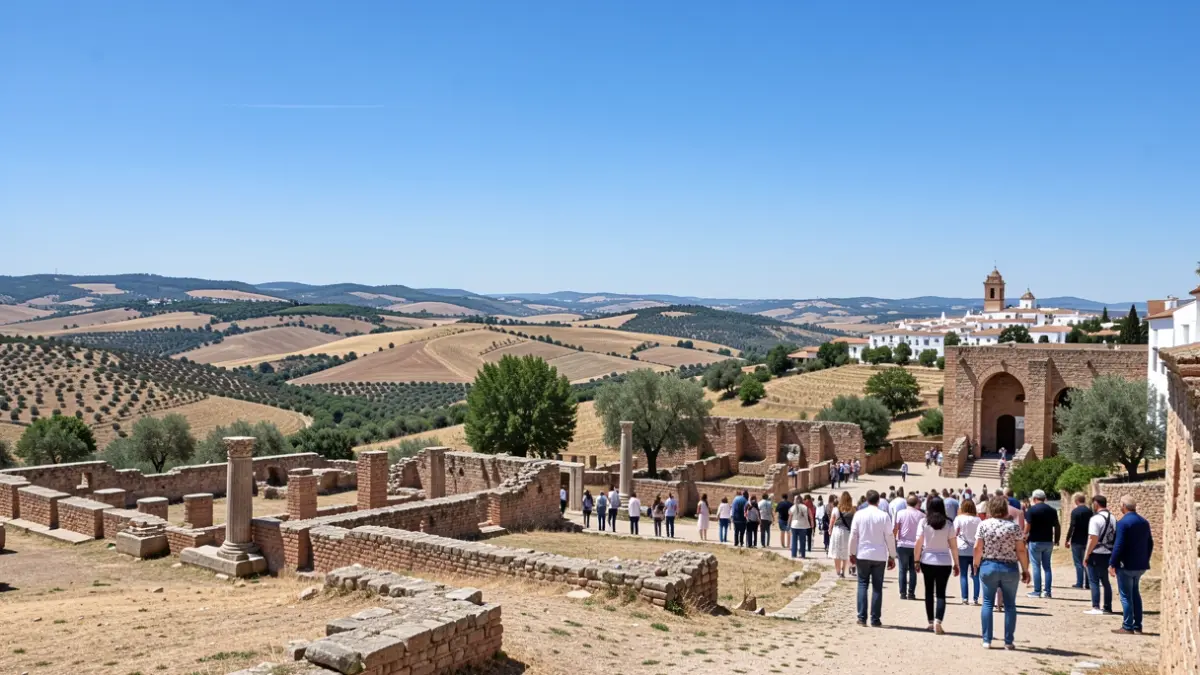
The proceedings, published by the University of Seville, compile the twenty lectures presented at the congress. These conferences explore, from various scientific perspectives, the value of Carmona's cultural landscape, a central element in the strategy to achieve World Heritage recognition from UNESCO.
The publication, co-directed by Professor of Ancient History Antonio Caballos Rufino, alongside Medieval History Professor Manuel González, and professor and former director of the Alcázar of Seville, José María Cabeza, is structured into five main sections. These cover the study of Carmona's natural environment, its historical and monumental heritage, ethnological heritage, heritage management for conservation and enhancement, and finally, the cultural landscape as the core of the candidacy.
“"A further step in the path we embarked on in 2021 with the initiation of our candidacy file, which to date has had its inclusion in Spain's Indicative List by the Historical Heritage Council as its main milestone, a prerequisite for its defense before UNESCO."
Mayor Juan Ávila emphasized that the publication of these proceedings represents a significant step in the process initiated in 2021. He highlighted the candidacy's inclusion in the Indicative List of Spain by the Historical Heritage Council as a crucial preliminary milestone for the presentation to UNESCO.
Ávila also expressed his gratitude to the University of Seville for its continuous involvement in various cultural, academic, and social initiatives in Carmona, describing it as a manifestation of the strong alliance between both entities, dating back to the university's founding by the Carmona native Maese Rodrigo in 1505.