The historic center of Cádiz has undergone significant transformation in recent decades, with the modernization of its streets and the adaptation of public spaces to contemporary needs. However, some corners still preserve elements of the old Cadiz cobblestone, a surface that for centuries defined the urban identity of the city.
Among these remnants, Mirador Street stands out as one of the last examples of this traditional paving. Nevertheless, its days are numbered, as the Local Government Board has approved the tender for the redevelopment works of this street, located in the Santa María neighborhood. This action, requested by residents since 2015, aims to improve the street's condition and adapt it to current demands.
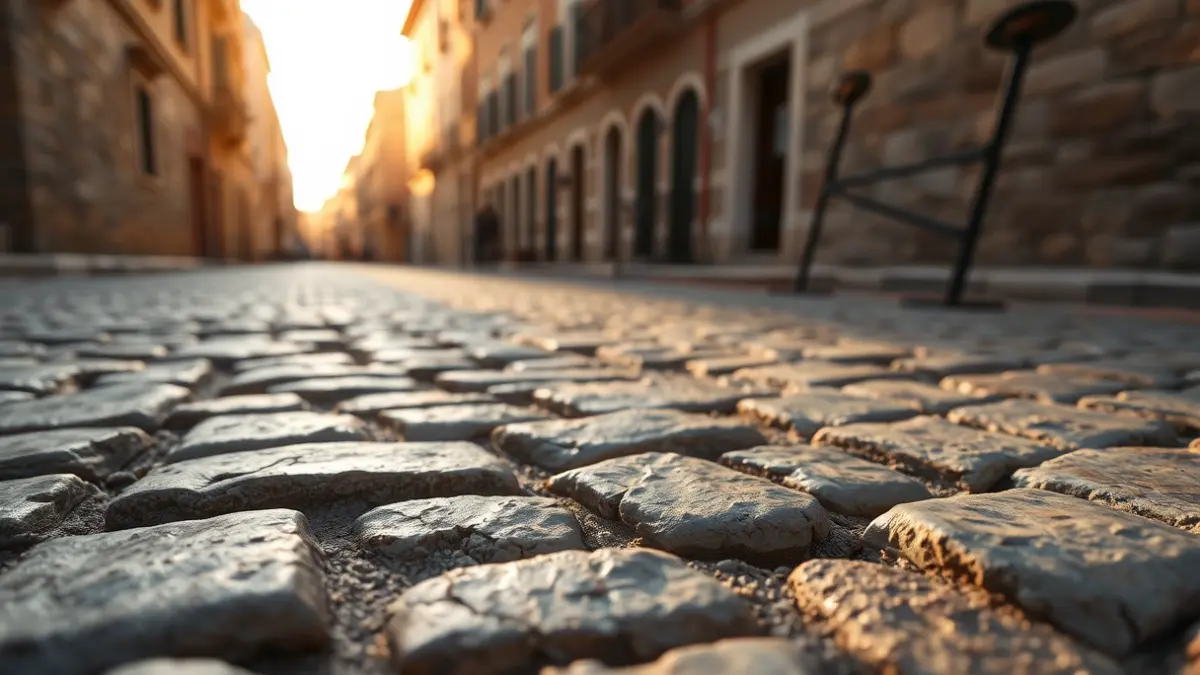
The original cobblestone of Cádiz was characterized by irregular stones of various sizes and shades, manually laid to create a surface resistant to the passage of time and the climatic conditions of a city marked by humidity and saltpeter. Beyond its functionality, this pavement became a distinctive element of the old Cadiz quarter, allowing those who walked on it to traverse part of the city's history.
Currently, very few streets retain this historic surface in its original state. Plaza de Fray Félix, in the Barrio del Pópulo, is one of the most representative examples, preserving stones over three centuries old and a traditional aesthetic that evokes the past of Cádiz. In the vicinity of the Barrio del Pópulo, especially near the Old Cathedral, small pedestrian streets with this pavement also survive, contributing significant heritage value to the historical ensemble.
The preservation of streets like Mirador and spaces like Plaza de Fray Félix highlights the debate between modernization and heritage preservation. Cádiz, one of the oldest cities in Western Europe, finds much of its historical value in everyday elements that have endured, such as its streets, squares, and traditional pavements. Although many thoroughfares have changed their appearance, there are still places where the ground tells the city's story, and Mirador Street is one of the last examples of a Cádiz that is gradually transforming.