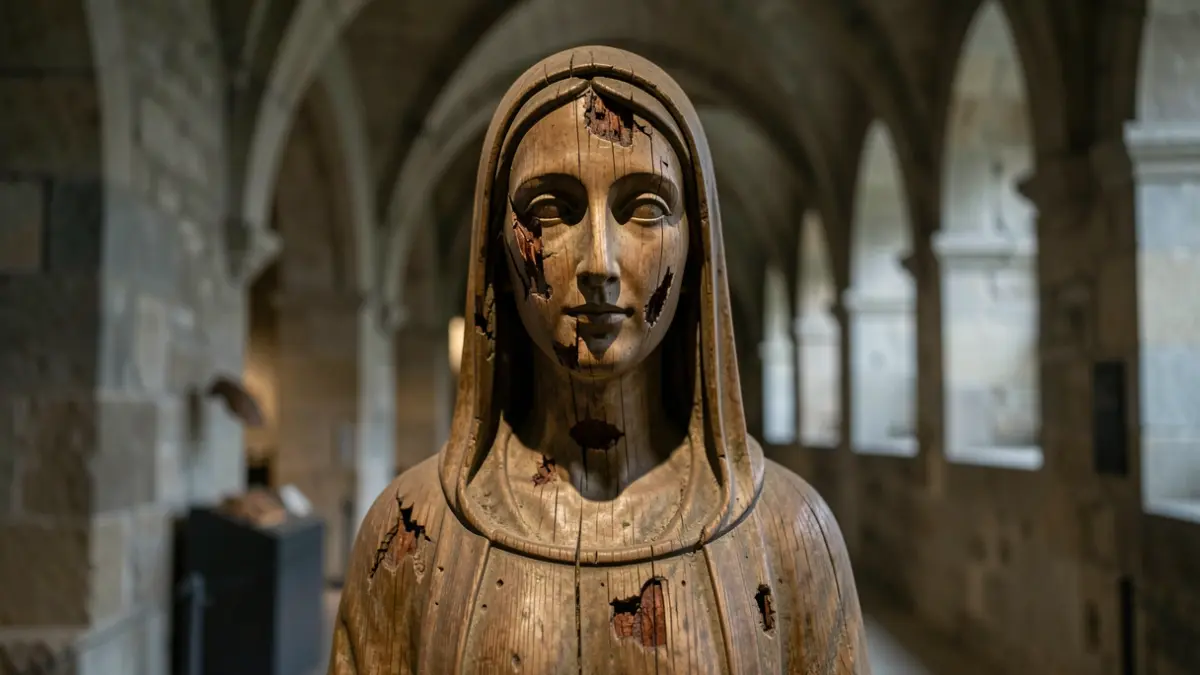
The Cathedral Chapter of Cádiz has enriched its artistic heritage with the addition of a new replica of the Virgen Vulnerata. This image, deeply symbolic for the city, commemorates one of the most painful episodes in its history: the Anglo-Dutch assault and sack that occurred in 1596.
The sculpture is now exhibited in the Hall of the Assault at the Casa de la Contaduría, a space within the Cathedral Museum dedicated to contextualizing key historical events of the Cádiz Church. The replica was created by the renowned conservator-restorer Natalia Martínez de Pisón, who previously made a reproduction for the Traslatio Sedis exhibition in 2018. The Cathedral Chapter's aim is to preserve and disseminate the memory of this image, so deeply rooted in the city's religious and sentimental history.
It is believed that the original polychrome wood sculpture originated from the Sevillian Sculptural School. Although it has not been definitively determined whether it represented the Virgen del Rosario or the Virgen de la Victoria, it enjoyed great devotion among the people of Cádiz in the 16th century.
The image's history was tragically marked in the summer of 1596 when Anglo-Dutch troops sacked Cádiz. During the assault, Protestant soldiers desecrated, dragged, and mutilated the image, an act of great religious and symbolic weight that gave rise to its invocation as the Virgen Vulnerata, meaning 'the wounded Virgin'.
After the sack, the image was recovered by Luisa de Padilla, Countess of Buendía, and moved to her palace in Madrid. It later went to Valladolid, where it was welcomed by the College of San Albano (Seminary of the English) as a symbolic gesture of restitution for the actions of their compatriots. The original statue still presides over the altarpiece of that institution's church.
The new replica at the Cádiz Cathedral Museum not only recovers a lost artistic piece from Cádiz's heritage but also returns a fundamental part of the city's history more than four centuries later.