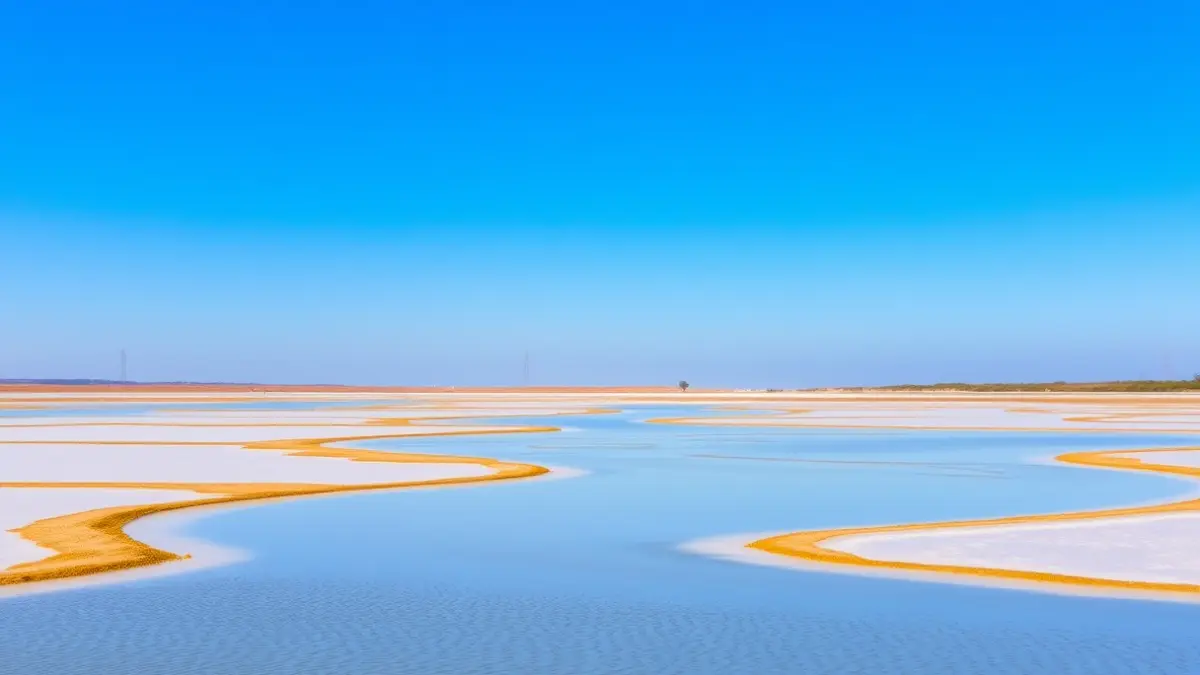
The salt flats and estuaries of the Bay of Cádiz constitute a natural system of exceptional value, whose conservation is crucial for the region's future. Its recognition as a Natural Park in 1989, its inclusion in the Natura 2000 Network, and its designation as a ZEPA and RAMSAR site, highlight its international ecological importance.
This vast coastal wetland in southern Europe, where most of its surface belongs to the public maritime-terrestrial domain, has allowed the survival of an economy linked to the territory for centuries. Sea salt production, aquaculture, and nature tourism form an
“"authentic blue economy that generates employment and projects a distinctive image of the Bay of Cádiz."
However, this delicate balance is threatened by climate change and the foreseeable rise in sea level, which demands an anticipated and coordinated response to protect the ecosystem.
Fortunately, the Bay of Cádiz boasts top-tier scientific and technological capital, represented by institutions such as the University of Cádiz, the International Campus of Excellence of the Sea (CEIMAR), and the ICMAN-CSIC Marine Sciences Institute. These entities, along with the Andalusian Aquaculture Technology Center (CTAQUA) and initiatives like INCUBAZUL-BLUECORE from the Cádiz Free Trade Zone, drive innovation and business development in sectors linked to the marine environment.
This potential must align with existing public policies, such as the ‘National Nature Restoration Plan’ from the Ministry for Ecological Transition and the ‘Andalusian Wetlands Plan Horizon 2030’ from the Junta de Andalucía. Nevertheless, it is considered essential to go further and call for the implementation of a ‘Specific Action Plan for the Bay of Cádiz’.
This plan, promoted by the “Alianza Bahía Azul” platform, should comprehensively address the restoration of marshes, the defense of the wetland against sea-level rise, and the improvement of conditions for the sustainable development of salt flats, also integrating sectors such as marine biotechnology and renewable energies. Protecting the Bay of Cádiz is a shared responsibility to safeguard its history, present, and future.