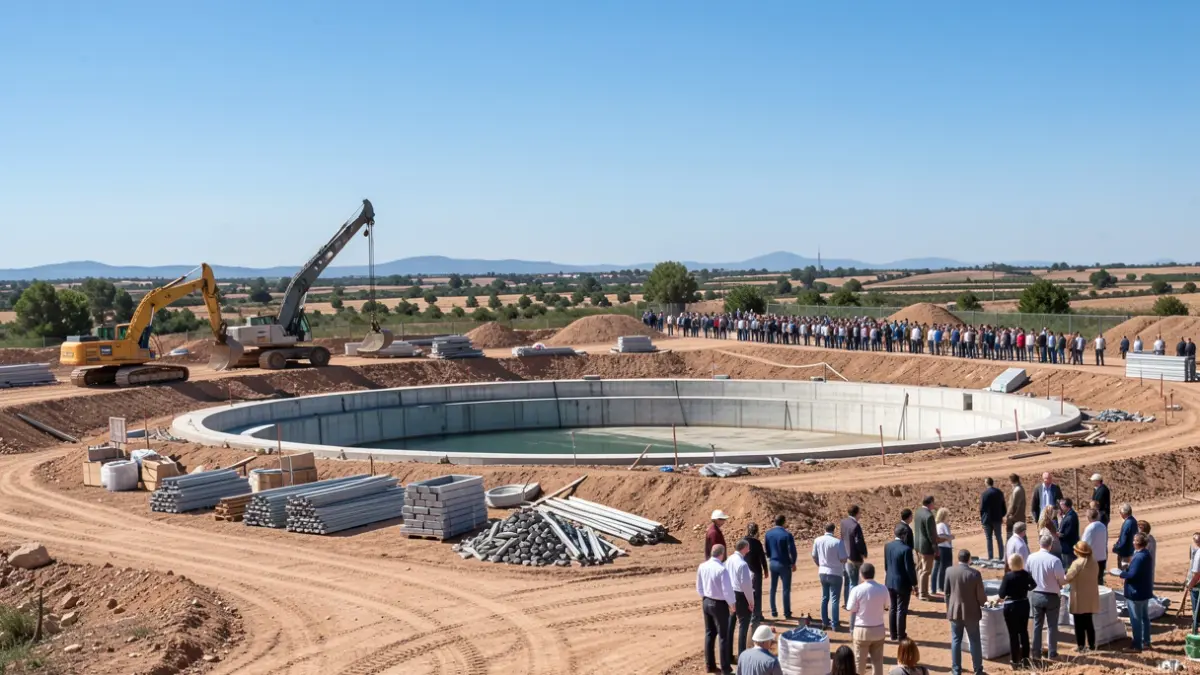
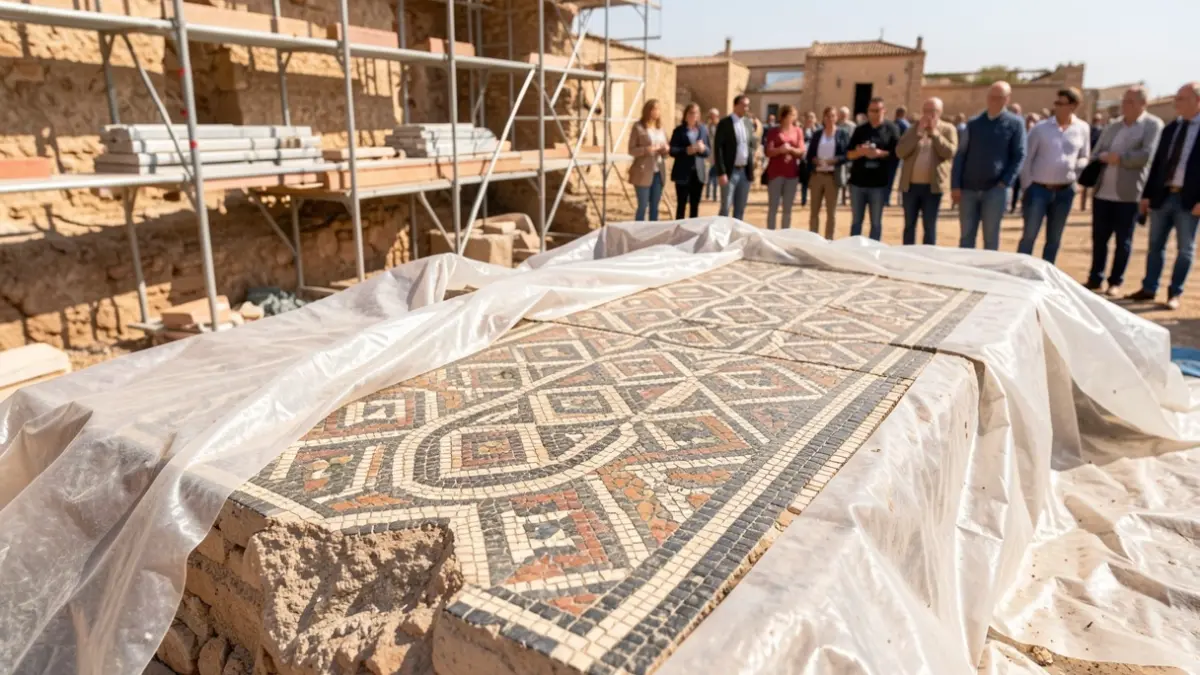
The intervention, with an estimated investment of nearly 2 million euros from funds from the Spanish Government and the Provincial Council, is part of the Sustainable Tourism Plan for Destinations. The mayor of Jaén, Julio Millán, and the president of the Provincial Council, Juan Latorre, visited the works of this facility, which will house the interpretive endowment of olive culture and highlight the Roman villa and the Los Robles oil mill, considered the largest known from the Roman era.
Millán emphasized the project's importance for "highlighting remains that were documented 20 years ago" and as a tourist resource explaining Jaén's historical significance as the "world capital of Oleotourism." He noted the intention for the building to include an interpretive section and another for events related to olive oil.
Juan Latorre expressed satisfaction in adding new resources to the province's oleotourism offerings, stating that the intervention, currently at 80% completion, will rescue a "unique and unparalleled" archaeological site.
The First Deputy Mayor and Councilor for Culture, Tourism, Festivals, and Historical Heritage, María Espejo, affirmed that the City Council is meeting the deadlines of the Sustainable Tourism Plan, despite difficulties and project delays. She explained that the new building is "practically finished" and only needs content for its public opening, as do the walkways and archaeological work, which are also advanced. The City Council will assume the maintenance of the remains for their conservation.
The project's architect, Alfonso Mollinedo, detailed that the building's design is inspired by the olive's skin, using the same type of sheeting for the reception and the cover of the archaeological area. Archaeologist Alberto Fernández highlighted the "acceptable" state of the remains and the work done to organize the intervention, which narrates the richness of the villa and the industrial part of the site.