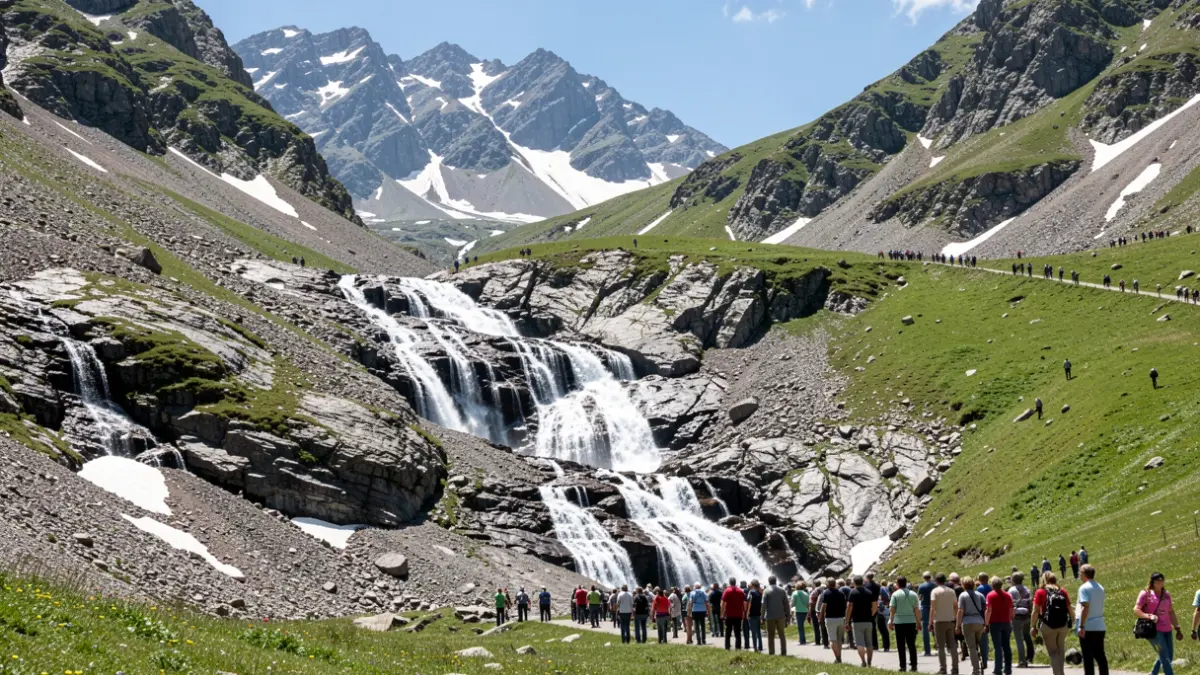
Late spring and early summer offer one of Sierra Nevada's most impressive natural spectacles. After snow accumulates at high altitudes, rising temperatures significantly increase the flow of streams, ravines, and mountain lakes. These changes completely transform some of the most iconic landscapes of the Granada massif, making these weeks an ideal time for hikers to explore areas where water takes center stage.
Temporary waterfalls, river sources, and lakes still surrounded by snow patches present ephemeral sights that can only be witnessed for a few months each year. Among the most notable routes is the one leading to the Lagunillos de la Virgen, a high mountain area below the Tajos de la Virgen where remnants of snow can still be found despite the heat in Granada. The contrast between the lakes, alpine pastures, and the last white patches makes this spot one of the most photographed in the mountains during this season.
The environment of the Dílar River also transforms, with meltwater feeding numerous cascades and small waterfalls that alter the valley's appearance. Along this route, visitors will find wetlands, high mountain meadows, and some of the greenest landscapes of the year.
A place particularly associated with snowmelt is the Lavaderos de la Reina. For several weeks, the slopes fill with waterfalls and water currents descending from the snowfields located beneath some of Andalusia's highest peaks, creating a landscape vastly different from that of summer.
Another option is to explore the area around Piedra Resbaladiza and the San Juan River valley. The abundance of water in this region makes it an attractive destination for those seeking moderately difficult routes with landscapes dominated by streams, lush vegetation, and open views towards the peaks.
While summer attracts the largest number of visitors, many hiking enthusiasts consider the snowmelt period to be one of the best times to walk through Sierra Nevada. Temperatures are milder, the mountains display a rich diversity of colors, and water is present on almost any itinerary. However, it is advisable to check trail conditions, as some areas may have mud, residual snow, or higher than usual water flows.