The High-Speed Rail connection to Almería has become a protracted saga of unfulfilled promises and shifting timelines. Statements by the Minister of Transport and Sustainable Mobility, Óscar Puente, increasingly diverge from the technical schedules managed by official bodies and citizen platforms, indicating that the service will not be operational before 2029 or 2030.
Following a recent meeting between the Partido Popular of Almería and the Railway Board, the general secretary of the Almería PP, Francisco González Bellido, once again highlighted the structural delay in the province's railway infrastructure. According to his information, the arrival of the AVE is now closer to 2030 than to the deadlines initially promised by the Spanish Government.
Criticism extends beyond the High-Speed Rail delay. González Bellido also denounced the state of the conventional line, with journeys exceeding seven hours and continuous incidents affecting travelers, emphasizing that Almería remains "at the bottom" of national railway infrastructure.
The controversy stems from the evolution of Minister Puente's own discourse. In late 2025, at a 'Quiero Corredor' platform event in Valencia, he assured that the AVE would reach Almería by 2027. Previously, in June 2024, during a visit to the province, he expressed confidence that the works on the Mediterranean Corridor between Murcia and Almería, over 60% complete, would be finished by 2026.
“"The Ministry's message lacks certainty and generates false expectations among the population."
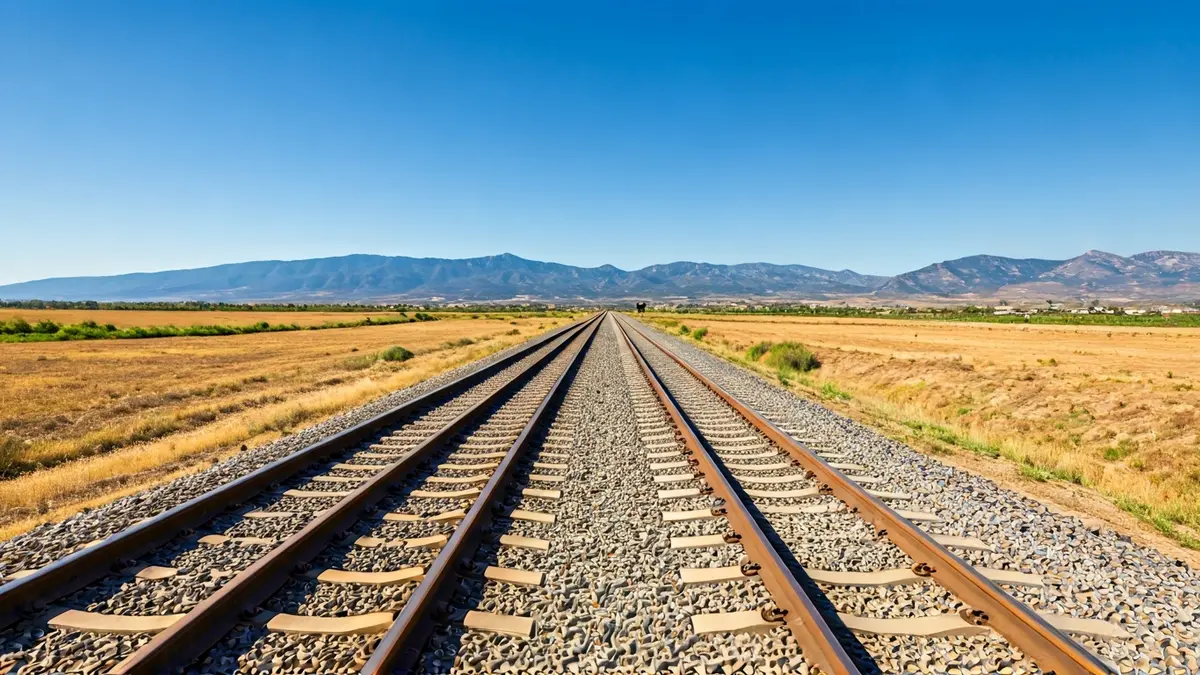
However, technical and administrative data reveal a different timeline. The recent tender published in the Official State Gazette for track assembly between Lorca and Vera introduces new deadlines: companies have until the end of 2026 to submit bids, the award is not expected until spring 2027, and the execution of works will extend for ten months, concluding in 2028.
This schedule does not mean the immediate arrival of the AVE in Almería. Pending tasks include the installation of catenaries, the commissioning of electrical substations, and, crucially, safety tests with Adif's laboratory train. These necessary actions push back the line's service entry until 2029 or even 2030.
José Carlos Tejada, coordinator of the Almería Railway Defense Board, has publicly expressed concern about the inconsistency between political announcements and actual planning. The citizen platform believes the Ministry's message lacks certainty and creates false expectations.
One of the main bottlenecks is in the Murcian section, particularly the railway integration in Lorca. This technically complex project includes the construction of a 3.2-kilometer tunnel and a new underground station. Its execution, awarded with a 32-month deadline, leaves very little room to meet government objectives.
Doubts about the dates promised by Óscar Puente for the High-Speed Rail in Almería are not new. Previous reports from the 'Objetivo Almería AVE' initiative, promoted by the Chamber of Commerce, already identified the undergrounding of Lorca as the main obstacle to meeting deadlines. Even before the latest tender, these analyses placed the arrival of the High-Speed Rail around 2028, a forecast that now gains more traction.
Meanwhile, the Government continues to defend the progress of the works and the strategic importance of the Murcia-Almería line within the Mediterranean Corridor. With a global investment of 3.6 billion euros and 200 kilometers of track, this project aims to connect the province with the rest of the high-speed network, allowing direct links to cities like Madrid or Barcelona.
For social groups and part of the opposition, the problem is not just the delay, but the repetition of unfulfilled dates. The "dance of deadlines" attributed to the minister has eroded institutional credibility and fuels a sense of historical grievance in a province that has been waiting for the AVE for over two decades.
The Partido Popular has announced that it will submit a series of questions to Congress to clarify the real situation of railway infrastructure in Almería, seeking a clear and verifiable roadmap to replace the promises that have not yet materialized.