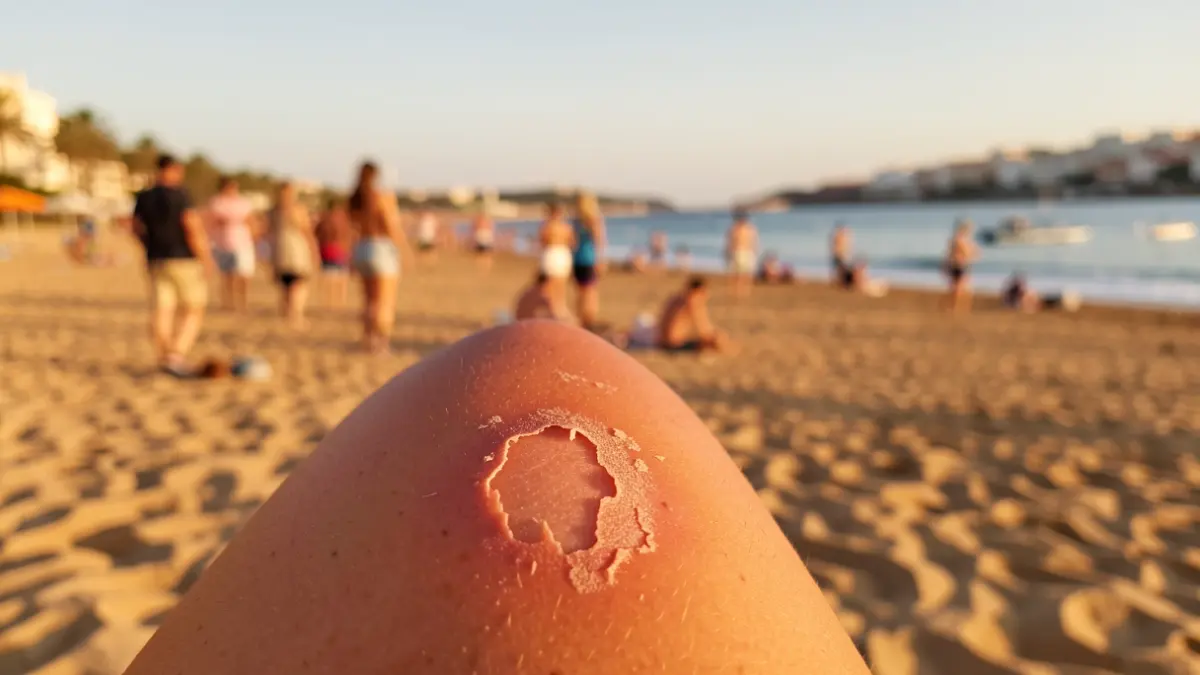
Sun exposure, especially during the central hours of the day, leaves a permanent mark on the skin. Dermatologist Ramón Fernández Miranda, with nearly half a century of experience, emphasizes that skin has memory and that every minute under the sun without adequate protection can have long-term consequences.
During the summer season, it is common to see people on the beaches of Almería seeking a tan, often without reapplying sunscreen frequently enough. The specialist compares tanning to a smoker's cough: a defensive response from the body indicating underlying damage. "There is no tan that is entirely healthy," he states, especially for fair skin.
Genetics play a crucial role, with darker skin tones (high Fitzpatrick phototypes) offering greater natural resistance. However, phototypes 2 and 3, common in Spain, are more vulnerable. Solar radiation damages cellular DNA, and accumulated damage over the years can lead to melanoma or skin cancer.
Fernández Miranda warns of three risk factors for melanoma: having more than 100 moles, having suffered more than three sunburns in childhood, or presenting a bleeding, crusted, or changing mole. In such cases, he recommends consulting a specialist.
The use of sunscreen is fundamental, but it is often applied incorrectly. The dermatologist points out that the recommended amount is 2 milligrams per square centimeter of skin, and reapplication should occur every half hour to three-quarters of an hour at the beach. Using less than the indicated amount drastically reduces real protection, making an SPF 50 potentially equivalent to an SPF 12.
Clothing also plays a role: dark garments block UV radiation better than light ones. However, given the impossibility of wearing completely dark clothing in the climate of Almería, the dermatologist insists on "common sense," recommending limiting sun exposure between 11:30 AM and 4:00 PM or 5:00 PM.
The specialist criticizes the viral misinformation, such as a recent claim by a footballer suggesting that sunscreens are useless and that gradual tanning is correct. "It's outrageous," states Fernández Miranda, warning that this only accelerates the onset of cancer.