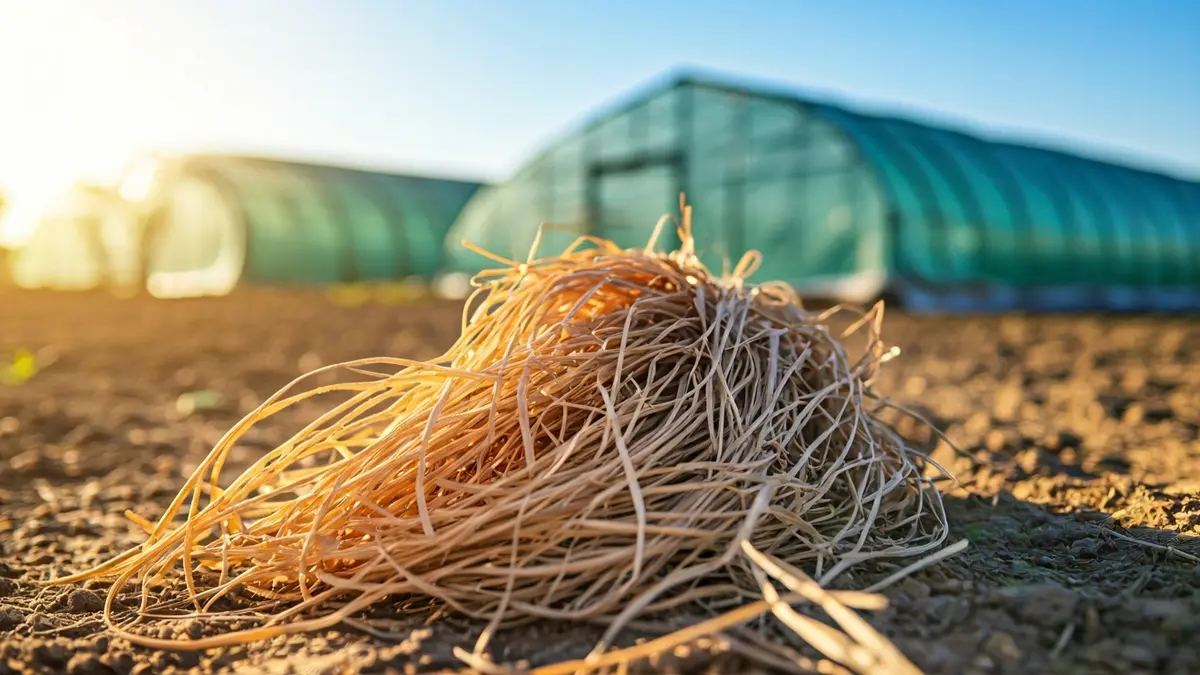
The Province of Almería, renowned for its powerful intensive agriculture, reveals a less visible reality: the proliferation of agricultural waste in its peripheral areas. Remains of plastics, raffia, and greenhouse fragments are scattered along roads, vacant lots, and road margins, even next to neighborhoods, highlighting a problem that extends beyond isolated spots.
With over 3,000 hectares of cultivation under plastic, Almería city is the third most agriculturally significant municipality in the province. However, this productive power coexists with irregular management of some of the waste generated, where the lack of decisive action from both the Junta de Andalucía and the Almería City Council to prevent these accumulations is under scrutiny.
“"98 or 99% of farmers do a perfect job. But there are a few who mess everything up."
José Mañas, an opposition councillor for the PSOE in the Almería City Council and a farmer, emphasizes that while most farmers manage their waste correctly, a minority is responsible for most of the impact. He also points to intermediaries operating outside the law, charging for plastic recycling that they then abandon anywhere.
The agricultural waste management system in the province is not directly public; the Junta de Andalucía authorizes and supervises, but implementation falls to private companies. Facilities like Reciclados Almerienses 2005 act as intermediate plants, but the process involves transfers to other specific plants, such as those in Níjar for plastics or Rioja for vegetable waste, which adds costs and logistical complexity. Although the treatment cost per hectare is relatively low (between 150 and 250 euros), some opt for irregular methods.
“"The plants are expressing their concern about possible saturation due to the volume of incoming materials."
From the Coordinadora de Organizaciones Agrarias y Ganaderas (COAG) of Almería, its provincial secretary, Andrés Góngora, warns about the saturation of treatment plants at the end of the season, when a large volume of waste accumulates. COAG insists on the need to anticipate management and separate materials, especially raffia, whose removal can reduce treatment costs by up to 80%. The accumulation of these residues not only creates a poor image but also becomes a breeding ground for pests and diseases for greenhouses, as Mañas points out.
The problem extends to peripheral neighborhoods such as Venta Gaspar, Bellavista, or Vega de Almería, where the accumulation of agricultural waste attracts other debris, such as tires or appliances. This situation has even affected the commercial image of the capital, forcing the design of routes to prevent institutional visitors or large distribution chains from seeing these improvised dumps.
Both the Almería City Council, governed by the PP, and the Junta de Andalucía distance themselves from direct responsibility. Juanjo Segura, Councillor for Agriculture, states that the monitoring and collection of agricultural waste is not a municipal competence, although they collaborate with the Junta and Seprona. The Junta, for its part, places initial responsibility on farmers, referring intervention to the Consejería de Sostenibilidad in case of non-compliance. This division of responsibilities contributes to the continued accumulation of waste, despite periodic cleanups in riverbeds like the Andarax river, where 315,000 kilograms of waste were removed in 2025.
The agricultural sector itself proposes solutions such as improving plant capacity, modernizing infrastructure, and promoting biodegradable materials. However, the current reality shows a picture of neglect on the fringes of one of the main productive powers of Spain and Europe.