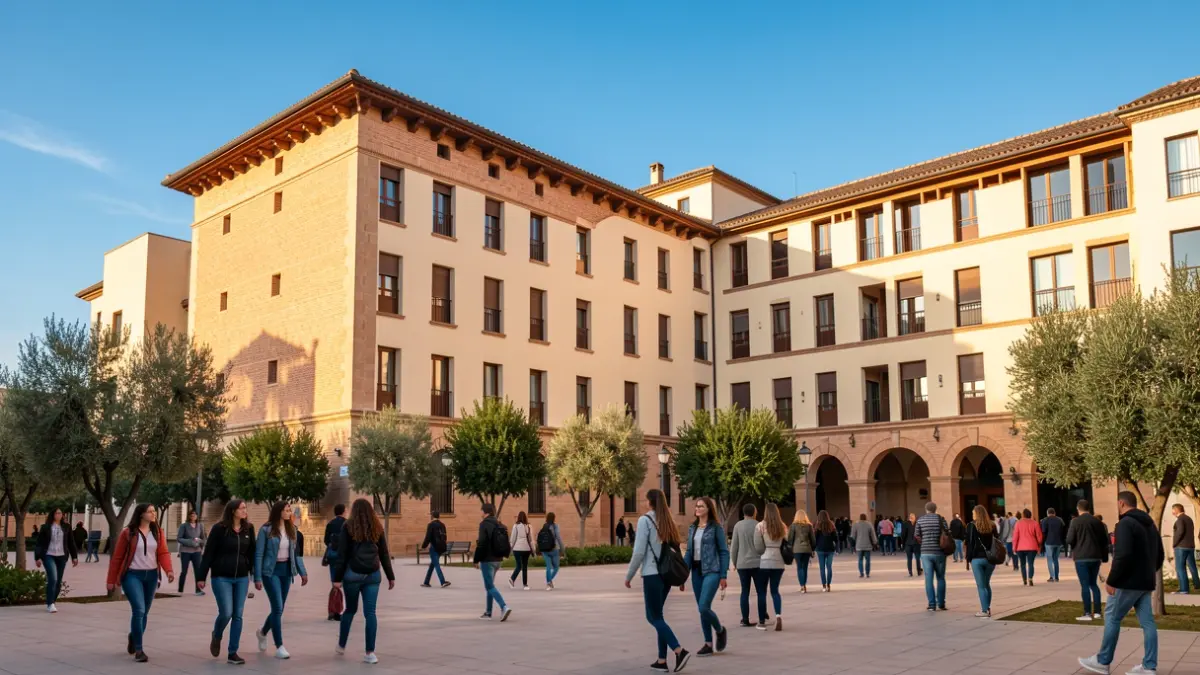
The University of Seville (US) has concluded the application period for residential places for the next academic year with a total of 810 requests, a figure consistent with previous years. The academic institution, aware of the difficulties young people face in finding affordable housing due to tourism pressure and rising rental costs, is prioritizing measures to address this trend.
Out of the US's three residential centers—the Hernando Colón hall of residence and the Rector Ramón Carande and Rector Estanislao del Campo residences—only the latter currently has available spots. The Hernando Colón hall of residence, directly managed by the university and located near the Reina Mercedes campus, has 143 places, all of which are already occupied. The monthly cost here is 725 euros, including full board, plus a registration fee of approximately 700 euros.
The Rector Ramón Carande residence, with 393 places and managed by the company RESA, has also filled all its vacancies less than two months before the academic year begins. Its prices range from 300 to 700 euros per month, depending on amenities and room size. The university is reviewing a new proposal from RESA that includes investment for facility renovations and aims to maintain price containment.
The only option with availability for the 2026/27 academic year is the Rector Estanislao del Campo Residence, located in Heliópolis, near the Reina Mercedes campus and the Virgen del Rocío Hospital. Managed by Minicampus, it offers over 400 places with accommodation costs ranging from 609 to 745 euros per month.
Carmen Gallardo, the US Vice-Rector for Students, emphasized that the rates at these residences are 200% to 300% lower than those in the private market, where accommodation alone can exceed one thousand euros per month.
Furthermore, the US is planning the construction of a student village on university land near the Virgen del Rocío Hospital, which would include services such as supermarkets and laundromats, potentially funded by the Spanish Government through ICO funds.
The academic institution also collaborates with private residences to offer places and discounts to vulnerable students, including those from conflict zones like Afghanistan, Ukraine, Palestine, or Iran, whose costs are now fully covered by the US after the cessation of ministerial aid. Erasmus students, particularly those on longer stays, also face difficulties finding housing.
To facilitate the housing search, the US will launch a dedicated portal to replace the current Sacu (sacu.us.es).
Meanwhile, the Pablo de Olavide University (UPO) will close the Flora Tristán Residence in the Polígono Sur next academic year. Its other residence, Celestino Mutis, with 144 places managed by Minicampus, has already reserved all its spots, with prices ranging from 400 euros for a triple room to over 860 for a single room.