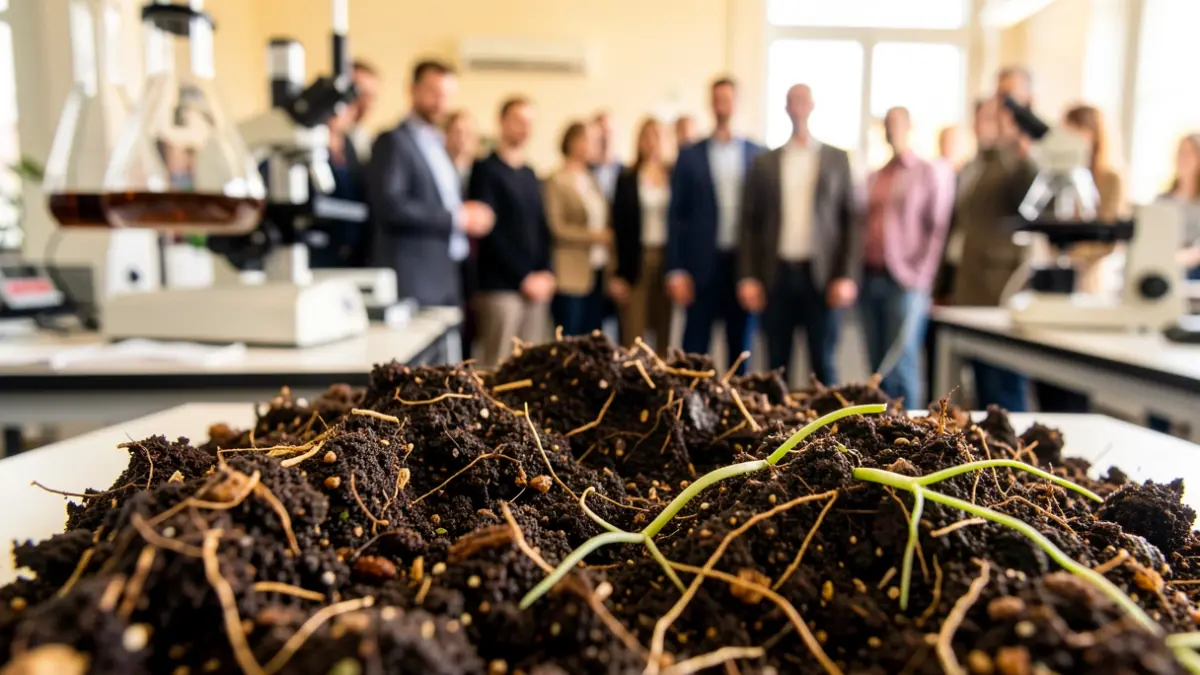
The University of Jaén (UJA) and the biomethane plant promoter Genia Bioenergy have signed a scientific-technical collaboration agreement to assess the agronomic potential of the solid fraction of digested material from biogas plants as an organic amendment for olive grove soil. This research aims to address one of the main challenges of the Mediterranean olive grove: the low organic matter content of its soils.
The study will analyze whether this material, resulting from anaerobic digestion in biogas plants, can act as an element for restoring soil organic carbon and fertility. If its potential is confirmed, the initiative would promote a circular economy pathway, revaluing an agro-industrial waste and reintegrating it into the olive oil production cycle.
Carmen Martínez, director of the UJA's Office for the Transfer of Research Results (OTRI), highlighted the university's commitment to innovation and knowledge transfer. She noted that the agreement will combine research and development capabilities in optimizing bioenergy processes and valorizing their products, a field urgently requiring advancements.
Víctor Díaz, Head of Agro at Genia Bioenergy, explained that the aim is to demonstrate that digestate from biogas plants is a natural organic matter that improves soil structure and nutrients. Following preliminary trials on herbaceous crops, the UJA's Soil O-live project has provided an opportunity to test these materials in olive groves.
Antonio Manzaneda, Professor of Ecology at UJA and lead researcher of the project, stated that the goal is to convey to society that greater value is being derived from waste that was previously returned to the field more directly, while also generating energy. He assured that the digestate to be applied is odorless, smelling like forest mulch, and is less phytotoxic and more stable, expressing hope that fears surrounding these materials will diminish.
Manzaneda added that this project seeks to offer a solution to the problem of low soil quality in the region, exacerbated by historical poor practices. The trials will commence in September on olive grove farms participating in the European Soil O-live project, encompassing both traditional and intensive olive grove scenarios.
The digested material, supplied by Genia Bioenergy, will be analyzed to ensure compliance with regulations for sustainable nutrition in agricultural soils. Study techniques will include measuring soil respiration, carbon and water fluxes, and evaluating crop yield and soil fertility over the 18-month research period.