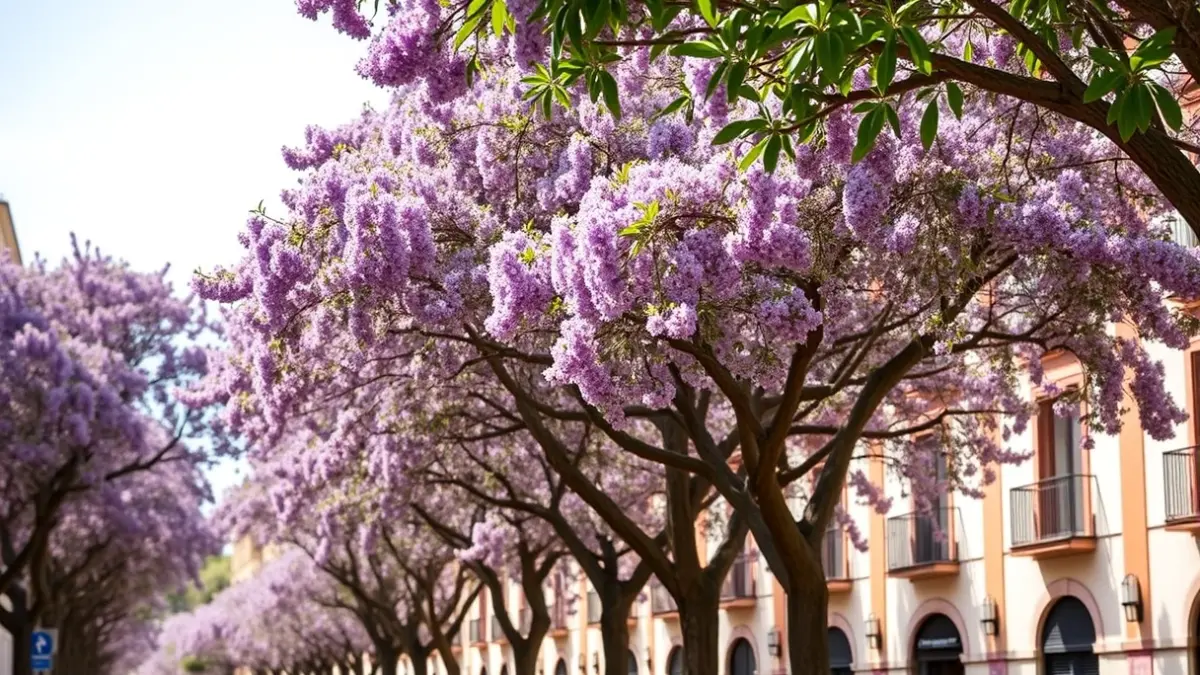
The blooming of the jacaranda in Sevilla marks a turning point in spring, transforming the environment with its vibrant colors. This species, which combines with the ocher of tipuanas and the creamy white of magnolias, creates a natural scene that lasts for several weeks and gives the city a unique visual identity.
The presence of the jacaranda is particularly noticeable when its branches still have few new leaves, allowing its floral clusters to take center stage and announce the imminent arrival of summer heat.
Originally from the tropical and subtropical regions of South America, the name of this tree, both in its Castilianized form and the masculine jacarandá, comes from the Tupi-Guarani term yacarandá. This word means “fragrant,” referring to the plant's aromatic qualities.
Beyond its undeniable ornamental value, the etymological origin of the jacaranda adds a cultural dimension that connects it with its American roots. Its adaptation and proliferation in Andalusian cities are not only due to its aesthetic appeal but also to its ability to thrive in the local climate.