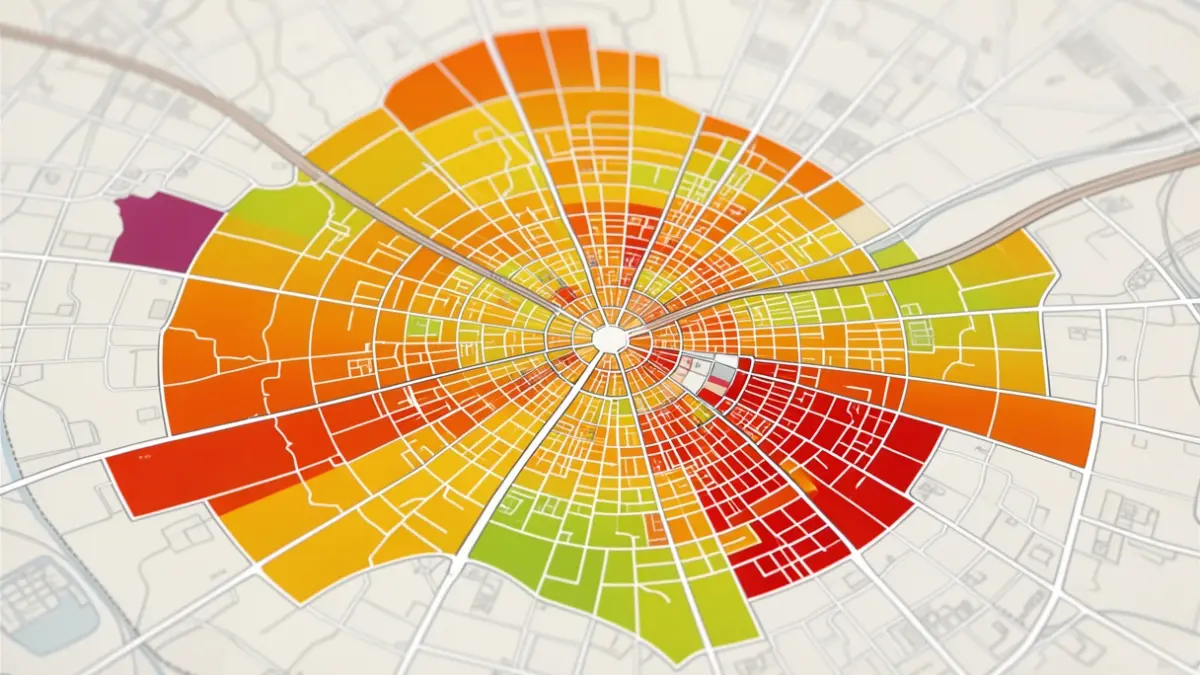
An advanced interactive tool, created by a team of researchers from the University of Sevilla and the University of Granada, now allows users to consult the urban climate risk that each neighborhood in Sevilla will face in 2050. The open-access viewer provides detailed projections of temperatures, heat threat indices, and socioeconomic vulnerability at the census tract level.
Unlike previous methods based on satellite thermal imagery, this new methodology simulates air temperature hour by hour, both day and night, and cross-references thermal threat with socioeconomic vulnerability and the state of the built environment. The study, published in the journal Urban Climate, aims to inform administrations and citizens about the disparities between neighborhoods.
The model processes official data and simulates the climate behavior of 500 residential census tracts under a typical summer scenario for 2050. The research demonstrates that the combination of urban morphology with demographic and economic factors creates deeply disparate realities. According to an intermediate projection by the IPCC, Sevilla's average temperature will increase by nearly 2ºC, including nighttime minimums.
The study reveals that extreme daytime heat is concentrated in peripheral neighborhoods like Palmete, while nighttime thermal stress is more prevalent in the Casco Antiguo and areas of Triana. Heat intensity can triple between neighborhoods, with differences of up to 6ºC in nighttime minimums.
The analysis also incorporates socioeconomic and construction vulnerability. 62.6% of Sevilla's census tracts have a built environment predating 1979, affecting over half the population. By cross-referencing this data with median income and the percentage of residents over 65, 14 census tracts with critical thresholds are identified, housing 17,329 inhabitants.
The tool enables administrations to prioritize resources and design specific strategies for each risk type, such as implementing tree planting or energy retrofitting of buildings. This application builds upon previous studies by the same team and is key to anticipating the challenges of climate change in Southern Europe.