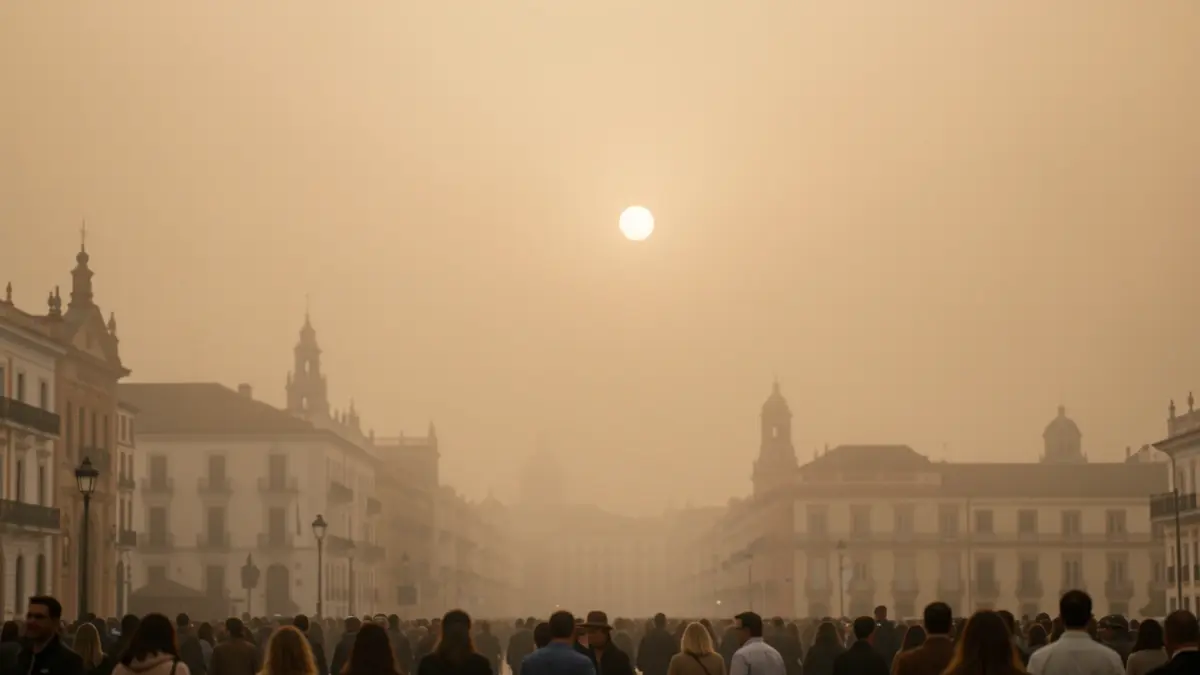
Between August 4 and 10, 2026, the daily average concentration of PM10 particles in Seville capital nearly doubled, rising from 26.15 to 51.01 micrograms per cubic meter (µg/m³). This increase directly coincided with the spread of the Niebla forest fire, the smoke from which became visible in the city.
PM2.5 particles, smaller and of greater concern for public health, also saw a significant rise, from 9.86 µg/m³ on the 6th to 19.45 µg/m³ on the 9th, exceeding the World Health Organization (WHO) reference threshold of 15 µg/m³ for two days.
The data, sourced from the Andalusian Air Quality Surveillance and Control Network, indicates that the particle increase was widespread across Seville's monitoring stations, affecting all four measuring PM10 and three measuring PM2.5. Stations like Santa Clara and Príncipes recorded the highest values.
Unlike the particles, other pollutants such as NO2 (nitrogen dioxide), primarily linked to traffic, did not show a spike on these days and even decreased, suggesting the source of the particle increase was external, like the fire smoke, rather than urban traffic.
The Niebla fire, which intensified over the weekend of August 6-8, generated large smoke plumes that were visible from Seville by the 10th. The timeline, the pollutant profile (high in PM2.5, characteristic of wildfire smoke), and the widespread nature of the phenomenon all point to the fire as the probable cause.
The concentrations recorded, while not extreme, surpassed the WHO's daily health reference values. Exposure to such episodes can cause eye and throat irritation, coughing, shortness of breath, and exacerbate respiratory and cardiovascular conditions, particularly in at-risk groups like children, the elderly, and individuals with pre-existing conditions.