The Malaga cooperative Dcoop concluded the 2025 fiscal year with a consolidated turnover of 1.421 billion euros. This figure, which includes the group's Spanish subsidiaries, reflects the significance of an organization operating across multiple sectors of the Andalusian and national agricultural landscape. However, the year presented considerable challenges due to a generalized drop in prices for products such as olive oil, table olives, wine, and cereals, which impacted results compared to the previous year.
Dcoop members and executives disclosed these figures during the general assembly held on Thursday, June 25, attended by over 300 cooperativists. The meeting approved the annual accounts and sustainability report, and outlined strategic directions for the coming years.
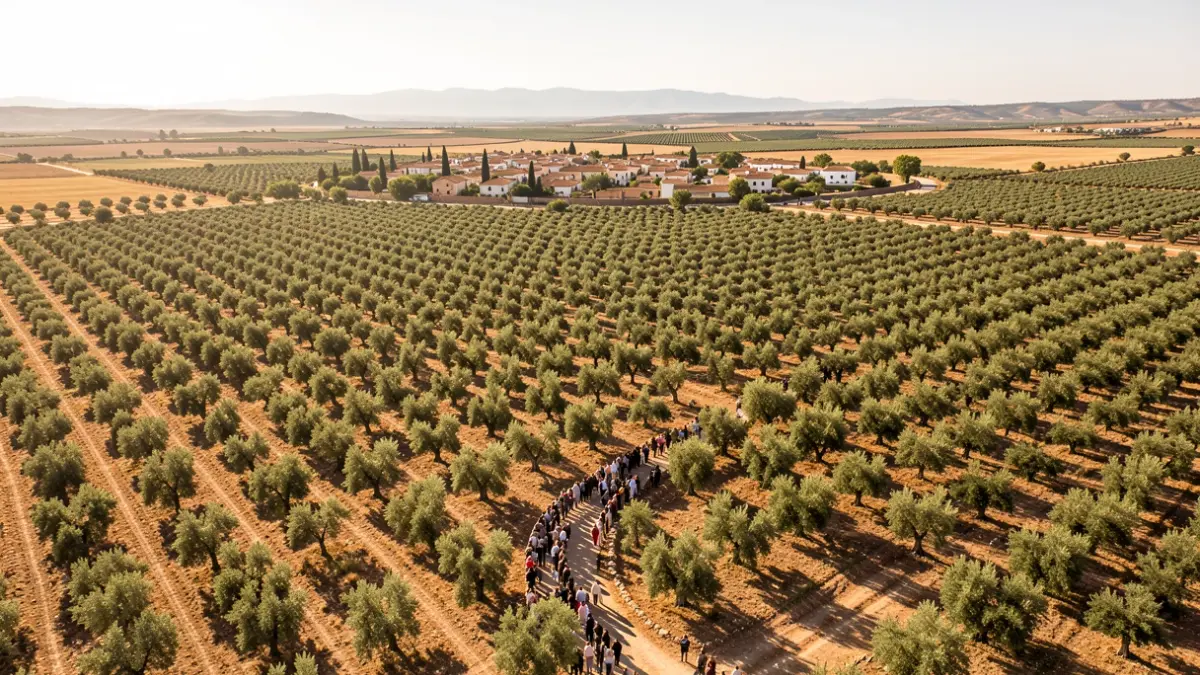
The olive grove sector remains the core of the business. Sections linked to this cultivation—Oil, Table Olives, Oil Mills, Pomace, and By-product Valorization—collectively generated 875.3 million euros, accounting for 63% of the Group's total turnover. The Oil section alone contributed 723.1 million euros, while the Table Olive section added 140.8 million euros.
The 2025 climate significantly affected the agricultural sector. A rainy spring, an extremely hot summer, and a winter with intense cold and successive storms directly impacted the harvests of Dcoop members, reducing production volumes. The Wine section, for instance, closed the year with 100 million euros in turnover, during a campaign where the grape harvest fell below the historical average.
The Supplies section, responsible for providing cooperativists with products like fuel, seeds, and phytosanitary items, ranked second in business volume, reaching 148.1 million euros. However, it registered a slight decrease compared to 2024, attributed to the fall in the average fuel price.
In contrast to the general trend, the Dried Fruits section, encompassing almonds and pistachios, showed a positive exception. Its turnover grew by 51.6%, reaching 56.3 million euros, driven by both an increased harvest in 2024 and sustained price rises throughout 2025.
Dcoop also expanded its structure by creating two new sections. In May 2025, the Citrus section was launched, comprising several orange cooperatives from the Guadalquivir Valley and Almeria. Although it began operations in the last two months of the year, generating only 2.9 million euros, the medium-term outlook is ambitious, including the industrialization of juice production through the acquisition of the Zumos Palma factory and the Zumosol brand.
The second new section is for Oil Mills (Almazaras), focused on joint olive grinding to reduce costs while maintaining the autonomy of member cooperatives. Following the facilities already operational in Dos Hermanas (Seville) and the one inaugurated in Pueblonuevo del Guadiana (Badajoz), work is underway for a third oil mill in Jaen.
Despite the value decrease, Dcoop increased its export volume by 10.11%, with international sales exceeding 697 million euros. In terms of volume, exports reached 278.9 million kilos, liters, and units. However, the price drop also impacted economic value, with exports falling by 23.75%.
Regarding sustainability, the cooperative launched the extra virgin olive oil Dcoop Natura, certified Sustainably Grown by SCS Global Services, marketed in a one-liter bottle made from 100% recycled plastic. Furthermore, its almond processing plant in Villarrubia (Cordoba) received the zero-waste certificate from SGS, recognizing organizations that minimize waste and move towards a circular economy.