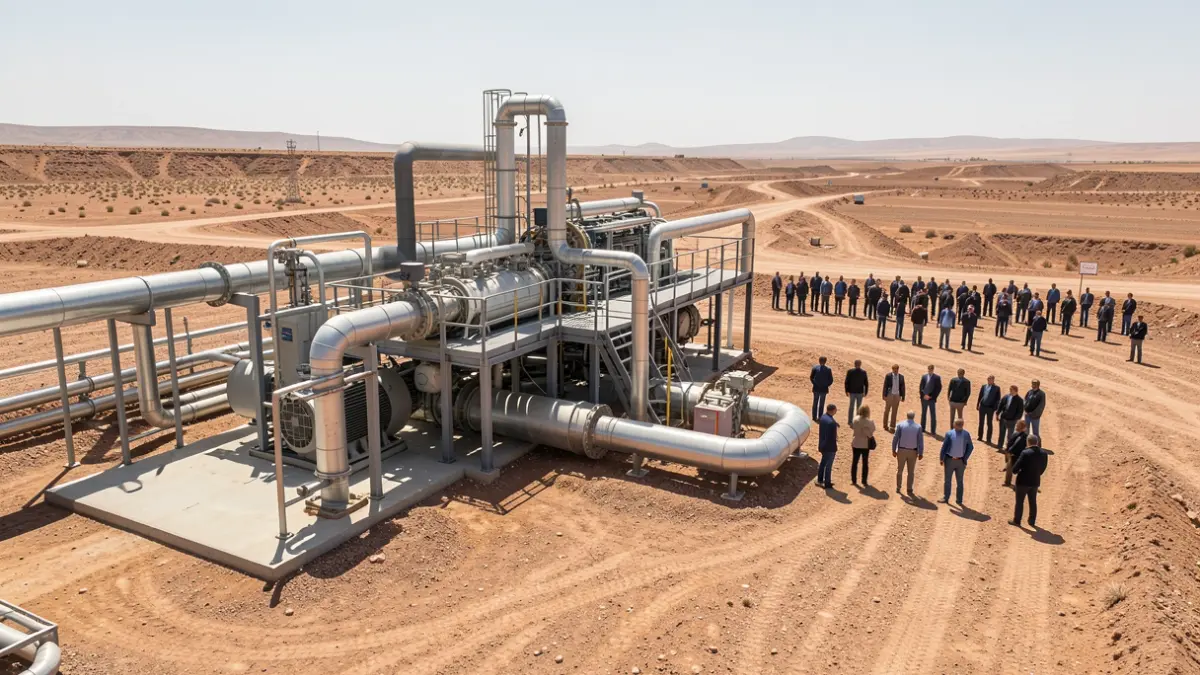
The town of Tharsis will be a key scenario for the European FIC-Fighters project, which seeks new ways to utilize phosphogypsum. The initiative, involving Magtel and Tharsis Mining, is preparing a mobile pilot plant to be installed at the mining company's facilities in Huelva. The goal is to demonstrate a technology for transforming this waste into raw materials with potential applications in sectors such as batteries, fertilizers, cement, or paper.
The project, having reached the midpoint of its 48-month execution, is entering a significant phase. The plant's engineering, led by IDENER, is nearly complete, allowing progress in acquiring the necessary equipment and materials for its construction. Once this stage is finished, the facility will be moved to Tharsis Mining for the operational demonstration of phosphogypsum treatment. Concurrently, the documentation required for environmental authority evaluation has been finalized, a crucial step for the technology's regulatory viability.
FIC-Fighters' primary objective is to develop economically sustainable models for managing and valorizing waste with environmental impact. For phosphogypsum, the project studies the recovery of usable components to reintroduce them into production chains, transforming a historical waste into a potential source of raw materials.
The pilot plant will demonstrate the sustainable production of sodium sulfate, rare earths, phosphorus, aluminum hydroxide, ammonium sulfate, and precipitated calcium carbonate. These compounds have applications in diverse sectors like paper, cement, batteries, fertilizers, and detergents. The project aims to scale up technologies to TRL 6-7 maturity levels, with the challenge of validating solutions under representative conditions. The mobile facility will also incorporate a digital twin for process optimization.
The project's latest progress report was shared during a consortium meeting in Zagreb, Croatia, organized by Prehnit. Some phosphogypsum ponds in Croatia will provide material for the pilot plant's trials. The historical accumulation of this waste poses an environmental challenge in various European regions, and the project seeks reproducible solutions.
FIC-Fighters also promotes a phosphogypsum forum with six European case studies, involving local stakeholders, companies, administrations, and research centers. It has developed the PG Exploitation Portal to connect cities with similar issues and facilitate solution replication. The project participates in the Circular Cities and Regions Initiative (CCRI) and will ensure public access to its findings.
With engineering nearly complete and equipment procurement underway, the construction and relocation of the pilot plant to Tharsis will mark a new phase. There, the process's capacity to recover value from phosphogypsum will be operationally tested, and the economic feasibility of valorization models will be evaluated.