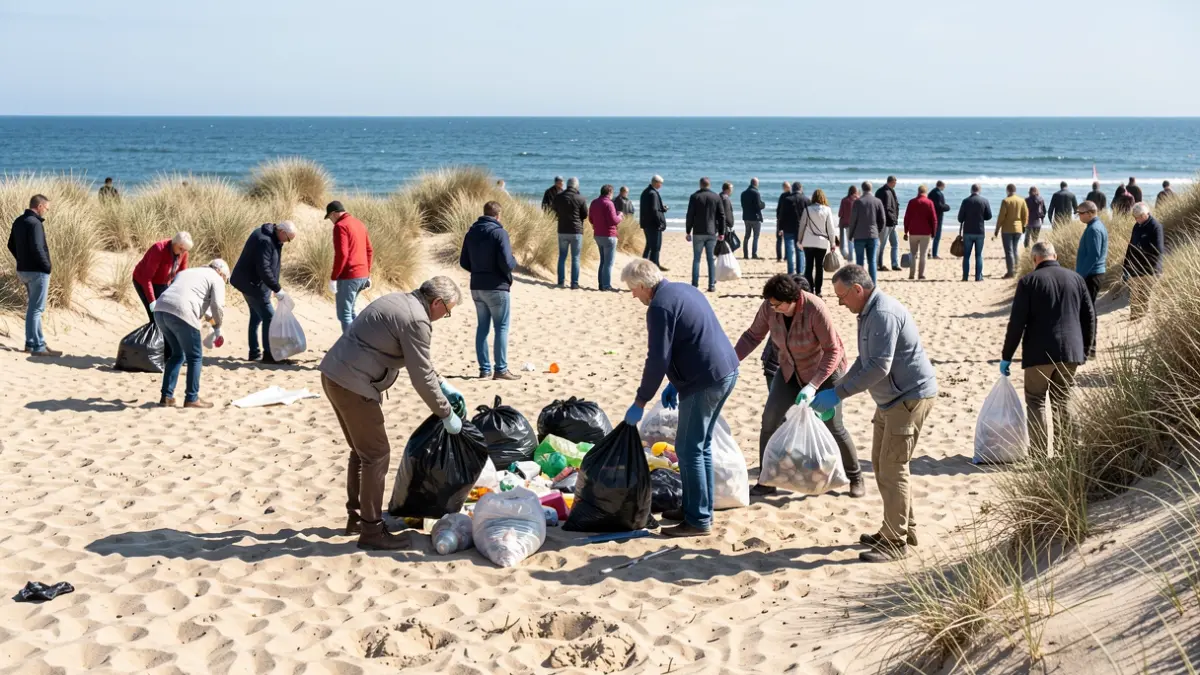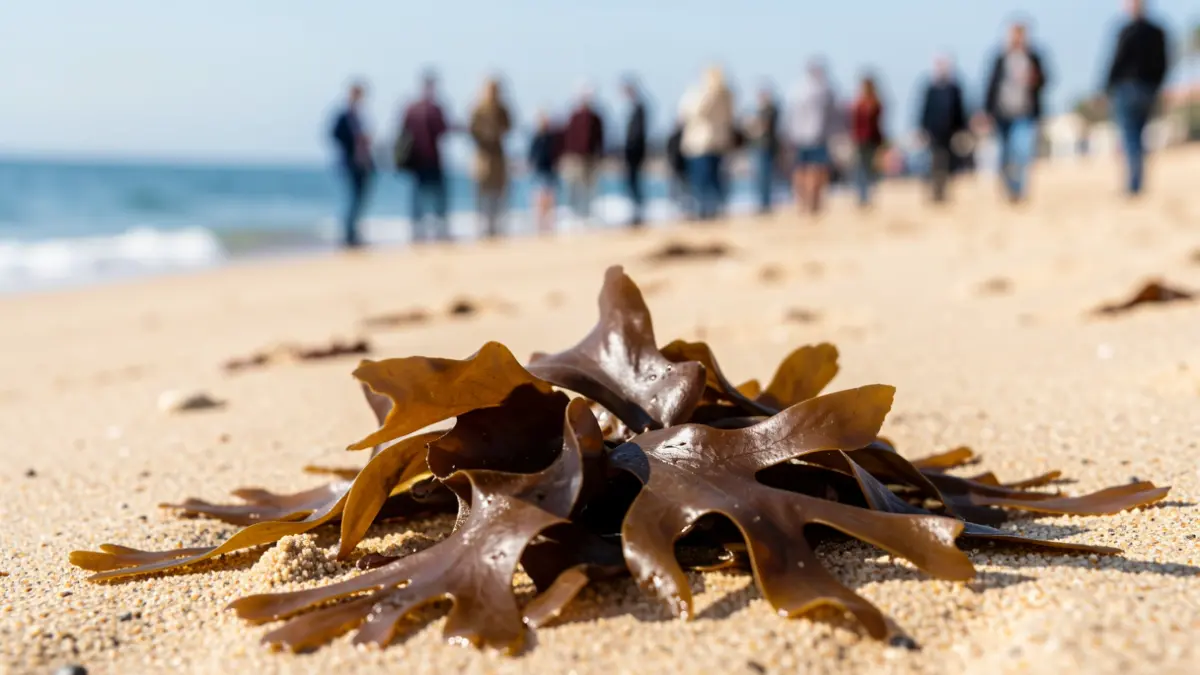
The massive arrival of the invasive Asian alga, Rugulopteryx okamurae, on the beaches of Cádiz province has generated concern and significant costs for coastal municipalities. The Provincial Council, through its Ecological Transition Area, has allocated 1.8 million euros in subsidies over the last five years to help affected municipalities cover removal expenses.
Despite not having direct responsibilities, the provincial administration is the only one supporting municipalities against this 'invasion' that impacts the environment, the fishing and tourism sectors, and the management of municipal services. However, during the meeting of the Standing Working Group on Invasive Algae, the need for greater involvement from 'higher administrations' was highlighted.
Since 2019, when the alga began causing problems in specific areas of the Strait of Gibraltar, its distribution on the beaches and marine ecosystems of Cádiz province has grown exponentially. Initially, it only affected Algeciras, La Línea, and Tarifa, but the problem now extends to the coastline of Rota and is colonizing the seabed of the Northwest Coast.
So far this year, Rota has recorded the highest figure for invasive alga removal with 10,000 tons. It is followed by Tarifa (3,000 tons), Cádiz (1,379 tons), and La Línea (550 tons). Other locations such as Algeciras, Chiclana, and Conil have registered 300, 250, and 40 tons, respectively.
Current regulations require municipalities to remove this material from their beaches, which creates serious difficulties for them. They must undertake extraordinary hiring, rent more machinery, and allocate more financial resources to maintain tourist and environmental quality.
Therefore, the Working Group will submit a formal request to the Ministry for Ecological Transition and the Demographic Challenge and the Regional Ministry of Sustainability and Environment of the Junta de Andalucía, asking for greater economic involvement. This request is based on the scale of the problem, which exceeds municipal competencies and budgets. The request was approved in the Corporation's Plenary session in July.
The request will also include asking for the inclusion of the Provincial Council of Cádiz, representing the affected municipalities, in the specific Working Group for Rugulopteryx okamurae at the national level, to defend the needs of the Cádiz territory.
Finally, it was agreed to seek technically and economically viable solutions for utilizing this organic matter, in line with circular economy objectives, and to enable municipalities to offset removal costs.
The Standing Working Group on Invasive Algae is part of the Pact for the Sustainability of the Cádiz Coast, promoted by the Provincial Council of Cádiz in 2019, aiming to develop common strategies for climate change adaptation in the province's coastal municipalities.