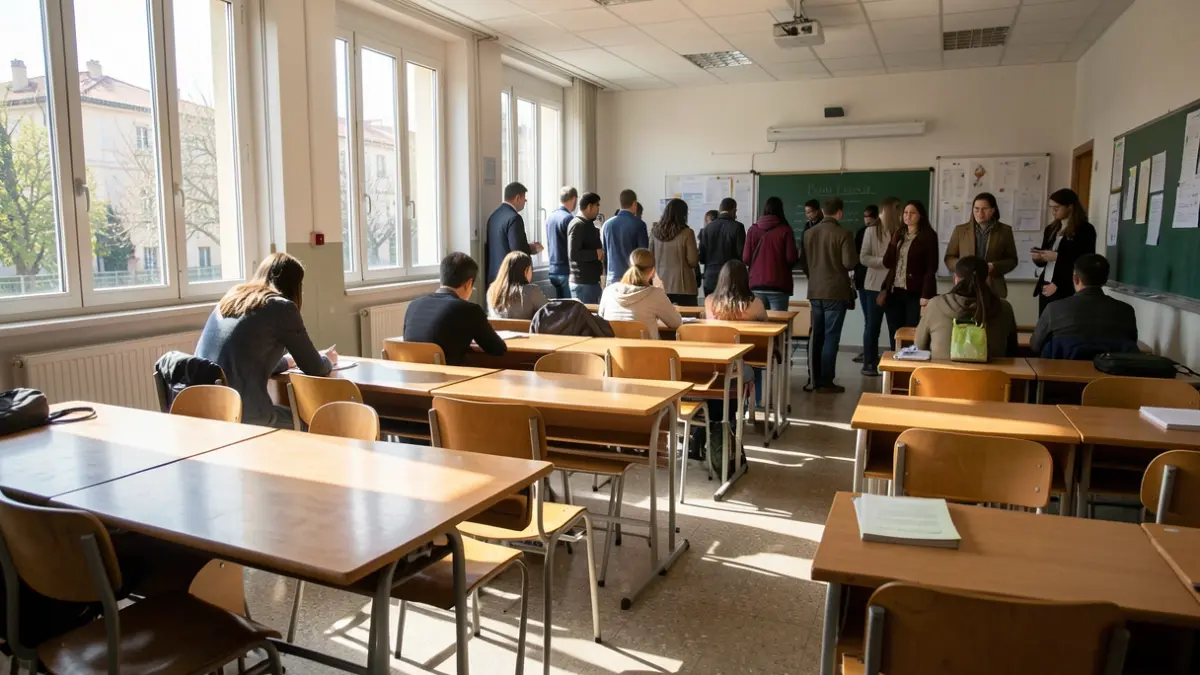

The Research Group in Education and Biodiversity Management (GESBIO) at the University of Córdoba, in collaboration with the European University of Andalusia, has analysed the relationship of children aged 6 to 12 with the natural environment. The results, published in the International Journal of Educational Research, indicate a significant emotional disconnection in Cordoban childhood, despite schoolchildren knowing about nature and understanding which behaviours are positive for its conservation.
The research delved into three dimensions: affective, behavioural, and knowledge. While behaviour remains almost unchanged throughout childhood, the other two dimensions show an opposite pattern with age. As students grow and progress through their educational stages, their theoretical understanding of nature increases, but their sense of belonging and emotional attachment to it decreases.
The research team, comprising Tamara Murillo Jiménez, Antonio J. Carpio Camargo, and Rocío Serrano Rodríguez from the UCO, along with Manuel Remesal from the European University of Andalusia, identified age as a determining factor. Against a backdrop of biodiversity loss, this emotional disconnection could affect future conservation measures. Furthermore, part of the knowledge children have is based on the internet or images generated by artificial intelligence, which can be misleading.
“"We should not focus solely on knowing ecological processes or certain common animals, for example, but rather delve into emotion and work with and in nature. Going to the countryside, parks, or gardens and putting children in contact with natural elements in a guided way can help recover that emotional bond that young people have and seem to lose with age."
The data show that neither gender nor living in a rural environment necessarily enhances the relationship with nature. However, the frequency of visits to the countryside does facilitate a greater emotional connection with the environment. Researcher Tamara Murillo Jiménez argues that if only knowledge is taken into account, a complete picture is not obtained, as the affective dimension is what largely determines future conservation actions.